Blog

All Ford F-150 Ford Bronco Sport Ford Explorer Alpine Ford Dealer Ford Bronco Ford Super Duty F-250 Ford Dealer Alpine Ford, LLC Service Ford Super Duty F-350 Ford Maverick Ford Escape Ford Expedition Ford Service New Inventory West Pueblo Ford Dealer Service Ford Mustang 2025 Ford F-150 Ford Ranger Ford Bronco Sport Service Ford Mustang Mach-E Ford Super Duty F-250 Service Ford Transit Parts People Pre-Owned Inventory
Why Standard 4x4 on the 2026 Bronco Sport® Fits Castle Rock, CO Daily Drives and Weekend Trails

Why Standard 4x4 on the 2026 Bronco Sport® Fits Castle Rock, CO Daily Drives and Weekend Trails

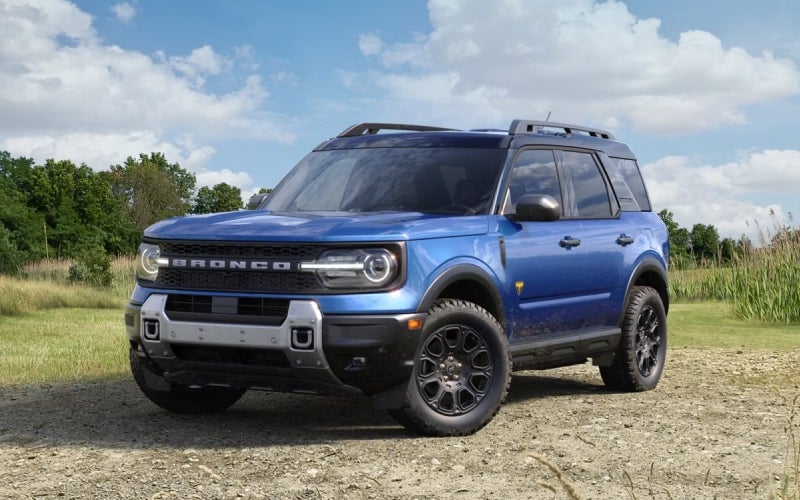
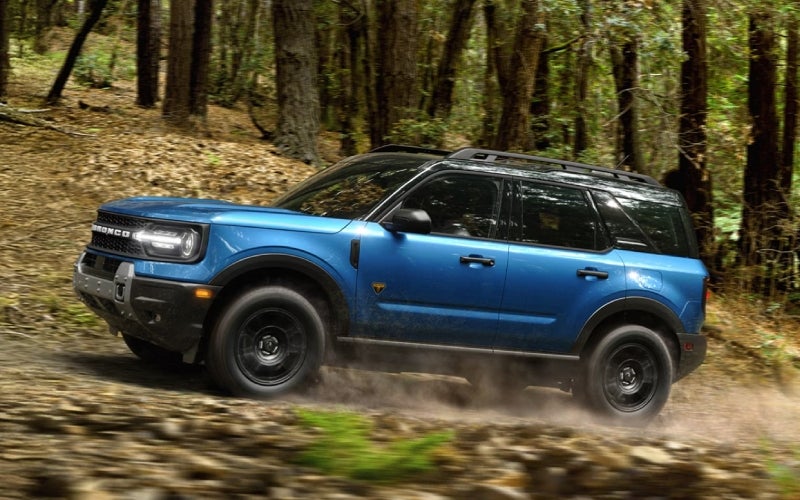
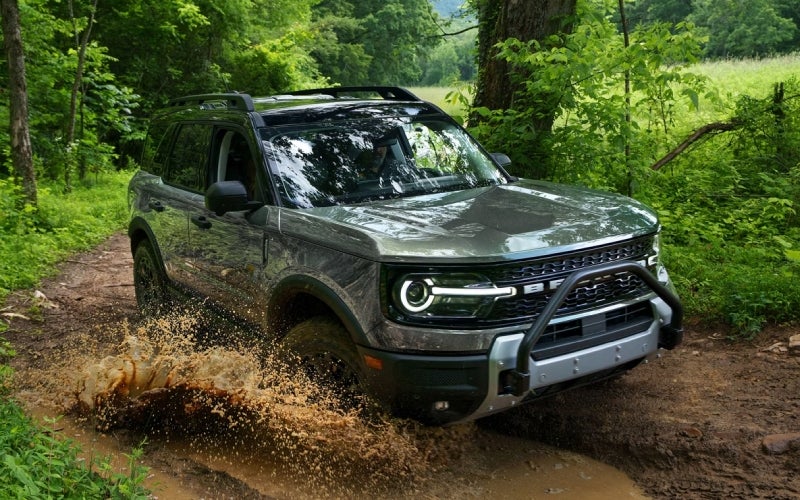
Alpine Ford - Why Standard 4x4 on the 2026 Bronco Sport® Fits Castle Rock, CO Daily Drives and Weekend Trails When your daily route runs from foundry-fast mornings to trailhead afternoons, one feature changes the entire feel of a small SUV: standard 4x4. That is why the 2026 Ford Bronco Sport® resonates with Castle Rock, CO drivers who want more confidence on pavement and poise on dirt — no extra boxes to tick just to get real traction. Add in G.O.A.T. Modes® for quick terrain tuning and a chassis tuned for uneven ground, and the Bronco Sport® turns the Front Range’s unpredictable mix into something you plan for rather than tiptoe around. Beyond the mechanical grip, what stands out is how natural it feels. Steering response stays calm as surfaces change, and the cabin keeps tech and essentials close without overcomplicating things. The available 13.2-inch center display makes routes and playlists easy to manage, while the Ford Connectivity Package offers streaming and a Wi-Fi® hotspot included for one year — great when friends need to sync plans at Philip S. Miller Park or you are pulling up offline trail maps before cell service fades. It is a smart balance of analog confidence and digital convenience. The Standard 4x4 Advantage You Can Feel Standard 4x4 across the entire Bronco Sport® lineup means no guessing which trim gives you traction — you get it. That matters when a Castle Rock afternoon shower turns crisp pavement into something slicker, or when you decide to detour onto a gravel spur near Dawson Butte after work. The system is tuned to optimize grip without feeling heavy, so you sense the help without the drama. For those who want even more control on technical paths, Badlands® adds Advanced 4x4 with a twin-clutch rear drive unit that can help send torque side to side, aiding traction when a wheel is unloaded on uneven terrain. G.O.A.T. Modes® (Goes Over Any Type of Terrain) keep things simple. Select the mode that matches the moment — Normal, Eco, Sport, Slippery, Sand, and more depending on trim — and the Bronco Sport® adjusts throttle, shifting, and traction management as needed. Instead of micromanaging settings, you get to focus on the view and your line. For Castle Rock drivers who mix highway, town, and trail, that quick, intuitive flexibility is a difference you notice every day. Interior Tech That Works, Not Distracts Inside the Bronco Sport®, the big news is how easily the tech adapts to your habits. The available 13.2-inch display gives your maps and media the space they need, with wireless Apple CarPlay® and Android Auto™ compatibility to eliminate cables. The Ford Connectivity Package brings apps, maps, and a Wi-Fi® hotspot for a year — helpful when you want to share a location near Rock Park or keep passengers streaming while you cruise along Founders Parkway. And unlike some competitors that bury basics under layers of submenus, the Bronco Sport® keeps core functions within reach. The cabin is cleverly arranged, too. A device tray holds your essentials, and available easy-clean surfaces stand up to dust and post-hike gear without stress. If your style leans classic, Heritage trim adds Oxford White accents and Navy Pier plaid cloth that pays tribute to the Bronco® lineage. If comfort tops your list, Outer Banks® brings premium-trimmed, heated front seats and a heated steering wheel for those chilly morning starts. Across the board, it all feels considered — built to stand up to life without feeling like a work truck. Which Trim Fits Your Castle Rock Routine? Because 4x4 is standard, you are choosing between good, great, and trail-hungry. Big Bend® is the easy yes for most drivers — confident 4x4, flexible cargo space, and the tech you want for day-to-day use. Heritage layers on distinctive style with Oxford White details and throwback decals, plus all-terrain tires that match the look with bite. Outer Banks® appeals to drivers who spend more time on pavement but still want the Bronco Sport® spirit. The Shadow Black-painted roof, black grille, and premium-trimmed, heated front seats elevate your time behind the wheel. If your weekends include rocky two-tracks or sandy climbs, Badlands® is the clear pick. Advanced 4x4 with a twin-clutch rear drive unit and 7 G.O.A.T. Modes® give you more control, while steel-plated front bumper and underbody protection add confidence when the route gets rough. Big Bend®: Everyday-ready capability, smart tech, flexible cargo Heritage: Oxford White design accents, Navy Pier plaid cloth, all-terrain tires Outer Banks®: Premium-trimmed comfort with a style-forward look Badlands®: Advanced 4x4 hardware and protection for tougher lines There is no wrong answer — just the right fit for the way you drive. If your schedule swings from school drop-offs to spur-of-the-moment detours down CO-85, the lineup makes it easy to prioritize comfort, style, or maximum trail ability without losing the Bronco Sport® core strengths. Capability Compared to the Class Standard 4x4 at every trim is a standout advantage in a segment where many models make AWD optional. Pair that with G.O.A.T. Modes® and, on Badlands®, the twin-clutch rear drive unit, and you get control you typically only see in specialized off-road packages elsewhere. The up to 2,200 lbs of towing when properly equipped is a practical bonus — enough for bikes, a small trailer, or weekend gear. And the available 13.2-inch center display stacks up well against rivals that require higher trims to unlock a comparable screen. Safety and driver assistance stay front-of-mind, with standard Ford Co-Pilot360® technologies and available Ford Co-Pilot360® Assist+ to help on I-25 or during longer drives up to Castlewood Canyon State Park. It is a capable, right-sized SUV that does not ask you to trade daily ease for weekend fun — it gives you both. Frequently Asked Questions: Is 4x4 really standard on every 2026 Bronco Sport®? Yes. Every trim comes with 4x4 capability, so you do not need to add a package just to get confident traction in mixed conditions. What is the benefit of G.O.A.T. Modes®? G.O.A.T. Modes® quickly tailor throttle response, shifting, and traction management to match your surroundings, making transitions from pavement to gravel or sand feel more controlled. Which trim is best for Castle Rock-area trails? Badlands® is the most trail-focused, with Advanced 4x4 and a twin-clutch rear drive unit, 7 G.O.A.T. Modes®, and added protection underneath. Big Bend®, Heritage, and Outer Banks® still deliver confident 4x4 for dirt roads and light trails. What interior tech stands out most? The available 13.2-inch center display and the Ford Connectivity Package stand out for simple, wireless integration and a year of included connectivity features. How does towing capability fit daily life? With up to 2,200 lbs when properly equipped, you can handle bikes, camping gear, and a small trailer — a practical range for most weekend plans. We are here to help you pick the 2026 Bronco Sport® that matches your day-to-day in Douglas County and the weekend terrain you love. As Alpine Ford, we are proud to be serving Canon City, Castle Rock, and Denver with guidance rooted in local driving. If you want to compare trims side by side, schedule a test drive, or map packages to your budget, our team is ready to make the process straightforward and stress-free. Bring your questions, your must-haves, and your favorite routes — we will help you find the Bronco Sport® that feels just right. Request more 2026 Ford Bronco Sport information
The 24-inch Panoramic Display on the 2027 Ford Expedition — A Smarter Screen for Colorado Springs, CO Drives

The 24-inch Panoramic Display on the 2027 Ford Expedition — A Smarter Screen for Colorado Springs, CO Drives

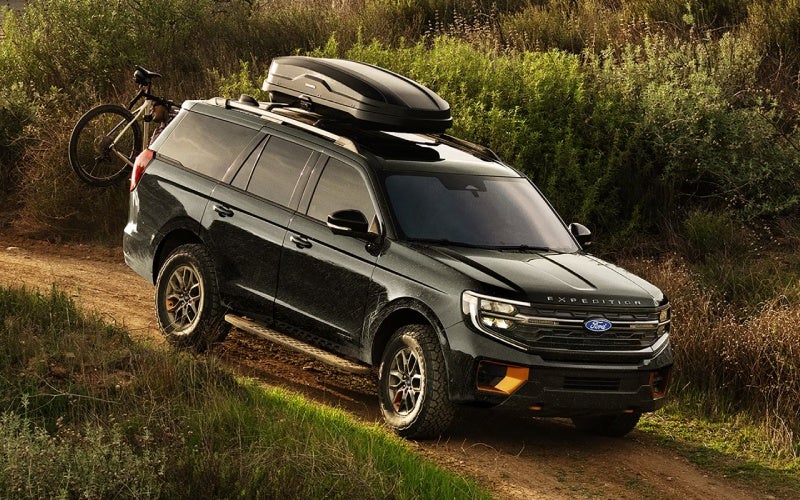
Alpine Ford - The 24-inch Panoramic Display on the 2027 Ford Expedition — A Smarter Screen for Colorado Springs, CO Drives The 2027 Ford Expedition® brings the kind of in-cabin clarity that makes busy driving days feel calm. Front and center is a 24-inch panoramic display — a sweeping, configurable screen that helps you see what matters at a glance. For drivers around Colorado Springs, CO, where I-25 merges, downtown traffic, and mountain-bound detours can overlap in a single trip, the right information placement is a real advantage. In this blog, we will look at what the display does well, how it works with the Ford Digital Experience and available driver-assist tech, and why it feels like a natural fit for daily routines and weekend travels alike. What the 24-inch panoramic display changes for everyday driving When we talk about a large display, we are not just talking about size for its own sake. The Expedition’s 24-inch panoramic interface gives your eyes and brain a cleaner, more intuitive canvas. The result is less head movement and less time spent hunting for data. Paired with the responsive 13.2-inch center display, the Expedition separates navigation and media in a logical way so you always know where to look. That balance matters when splitting attention between turn-by-turn directions, lane-change decisions, traffic speed, and the family playlist. Another quiet benefit is the Expedition’s thoughtful use of the screen space. Fonts are legible without being oversized. Key icons are consistently placed. And the system lets you customize the layout so your most-used tiles sit front and center. Whether you want towing info, trip data, or adaptive cruise distance highlighted, you can prioritize what you need — then set it and forget it. Ford Digital Experience and Google built-in apps The Ford Digital Experience complements the 24-inch display with familiar apps and maps that feel intuitive right away. With Google Maps on board, you can count on dependable routing from city streets to mountain passes, plus real-time traffic insights when your plan changes. The Google Play store puts a growing library of media and utility apps a tap away, while the available Ford Connectivity Package enables a 5G Wi-Fi hotspot for up to 10 devices within 50 feet of the vehicle. Carpool drops, last-minute lunch orders, and surprise schedule changes feel more manageable when your SUV works like a rolling command center. Colorado Springs drivers who split time between downtown, the Powers corridor, and Monument Hill will appreciate how the Expedition keeps your map visible without burying your media controls or vehicle settings. It is a simple formula: big screen, smart layout, and the right apps. You get the clarity of a premium cockpit without one feature stepping on another. How the big screen supports towing, trailering, and parking The 24-inch panoramic display also shines when your tasks get more technical. Pair it with Pro Trailer Hitch Assist™ and Pro Trailer Backup Assist™ to see crisp visual guides as you align to a coupler or dial in your trailer’s reverse path. The on-screen prompts are frank and timely, reducing guesswork and the back-and-forth of trial-and-error. If you regularly tow a boat to the reservoir or haul a pop-up camper into the foothills, these cues save minutes and stress every single trip. Add the available 360-Degree Camera and the Expedition turns the big screen into a confidence multiplier for tight parking or narrow trailhead lots. You can toggle angles, see curbs, and pick reference points that help a long-wheelbase SUV feel smaller and nimbler. It is the kind of feature you quickly miss when you drive a vehicle without it. Trailer Views: Clear visual guidance for hitching, backing, and monitoring tongue placement. Surround Perspective: Multiple camera angles that reveal curbs, obstacles, and tight clearances. Configurable Tiles: Prioritize towing data, maps, or media so the right info stays visible. While rivals offer some of these tools, the Expedition’s combination of screen real estate, crisp graphics, and straightforward controls makes the whole process feel more natural. Once you get used to it, it is hard to go back. Hands-free help on the highway One of the most impressive pairings with the 24-inch display is available Ford BlueCruise. On compatible, mapped highways, you can drive hands-free while the system monitors lane position and traffic around you. The big screen communicates BlueCruise status clearly so you always know when hands-free is active, when it is prompting you to take over, and how the system is responding to changing traffic. On busy stretches of I-25, that transparency takes the edge off and lets you hold a steady, confident pace. Equally important, the Expedition’s driver-assist collection — including Ford Co-Pilot360® Assist 2.0 with Adaptive Cruise Control, Pro Trailer Hitch Assist, and Pro Trailer Backup Assist — makes the large display work hard on your behalf. It is not just a broad canvas; it is a smart one that integrates the right data at the right time. For families, the benefits are immediate. Less mental clutter for the driver. Fewer abrupt lane changes. Fewer missed turns. The Expedition meets you where you are and keeps you a step ahead of what is coming next. Local life also rewards the Expedition’s design choices. From Academy Boulevard errands to weekend runs up Ute Pass or Garden of the Gods, the 24-inch panoramic display helps you see and decide sooner. On unfamiliar backroads, the extra map real estate pays off with quicker recognition of tight bends and turnouts. And in downtown areas, you can keep navigation up top while adjusting music or climate down below without burying the route. As a whole, the 2027 Expedition’s in-cabin tech is greater than the sum of its parts. The 24-inch panoramic display anchors a cockpit that thinks ahead, the Ford Digital Experience brings the apps you use every day, and BlueCruise adds a helpful highway layer when your hands and head could use a break. Alpine Ford is proud to support drivers looking for a full-size SUV that feels both powerful and peaceful in daily use, serving Colorado Springs, Canon City, and Castle Rock with guidance that fits your drive and your day. Frequently Asked Questions: How does the 24-inch panoramic display differ from other large SUV screens? It is not just larger — it is designed to separate critical info (like navigation and driver-assist prompts) from everyday controls. That means less searching and more clarity, especially when traffic is crowded or you are towing. Can I customize what shows on the 24-inch panoramic display? Yes. You can prioritize tiles to keep navigation, towing details, trip data, or media where you want them. The result is a layout that feels tailored to your driving style. How does the big screen help with towing and parking? Pairing the display with Pro Trailer Hitch Assist and Pro Trailer Backup Assist adds clear on-screen guides for hitching and reversing with a trailer. The available 360-Degree Camera enhances parking and low-speed maneuvers with multiple, high-clarity views. Request more 2027 Ford Expedition information

2026 Ford Bronco Manual vs Automatic for Colorado Springs, CO Drivers — Which Transmission Fits Your Adventure?

2026 Ford Bronco Manual vs Automatic for Colorado Springs, CO Drivers — Which Transmission Fits Your Adventure?

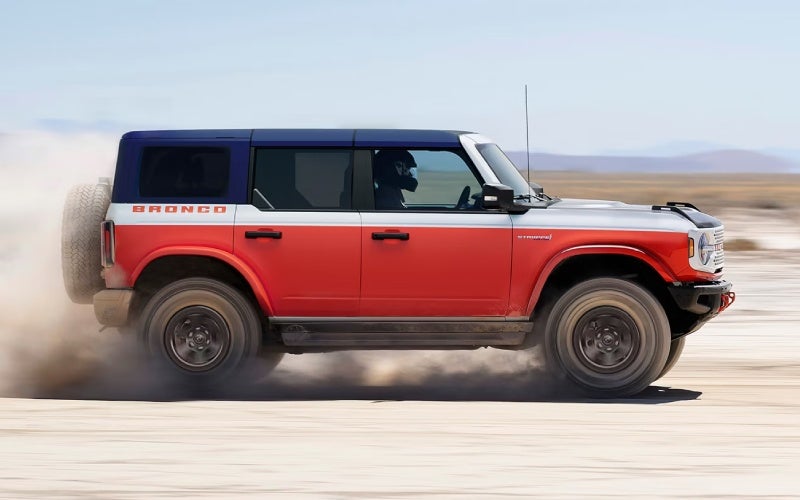
Alpine Ford - 2026 Ford Bronco Manual vs Automatic for Colorado Springs, CO Drivers — Which Transmission Fits Your Adventure? The 2026 Ford Bronco® gives Colorado Springs, CO drivers two great transmission paths: a hands-on 7-speed manual available on select trims and a smart, quick-shifting 10-speed automatic. Both are built for the Front Range reality—weekday I-25 traffic, quick trips to Garden of the Gods, and dirt byways like Old Stage Road or Rampart Range Road when the weekend calls. So which one fits your style best? Let’s look at how each option performs on the daily and on our most-visited local routes. Manual vs Automatic: How They Feel Around Town If you live for the classic connection between engine, gear, and terrain, the available 7-speed manual keeps you engaged in every moment. It’s a favorite for drivers who want to manage torque precisely over washboard or ease a tire onto a ledge. The crawler gear is your low-speed ally when the trail tightens. On the other hand, the 10-speed automatic is terrific for Colorado Springs city life, easing the stop-and-go along Nevada Avenue and smoothing transitions on the Highway 24 climb. It’s also tuned for quick downshifts when you need passing punch heading up to Ute Pass or Woodland Park. Shifting feel matters, but so does predictability. The manual’s consistent engagement helps you place the Bronco exactly where you intend in off-camber sections or rutted switchbacks. The automatic fights fatigue on long drives and keeps the powerband right where you want it when accelerating out of a tight corner. Both pair seamlessly with the Bronco’s EcoBoost® engines and G.O.A.T. Modes® drivetrain logic. Traction Tools That Compliment Either Choice Transmission choice is only part of the capability equation. Bronco’s available HOSS (High-Performance Off-Road Stability Suspension) Systems bring the control many drivers expect from a premium off-road build. The damping composure shines on fast gravel stretches along Gold Camp Road and when you encounter surprise washouts after a summer downpour. Up to seven G.O.A.T. Modes help the differentials, throttle mapping, and shift strategy (in the automatic) adapt to changing surfaces—sand, mud, rock, and more. With the manual, mode selection influences traction aids, while your right hand and left foot fine-tune the rest. Don’t overlook camera tech. The available 360-Degree Camera can be a game-changer whether you’re easing through a tight gate at Red Rock Canyon Open Space or positioning a rear wheel on a stabilizing patch of rock. It reduces guesswork, shortens learning curves, and gives confidence to both new and seasoned drivers. Choosing Based on Your Weekend Routine Consider where you typically go. If your adventures lean toward slow, technical trails with lots of line choice and tire placement—think segments of Old Stage Road after the rain or exploratory spurs off Rampart Range—the manual’s crawler gear is an asset. If you prioritize mixed-surface drives, frequent elevation changes, or longer highway legs to reach trailheads near Florissant or Eleven Mile Reservoir, the 10-speed automatic’s adaptability can make the day more relaxed. There’s also the comfort factor. The automatic is easy to live with for daily commuting across the city and in busy parking lots. The manual invites you to stay involved—especially satisfying for drivers who enjoy the rhythm of smooth rev-matched downshifts and precise throttle control on dirt. Both feel at home in the Bronco cabin, which blends durable materials with modern tech, including standard wireless Apple CarPlay and Android Auto compatibility. Trail-Ready Features That Make Either Pick Shine G.O.A.T. Modes: Up to seven, tailored to changing surfaces HOSS Systems: HOSS 3.0 and 4.0 available on select models Ground Clearance: Up to 13.1 inches for obstacle confidence Water Fording: Up to 37 inches on select configurations Removable Doors: Class-exclusive cowl-mounted mirrors stay in place 360-Degree Camera: Available views for precise wheel placement Capability is more than a spec sheet. Bronco blends trail geometry with composure and visibility. The available damping tech keeps it settled across washboards; the camera system lets you creep forward with confidence; and the removable doors and roof bring the best part of the Front Range—open air and big views—right into the drive. Which Bronco Trims Offer What You Want? Several trims offer a manual or automatic, so you can choose your preferred feel without sacrificing your must-haves. If you like a refined, style-forward look with a comfortable ride and available 60th Anniversary Package, Outer Banks® is a great fit—paired with the automatic. If you’re eyeing tougher terrain out of the box, Badlands® offers advanced off-road hardware and is a natural match for drivers who want to row their own gears. Heritage Edition adds retro cues without skipping modern capability. At the extreme end, Bronco Raptor® pairs a 418-hp 3.0L EcoBoost® V6 with HOSS 4.0—made for high-speed desert work and big trail days. It’s worth mapping your routine. Do you mostly explore Rampart Range loops with friends, then grab dinner in Old Colorado City? Or are you planning dedicated trail days with recovery gear and scouting apps? Your transmission choice should reflect that rhythm. Many local drivers appreciate the automatic’s versatility for everyday life, while manual loyalists prize the precision and engagement on the toughest sections. Frequently Asked Questions: Can I still get seven G.O.A.T. Modes with a manual? Yes. Drive modes remain available and adjust traction aids and throttle mapping. With the manual, you add clutch and gear selection as part of the control set. Does the 10-speed automatic feel busy on mountain climbs? No. It’s tuned to hold gears confidently and downshift promptly. Many drivers find it reduces fatigue on long grades and makes quick work of passing zones. Is the manual better for rock crawling? It’s a strong choice for slow, technical moves thanks to the crawler gear and direct control. That said, the automatic works exceptionally well with G.O.A.T. Modes to meter torque on uneven surfaces. What about towing to a trailhead? When properly equipped, Bronco offers up to 4,500 pounds of towing. The automatic pairs naturally with towing due to its shift logic, but either transmission can work depending on your setup. Whether you lean manual or automatic, the 2026 Bronco is built for the way Colorado Springs drivers actually live—confident around town, tractable on dirt, and easy to dial in for your favorite routes. If you’d like a personal walkthrough, we’re happy to show you both options side-by-side, set up a test loop that includes city and scenic roads, and talk through trim details that match your goals. Ready to compare? Bring a few destinations to mind—Old Stage Road, Rampart Range, or your favorite Garden of the Gods access—and we’ll help you build the Bronco that fits. We’re proud to be serving Colorado Springs, Canon City, and Castle Rock with guidance that keeps your everyday drives and weekend adventures equally rewarding, backed by support you can count on long after delivery. Alpine Ford is here to help you choose confidently. Request more 2026 Ford Bronco information

Ford vs Honda for Family Driving, Towing Flexibility, and Backroad Confidence near Canon City, CO

Ford vs Honda for Family Driving, Towing Flexibility, and Backroad Confidence near Canon City, CO

Alpine Ford - Ford vs Honda for Family Driving, Towing Flexibility, and Backroad Confidence near Canon City, CO Shopping for a vehicle near Canon City, CO often means thinking beyond a simple commute. A daily driver may need to handle Highway 50 trips into Pueblo, school and work routines around Fremont County, weekend drives toward the Royal Gorge, and occasional dirt-road access near Red Canyon Park or Temple Canyon Road. For many shoppers, Ford and Honda both rise to the top because each brand has a strong reputation, a wide selection, and practical choices for families. The right choice depends on how much flexibility you want from one vehicle and how much capability matters outside of paved-road errands. Honda is well known for easy-to-drive cars, efficient SUVs, and family-focused vehicles such as the CR-V, Pilot, Passport, Odyssey, Civic, and Accord. For shoppers who spend most time on pavement and want a smooth, straightforward ownership experience, Honda makes a compelling case. Ford, however, brings a broader lineup for Colorado life, especially for shoppers who want one brand that can cover compact commuting, family SUV duty, trail access, towing, hauling, and work needs. At Alpine Ford, we often speak with drivers comparing Ford and Honda because both brands make sense on paper, but Ford frequently stands out once the conversation turns to towing confidence, truck choices, 4x4 capability, and long-term ownership support. Why This Comparison Matters near Canon City Canon City drivers face a mix of road types and ownership needs. Some days are simple: grocery stops, appointments, school pickup, and a quick run along Royal Gorge Boulevard. Other days demand more from a vehicle: towing a small camper, hauling outdoor gear, carrying tools, climbing grade changes west of town, or driving unpaved access roads with ruts, loose gravel, and uneven surfaces. A brand comparison should reflect that real use case, not just a showroom checklist. Honda performs especially well for commuters and families who value cabin comfort, fuel-conscious driving, and intuitive technology. A Honda CR-V or Pilot can be a smart choice for many households. Ford adds another layer by giving shoppers more paths to match a vehicle with a lifestyle. A Ford Escape® can suit efficient daily driving, a Ford Explorer® can handle family road trips with available advanced driver-assist technology, a Ford Bronco® Sport or Bronco® can support more confident backroad exploring, and a Ford F-150® or Ranger® can tow and haul with genuine truck capability. That range is a major advantage for shoppers who do not want to compromise as life changes. Lineup Breadth: Ford Offers More Paths to the Right Fit One of Ford's biggest advantages over Honda is the depth of its vehicle lineup. Honda covers cars, crossovers, a minivan, and a unibody pickup. Ford covers many of those same daily-driving needs while also offering a much stronger truck and utility portfolio. That matters near Canon City because shoppers often want a vehicle that can do more than one job. A family SUV might need to tow recreational gear. A truck might need to be comfortable enough for weekday commuting. A compact pickup might need to handle home projects without feeling oversized in town. Truck availability: Ford offers Maverick®, Ranger®, F-150®, and Super Duty® choices, while Honda offers the Ridgeline as its primary pickup option. Off-road variety: Ford gives shoppers choices such as Bronco® Sport, Bronco®, Ranger®, F-150®, and Tremor® variants across multiple vehicle types. Family SUV depth: Ford offers options from Escape® to Explorer® to Expedition®, giving families more size and capability choices. Electrified options: Ford includes hybrid, plug-in hybrid, and all-electric choices across select models, including options such as Maverick®, Escape®, Mustang Mach-E®, and F-150 Lightning®. Commercial and work support: Ford also offers Transit® and E-Transit™ for businesses, contractors, shuttle needs, and fleet use. Honda has strong entries in several key categories, but Ford makes it easier to stay with one brand as your needs expand. A shopper may start with a compact SUV, move into a midsize truck, and later need a full-size SUV or heavy-duty pickup. Ford can support that entire journey with a broader set of vehicles. Towing, Hauling, and Outdoor Gear For shoppers around Canon City who tow even occasionally, Ford has a clear edge. Honda SUVs can tow within applicable limits, and the Ridgeline offers useful light-duty pickup versatility. Ford, though, builds towing capability into a much larger portion of its lineup. Ranger® and F-150® are traditional truck choices for drivers who regularly tow small campers, utility trailers, ATVs, or home-improvement supplies. Super Duty® models step into serious heavy-duty work for larger trailers, equipment, and demanding jobs. Ford also offers towing technology that can make real-world trailering less stressful. Available systems can include Pro Trailer Backup Assist™, Smart Hitch, Onboard Scales, trailer brake controller availability, camera views, and integrated trailer information depending on the model and configuration. A Honda shopper may find the driving experience comfortable and user-friendly, but a Ford shopper has access to more purpose-built tools for hitching, backing, loading, and towing with confidence. That difference becomes noticeable on Colorado roads. Merging onto Highway 50 with a trailer, climbing toward higher elevations, or managing a full cargo load calls for power, stability, visibility, and smart driver information. Ford does not just offer more towing capacity in many segments; Ford also offers more towing-focused technology across trucks and larger SUVs. Backroad Confidence and 4x4 Capability Honda offers available all-wheel-drive systems on several SUVs, including Real Time AWD™ and i-VTM4® AWD on select models. Those systems are useful for changing traction conditions, graded dirt roads, and everyday confidence. For many drivers, Honda AWD is more than enough. The Ford advantage appears when a shopper wants deeper capability, more ground-clearance-focused options, or systems designed with rugged terrain in mind. Ford offers available 4x4 systems across trucks and SUVs, plus trail-focused hardware on select models. Bronco® and Bronco® Sport can offer features such as G.O.A.T. Modes®, available advanced 4x4 systems, skid plates, off-road suspension tuning, and trail-focused camera technology depending on configuration. Ranger® and F-150® provide truck-based capability, and Tremor® models bring off-road upgrades without requiring shoppers to leave daily comfort behind. For Canon City drivers who enjoy weekend access roads, fishing areas along the Arkansas River, camping routes, and scenic dirt-road exploring, Ford provides more specialized options. Honda is excellent for composed daily driving; Ford is better positioned for drivers who want extra confidence once pavement ends. Technology and Driver Assistance Both brands take safety and driver assistance seriously. Honda Sensing® is a familiar suite with helpful features on many Honda models, and Honda cabins are often simple to learn. Ford Co-Pilot360™ technology also supports driver confidence with available features such as Pre-Collision Assist with Automatic Emergency Braking, BLIS® with Cross-Traffic Alert, Lane-Keeping System, Adaptive Cruise Control, and more depending on model and trim. Ford also offers available Ford BlueCruise on select vehicles, a major point for shoppers who spend time on longer highway drives. Ford BlueCruise supports hands-free highway driving on compatible divided highways called Hands-Free Blue Zones. For families making regular drives between Canon City, Pueblo, Colorado Springs, and other Front Range destinations, this available technology can make highway travel feel calmer and more convenient when conditions allow. Ownership Support at Alpine Ford A vehicle decision is also a dealership decision. At Alpine Ford in Pueblo, we are proud to serve drivers from Canon City with a people-first approach built on trust, respect, and community commitment. Our dealership is locally owned, and we focus on helping shoppers choose a vehicle based on actual needs, not pressure. Whether you are comparing a Ford Explorer® to a Honda Pilot, a Ford Bronco® Sport to a Honda Passport, or a Ford F-150® to a Honda Ridgeline, our team can help you think through seating, cargo space, towing, technology, service expectations, and trade-in goals. Ford ownership also comes with the benefit of certified Ford service support. Our service center handles routine maintenance, oil changes, tire services, battery checks, brake service, diagnostics, and more. We use genuine OEM Ford parts, and our technicians understand the Ford lineup from compact SUVs to Super Duty® trucks. That support can be especially valuable for drivers who plan to keep a vehicle for many years or rely on a truck or SUV for work, family, and recreation. Which Brand Is the Better Fit? Honda remains a strong choice for shoppers who want a refined car, minivan, or crossover with straightforward daily usability. If your driving life is mostly pavement, light cargo, and family errands, Honda deserves consideration. Ford is the stronger fit for shoppers near Canon City who want more capability choices, more towing room, more truck options, and more trail-ready confidence. Ford simply gives shoppers more ways to match a vehicle to Colorado life. For many in-market shoppers, the best next step is a back-to-back comparison based on real needs. Think about how often you carry passengers, how much gear you load, whether you plan to tow, what roads you drive, and how long you want the vehicle to serve your household. When those questions come into focus, Ford's lineup often feels more adaptable and future-ready. Frequently Asked Questions: Is Ford or Honda better for towing near Canon City, CO? Ford is generally the better choice for towing because its lineup includes Ranger®, F-150®, Super Duty®, Explorer®, and Expedition® options with towing-focused engineering and available trailering technology. Honda offers light towing ability on select SUVs and the Ridgeline, but Ford provides more depth and higher-capability choices. Is Honda better than Ford for commuting? Honda makes excellent commuter vehicles, especially for shoppers focused on cars and compact SUVs. Ford also offers strong commuter choices such as Escape®, Maverick®, and Mustang Mach-E®, with the added benefit of more truck, hybrid, plug-in hybrid, and electric options depending on driving needs. Which brand is better for backroad and trail access? Ford has the advantage for backroad and trail access thanks to models such as Bronco® Sport, Bronco®, Ranger®, F-150®, and available Tremor® configurations. Honda AWD systems are useful for everyday traction, but Ford offers more specialized off-road hardware and drive modes. Can Alpine Ford help shoppers compare Ford vehicles to Honda models? Yes. At Alpine Ford, we can help Canon City shoppers compare size, seating, towing, technology, service needs, and trade-in options. Our goal is to help you choose a Ford vehicle that fits your real daily routine and long-term ownership plans. Request more information

Ford vs Nissan for Commuting, Trail Access, and Towing Confidence near Colorado Springs, CO

Ford vs Nissan for Commuting, Trail Access, and Towing Confidence near Colorado Springs, CO

Alpine Ford - Ford vs Nissan for Commuting, Trail Access, and Towing Confidence near Colorado Springs, CO Drivers shopping near Colorado Springs, CO often need one vehicle to handle several very different jobs. A typical week can include I-25 commuting, errands across town, school drop-offs, a drive south toward Pueblo, a weekend run up Highway 24 toward Woodland Park, or a trip with bikes, camping gear, tools, or a small trailer. That is why many shoppers compare Ford and Nissan. Both brands offer practical SUVs, capable trucks, efficient daily drivers, and modern technology, but each brand approaches real-world ownership in a different way. Nissan deserves consideration for shoppers who want approachable daily comfort, familiar controls, and useful options in popular segments. Vehicles like the Rogue, Pathfinder, Armada, Frontier, Ariya, and LEAF give Nissan a broad presence across SUVs, trucks, and electric vehicles. Ford, however, stands out for shoppers who want deeper truck capability, a wider range of adventure-ready SUVs, more commercial and work-focused choices, and advanced driver-assist technology across a large lineup. At Alpine Ford, we see that difference matter for Pikes Peak region drivers who want confidence not just during a test drive, but years into ownership. Daily Driving Around Colorado Springs: Comfort, Visibility, and Technology For everyday driving, both Ford and Nissan offer comfortable cabins, available all-wheel drive or four-wheel drive systems, smartphone connectivity, and driver-assist features. Nissan models such as Rogue and Pathfinder are easy to drive and well-suited to commuting, family errands, and road trips. Nissan ProPILOT Assist, available on select models, can help with steering assistance and speed control under proper conditions, which many highway commuters appreciate. Ford counters with a lineup that feels especially well matched to Colorado Springs life because shoppers can choose from compact, midsize, full-size, truck-based, hybrid, electric, and off-road-focused options. Ford Co-Pilot360® Technology is available across many Ford vehicles and may include features such as Pre-Collision Assist with Automatic Emergency Braking, BLIS® with Cross-Traffic Alert, Lane-Keeping System, and available Adaptive Cruise Control, depending on the model and configuration. For long drives on compatible divided highways, available Ford BlueCruise adds another layer of convenience with hands-free highway driving on select equipped Ford vehicles. For shoppers who regularly travel between Colorado Springs, Denver, Pueblo, and mountain destinations, that technology can make Ford especially compelling. Truck Capability: Where Ford Has a Clear Advantage If a pickup is part of the conversation, Ford offers one of the strongest brand-level advantages. Nissan builds the Frontier, a capable midsize truck that works well for light hauling, trailhead access, and drivers who prefer a smaller footprint. For shoppers whose truck needs stop at weekend projects, mountain bikes, and moderate towing, Frontier can be a sensible choice. Ford simply gives truck shoppers more room to grow. The Ford Maverick® brings compact truck flexibility and available hybrid efficiency. The Ford Ranger® fits midsize truck drivers who want more trail and towing confidence. The Ford F-150® remains a benchmark for full-size truck capability, technology, and configuration choice. For heavy towing, fifth-wheel or gooseneck setups, commercial work, ranch needs, or larger recreational trailers, the Ford Super Duty® lineup gives Ford a capability range Nissan does not currently match in the U.S. market. That matters around Colorado Springs because altitude, grades, payload, and wind exposure can change how a vehicle feels under load. A truck that seems adequate on flat roads may feel different climbing toward mountain communities or pulling a trailer south on I-25. Ford towing technologies can also make ownership easier. Depending on the model and equipment, available features may include Pro Trailer Backup Assist™, Pro Trailer Hitch Assist™, Trailer Sway Control, integrated trailer brake controller, smart towing camera views, and onboard productivity tools such as available Pro Power Onboard. For drivers who tow only a few times a year, those features can be just as valuable as raw capability. SUVs for Families, Trails, and Everyday Utility Nissan has a strong SUV lineup, especially for shoppers focused on straightforward comfort. Rogue is popular with commuters and small families, Pathfinder adds three-row practicality, and Armada serves shoppers who want a large SUV with substantial road presence. Nissan SUVs tend to emphasize easy operation, useful cargo space, and a smooth everyday feel. Ford offers a wider personality range within the SUV world. The Ford Escape is a strong fit for efficient commuting and compact versatility. Bronco Sport offers confident size and available trail-focused hardware for drivers who want a daily SUV with more outdoor character. The Ford Bronco® takes open-air adventure and rugged capability much further, with available G.O.A.T. Modes® and serious off-road equipment. Explorer delivers three-row versatility with available performance and comfort-focused trims, while Expedition gives large families impressive space, capability, and road-trip comfort. For Colorado Springs shoppers, the Ford SUV lineup can be especially appealing because it is not limited to one type of buyer. A driver who spends most of the week downtown may prefer Escape. A family that drives to soccer, school, Garden of the Gods, and weekend trailheads may lean toward Bronco Sport or Explorer. A household that tows, carries several passengers, and travels often may find Expedition a stronger match. Ford makes it easier to choose an SUV based on how life actually works, rather than forcing every shopper into the same kind of crossover. Electrified Choices: Hybrid, Plug-In, and EV Options Both Ford and Nissan have experience with electrified vehicles. Nissan helped bring EV ownership into the mainstream with LEAF and now offers Ariya as an electric crossover. For shoppers who want an EV for commuting around Colorado Springs and charging at home, Nissan can be worth researching. Ford, however, brings electrification into more types of vehicles. The Mustang Mach-E® offers electric SUV performance and style. The F-150 Lightning provides all-electric truck utility. Ford also offers hybrid options in key models such as Maverick® and available hybrid choices in select Ford SUVs and trucks, depending on model year and configuration. This variety is important because not every driver is ready for the same ownership path. Some shoppers want a full EV. Others want hybrid efficiency without changing refueling habits. Ford gives more ways to move toward electrified driving while still choosing a vehicle that fits work, family, or recreation. What to Consider Before Choosing Ford or Nissan When comparing Ford and Nissan near Colorado Springs, the best choice depends on how a vehicle will be used every week. A simple checklist can help narrow the decision before visiting a dealership or scheduling a test drive. Primary driving: If most miles are city and highway commuting, compare comfort, visibility, driver-assist features, and fuel or charging preferences. Trailhead access: If gravel roads, uneven parking areas, and outdoor gear are common, look closely at ground clearance, drivetrain options, cargo design, and available drive modes. Towing needs: If trailers, boats, campers, or work equipment are part of ownership, Ford offers a broader truck and SUV capability range. Family flexibility: If passenger space and cargo room matter, compare second-row comfort, third-row usability, cargo access, and available safety features. Long-term support: Consider service access, OEM parts availability, technician expertise, and how easy it will be to maintain the vehicle over time. That last point is a major reason shoppers choose Alpine Ford. We are a locally owned, people-first dealership serving Pueblo, Colorado Springs, Canon City, La Junta, and nearby communities. Our team is built around respect, trust, and long-term customer relationships. With new Ford inventory, pre-owned options, financing support, a service center, and genuine OEM Ford parts, we help shoppers look beyond the first purchase and think about the full ownership experience. Why Ford Often Fits the Pikes Peak Region Better Nissan remains a solid brand for shoppers who prioritize easy daily driving, practical SUVs, and familiar technology. For many drivers, a Nissan Rogue, Pathfinder, Frontier, or Ariya may check the right boxes. The key question is whether a shopper needs broader capability now or may need it later. That is where Ford has the edge. Ford gives Colorado Springs drivers more ways to match a vehicle to a changing life. A compact truck for weekday efficiency. A full-size truck for towing and job-site demands. A heavy-duty truck for serious work. An off-road SUV for trail-centered weekends. A three-row SUV for family travel. An EV or hybrid for drivers moving toward electrified ownership. That depth makes Ford a smart brand to consider for shoppers who want one dealership relationship and a wide range of future options. At Alpine Ford, we invite shoppers to compare both brands thoughtfully, bring questions, and test drive the Ford models that fit real daily needs. Visit us at 2828 Highway 50 West in Pueblo, CO, or contact our sales, service, or parts teams at 719-545-3673. We are here to help drivers from Colorado Springs and across southern Colorado find the right Ford with confidence. Frequently Asked Questions: Is Ford or Nissan better for towing near Colorado Springs, CO? Ford is often the stronger choice for towing because the lineup includes Maverick®, Ranger®, F-150®, Super Duty®, Explorer, and Expedition options. Nissan offers capable vehicles, but Ford provides a wider range for light, moderate, and heavy-duty towing needs. Which brand is better for off-road and trail access? Nissan offers capable choices such as Frontier and certain SUV configurations, but Ford has a broader adventure-focused lineup with Bronco Sport, Bronco®, Ranger®, F-150® Tremor®, and available systems like G.O.A.T. Modes® on select models. Does Ford offer good options for commuters? Yes. Ford offers efficient compact SUVs, hybrids, EVs, midsize SUVs, and trucks with comfort and technology features. Available Ford BlueCruise on select models can also support more relaxed hands-free highway driving on compatible roads. Why shop at Alpine Ford if I live near Colorado Springs? Alpine Ford offers new and pre-owned Ford vehicles, financing support, certified Ford service, and genuine OEM Ford parts. We are locally owned, community focused, and committed to helping southern Colorado drivers find the right fit. Request more information

Ford vs Chevrolet for One-Brand Work, Towing, and Family Life in Pueblo, CO

Ford vs Chevrolet for One-Brand Work, Towing, and Family Life in Pueblo, CO

Alpine Ford - Ford vs Chevrolet for One-Brand Work, Towing, and Family Life in Pueblo, CO For many shoppers around Pueblo, the question is not simply "Which truck or SUV do I like?" It is more practical than that: "Which brand fits my whole life?" A vehicle may need to handle weekday commuting on Highway 50, errands near Pueblo West, family drives toward Colorado Springs, jobsite duty, and occasional towing to Lake Pueblo State Park. That kind of real-world ownership scenario is where a brand comparison between Ford and Chevrolet becomes especially useful. Chevrolet has a long-running reputation in the truck and SUV world, and many in-market shoppers naturally cross-shop Ford and Chevy. Both brands offer pickups, family SUVs, commercial vehicles, electrified choices, and performance models. The difference comes down to how each brand supports daily confidence, towing convenience, interior flexibility, technology, service access, and long-term ownership. At Alpine Ford in Pueblo, CO, we believe Ford stands out because the lineup feels especially complete for Southern Colorado drivers who want one brand to support work, family, recreation, and future needs. Why Pueblo Drivers Often Compare Ford and Chevrolet Ford and Chevrolet compete in many of the same categories. If a shopper is looking at a full-size truck, Ford F-150® and Chevrolet Silverado 1500 are common considerations. For heavy-duty towing, Ford Super Duty® and Chevrolet Silverado HD both draw attention. Families may compare Ford Explorer or Expedition with Chevrolet Traverse, Tahoe, or Suburban. Smaller SUV shoppers may look at Ford Escape or Bronco Sport® alongside Chevrolet Equinox or Trailblazer. That overlap makes this comparison practical for Pueblo drivers who want to narrow the search without focusing on only one model. Local driving needs also matter. Pueblo drivers often cover a mix of city streets, open highway, rural roads, and foothill routes. A vehicle may need to feel easy in downtown Pueblo, steady on I-25, capable on uneven roads outside town, and comfortable for longer drives toward Denver, Canon City, or the San Luis Valley. Ford and Chevrolet both build vehicles for American driving, but Ford’s broad mix of truck engineering, available driver-assist technology, hybrid options, off-road choices, and work-focused features gives shoppers more ways to tailor a vehicle around a specific lifestyle. Work and Towing: Ford Puts Practical Tech Front and Center For work-focused shoppers, Ford has built a strong advantage by making towing and payload easier to manage. Ford trucks are known for capability, but the bigger story is how Ford supports drivers before, during, and after a haul. Available features such as Pro Trailer Backup Assist™, Smart Hitch, Onboard Scales, trailer profiles, camera views, and Pro Power Onboard help turn a truck into a mobile work partner. That matters for Pueblo contractors, ranch property owners, small business operators, and weekend haulers who want capability with less guesswork. Chevrolet trucks are capable and respected, especially Silverado and Silverado HD. Chevy also offers towing technologies and useful bed options. Still, Ford’s truck lineup feels especially deep because it covers so many use cases. Ford Maverick® gives shoppers a compact pickup option with smart utility. Ford Ranger® adds midsize toughness. Ford F-150® remains a go-to choice for full-size capability, while Ford Super Duty® serves drivers with serious towing and commercial needs. For a shopper who may start with a daily truck now and later need more capability, Ford makes it easy to stay within one familiar brand ecosystem. Here are a few Ford strengths that often matter in real ownership: Broader truck ladder: Maverick®, Ranger®, F-150®, Super Duty®, and commercial options help match truck size to the job. Available worksite power: Pro Power Onboard can help run tools, lighting, equipment, and recreation gear depending on configuration. Towing confidence: Available towing technologies can simplify hitching, backing, weight awareness, and trailer control. Everyday usability: Ford truck cabins offer practical storage, available large displays, and configurations suited for family or work use. Family Life: Ford SUVs Balance Comfort, Space, and Confidence Not every shopper needs a pickup. For families in Pueblo, the right SUV may be the vehicle that handles school drop-offs, grocery runs, youth sports, commuting, and road trips. Chevrolet offers a wide SUV family, with familiar nameplates such as Equinox, Traverse, Tahoe, and Suburban. Chevy’s larger SUVs are strong choices for space and traditional SUV capability. Ford responds with a lineup that feels especially versatile, from compact crossovers to large family haulers and adventure-ready SUVs. Ford Escape offers easy everyday driving and available all-wheel drive. Ford Bronco Sport® brings a more rugged personality for drivers who want compact SUV practicality with available trail-friendly hardware. Ford Explorer remains a strong three-row choice for families who need room without moving into the largest SUV class. Ford Expedition delivers generous space, towing strength, and family comfort for bigger crews. Ford Bronco® adds open-air adventure appeal for drivers who want a more distinctive off-road SUV. In short, Ford gives Pueblo families more than one version of confidence, from efficient commuting to weekend exploration. Technology is another important difference. Ford Co-Pilot360® features are designed to support everyday awareness, and available Ford BlueCruise can allow hands-free highway driving on compatible roads when equipped and activated. Chevrolet offers available safety and driver-assist features as well, including Super Cruise on select vehicles. For shoppers who spend time on longer highway routes, both systems deserve consideration. Ford’s advantage is how naturally its driver-assist story fits across popular trucks and SUVs, helping shoppers find useful tech without leaving the Ford lineup. Adventure and Utility Around Southern Colorado Pueblo drivers have quick access to a wide range of destinations, from Lake Pueblo State Park to mountain routes west of Canon City and open roads toward Walsenburg or Trinidad. A brand that works well here needs more than smooth pavement manners. Ground clearance, available 4x4 systems, all-wheel drive options, selectable drive modes, durable cargo areas, and towing support can all matter depending on how a vehicle will be used. Ford’s adventure identity is especially strong. Bronco® and Bronco Sport® bring G.O.A.T. Modes® and off-road-focused configurations. F-150® and Super Duty® offer trims and packages suited for rougher routes and heavy use. Explorer and Expedition can serve families who want comfort first but still value capability. Chevrolet offers rugged choices too, including Z71 trims and off-road-oriented trucks and SUVs. Even so, Ford’s lineup feels more intentionally layered for shoppers who want to choose a level of adventure rather than settle for a one-size-fits-all approach. That flexibility is helpful in Pueblo because no two drivers use a vehicle exactly the same way. A commuter from Pueblo West may want efficiency and easy parking. A contractor may need a bed, towing equipment, and durable seating. A family may want three rows and confident highway tech. A weekend explorer may prioritize 4x4 capability and cargo space for gear. Ford gives each shopper a clear path to the right body style, powertrain, and feature set. Ownership Support: Why Alpine Ford Matters A brand comparison should include the dealership experience, because ownership does not stop after the test drive. At Alpine Ford, we are locally owned, community-focused, and built around a people-first approach. Our dealership on Highway 50 West serves Pueblo drivers with new Ford inventory, pre-owned options, financing support, service, and genuine OEM Ford parts. We work to make the process clear and respectful, whether a customer is choosing a first vehicle, trading in, rebuilding credit, or maintaining a long-owned Ford. Service is a major part of the Ford ownership advantage at Alpine Ford. Our trained technicians can help with routine maintenance such as oil changes, tire rotations, battery service, brake work, fluid checks, and more involved repairs. Using genuine OEM Ford parts helps keep a Ford vehicle performing as designed. For Pueblo drivers who depend on a truck or SUV for work, family needs, or travel, convenient local support can make a meaningful difference over time. Chevrolet also has a strong dealer network, and Chevy owners can find capable service support in many communities. The reason we favor Ford is the combination of vehicle variety, practical technology, towing innovation, adventure capability, and our local commitment. When shoppers choose Ford from Alpine Ford, our team is here to help match the vehicle to real needs and support the ownership journey afterward. Which Brand Is the Better Fit? Chevrolet remains a worthy competitor, especially for shoppers already familiar with Silverado, Tahoe, or other Chevy nameplates. However, Ford earns our recommendation for Pueblo drivers who want maximum flexibility across work, towing, family life, and recreation. Ford’s lineup offers compact trucks, midsize trucks, full-size pickups, heavy-duty workhorses, efficient SUVs, three-row family vehicles, rugged off-road models, commercial vans, electric options, and performance choices. That range makes it easier to find a vehicle that fits today while leaving room for future needs. If your next vehicle needs to handle more than one role, we invite you to visit Alpine Ford in Pueblo, CO. Our team can help compare Ford trucks and SUVs against competitive options, explain available features, and schedule a test drive. Whether your priority is towing confidence, family comfort, everyday efficiency, or weekend capability, we are here to help you find the right Ford for life in Southern Colorado. Frequently Asked Questions: Is Ford or Chevrolet better for towing around Pueblo, CO? Both brands offer capable towing vehicles, but Ford stands out for available towing technologies such as Pro Trailer Backup Assist™, Smart Hitch, Onboard Scales, camera systems, and a deep truck lineup from Maverick® to Super Duty®. Which brand has better options for families? Chevrolet offers roomy SUVs such as Traverse, Tahoe, and Suburban. Ford counters with Escape, Bronco Sport®, Explorer, Expedition, and Bronco®, giving families a wide range of choices from efficient daily driving to large-SUV comfort and adventure-ready capability. Does Ford offer good technology for highway driving? Yes. Ford Co-Pilot360® features support driver awareness, and available Ford BlueCruise can provide hands-free highway driving on compatible roads when properly equipped and activated. Why buy from Alpine Ford in Pueblo, CO? At Alpine Ford, we combine Ford’s strong lineup with local support, straightforward guidance, financing tools, certified service, and genuine OEM Ford parts. Our goal is to help Pueblo drivers choose and maintain a vehicle with confidence. Request more information

Is the Ford Explorer or Hyundai PALISADE Better for I-25 Family Driving near Colorado Springs, CO?

Is the Ford Explorer or Hyundai PALISADE Better for I-25 Family Driving near Colorado Springs, CO?

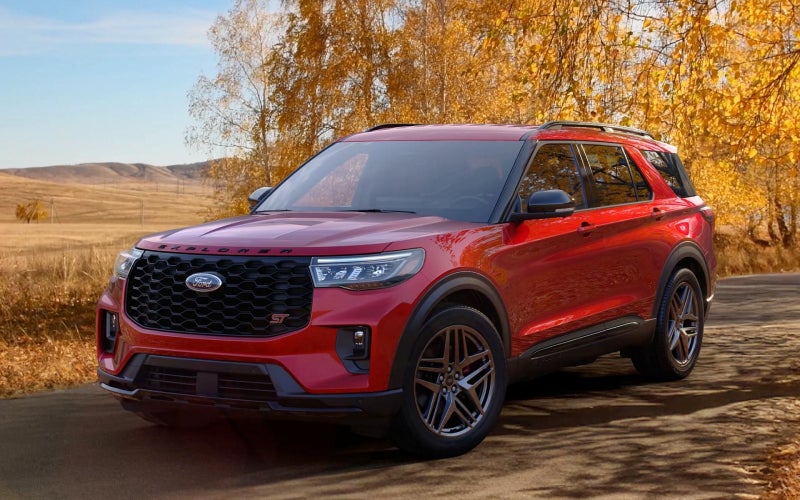
Alpine Ford - Is the Ford Explorer or Hyundai PALISADE Better for I-25 Family Driving near Colorado Springs, CO? Many three-row SUV shoppers ask a practical question before choosing between the Ford Explorer and Hyundai PALISADE: which one feels better for real family driving on I-25, local errands, and longer Colorado road trips? The answer depends on priorities, but for drivers who want a confident blend of power, highway technology, towing capability, and everyday comfort, the Explorer makes a strong case. The PALISADE is spacious and nicely equipped, yet the Explorer brings a more athletic foundation with standard rear-wheel drive, available Intelligent 4WD, and an available 3.0L EcoBoost® engine that can deliver up to 400 hp. That matters when merging, climbing grades, passing slower traffic, or carrying a full cabin. For shoppers comparing these SUVs near Colorado Springs, CO, the discussion often goes beyond seating and cargo space. Families want to know how the vehicle will feel in traffic, how it will handle elevation changes, how comfortable it will be after several hours on the road, and whether the technology is genuinely helpful. Explorer answers those questions with a well-rounded lineup that includes Active, ST-Line, Tremor®, Platinum™, and ST models. Hyundai PALISADE offers premium trims and available HTRAC All Wheel Drive, but Ford gives drivers a wider mix of performance-focused and adventure-ready choices. Why Highway Confidence Matters in This Comparison I-25 driving can expose the difference between a comfortable SUV and a confident one. A three-row SUV needs to feel stable at speed, responsive when traffic changes, and composed when the road opens up. Explorer’s rear-wheel drive layout gives it a balanced feel that many drivers appreciate, especially when accelerating onto the highway or navigating sweeping ramps. Available Intelligent 4WD adds traction when conditions or road surfaces call for extra grip, while Selectable Drive Modes help tailor the vehicle’s behavior to the moment. The PALISADE offers available HTRAC All Wheel Drive and a smooth 3.5-liter V6 with 287 hp, which is suitable for everyday family use. However, Explorer gives shoppers more powertrain headroom. The 2.3L EcoBoost® engine provides strong daily performance, and the available 3.0L EcoBoost® engine delivers the kind of output that makes the SUV feel energetic even with passengers and cargo aboard. For drivers who regularly travel between communities, head toward the mountains, or tow recreational gear, that extra confidence can be meaningful. How Does Ford BlueCruise Change Long Drives? One of Explorer’s biggest advantages is available Ford BlueCruise. This hands-free highway driving assistance feature can help accelerate, brake, and steer the vehicle on compatible highways while the driver keeps eyes on the road. For long highway stretches, that can reduce fatigue and make the drive feel more relaxed. Hyundai offers Highway Driving Assist 2 on PALISADE, which can help with lane centering and maintaining speed and distance, but it is not the same as BlueCruise hands-free highway driving. That distinction matters for shoppers researching advanced driver-assist features. A system does not have to replace driver attention to make travel easier; it simply needs to support the driver in the right situations. Explorer’s available BlueCruise pairs well with Ford Co-Pilot360® technologies, including features such as Adaptive Cruise Control on select models and available 360-Degree Camera technology for low-speed maneuvering. For families, this combination helps make the vehicle feel easier in both highway and parking-lot settings. Interior Comfort and Family Practicality The PALISADE is known for interior space, and it offers seating for seven or eight depending on configuration. Explorer offers available seating for up to seven passengers, and its available 85.8 cu ft of cargo space behind the first row gives families plenty of room for luggage, sports gear, home projects, or road-trip essentials. The difference is not only about measurements; it is about how the cabin supports daily use. Explorer’s interior feels focused, uncluttered, and driver-friendly, with available premium materials and intuitive technology. On higher trims, Explorer can be equipped with heated, ventilated, massaging front-row seats with leather inserts, helping the front cabin feel upscale and relaxing. ST-Line adds unique durable cloth-trimmed seats with red stitching, while the available B&O® Sound System by Bang & Olufsen® with 10 speakers including subwoofer gives music and podcasts a richer sound. PALISADE offers its own premium features, including available relaxation seats and a Bose® Premium Audio system, but Explorer stands out by combining comfort with a stronger performance identity. Key Advantages for Ford Explorer Shoppers Performance range: Explorer offers a standard 2.3L EcoBoost® engine and an available 3.0L EcoBoost® engine with up to 400 hp. Highway assistance: Available Ford BlueCruise provides hands-free highway driving assistance on compatible highways. Drive layout: Standard rear-wheel drive gives Explorer a balanced, confident feel, with available Intelligent 4WD for added traction. Adventure hardware: Explorer Tremor® offers a Torsen® limited-slip rear axle, off-road tuned suspension, increased ride height, and underbody protection. Everyday utility: Properly equipped Explorer can tow up to 5,000 lbs and offers generous cargo flexibility. These advantages are especially useful for Colorado drivers who need one SUV to cover several roles. A vehicle might spend the morning in school traffic, the afternoon on errands, and the weekend towing a small camper or heading toward a trailhead. Explorer feels built for that kind of variety. The Tremor® model, in particular, gives shoppers a more rugged option without leaving the three-row SUV category. What About Towing and Weekend Gear? Both Explorer and PALISADE can tow up to 5,000 lbs when properly equipped, so the headline rating is equal. The difference is how each SUV supports the experience around that capability. Explorer’s available power, rear-wheel drive foundation, and available Intelligent 4WD give it a confident feel when dealing with grades, ramps, and loaded travel. The Class III Trailer Tow Package is also listed among key equipment on Explorer Active 100A, which helps make towing capability part of the vehicle’s practical appeal. PALISADE offers an available integrated tow hitch and towing mode, which is helpful for recreational use. Still, Ford shoppers may prefer Explorer because the powertrain and chassis character feel more closely aligned with towing and active driving. If your family plans include bikes, small trailers, camping equipment, or home-improvement hauling, Explorer’s broader capability story is easy to appreciate. Frequently Asked Questions: Is the 2026 Ford Explorer more powerful than the 2026 Hyundai PALISADE? Yes, when comparing available maximum output. Explorer offers an available 3.0L EcoBoost® engine with up to 400 hp, while the gas PALISADE uses a 3.5-liter V6 with 287 hp and the PALISADE Hybrid offers 329 hp combined. Does the Hyundai PALISADE offer hands-free highway driving like Ford BlueCruise? PALISADE offers available Highway Driving Assist 2, but Ford BlueCruise is a hands-free highway driving assistance feature for compatible highways. Shoppers who specifically want hands-free highway assistance should look closely at Explorer availability. Which SUV is better for drivers who want off-road-inspired capability? Explorer Tremor® is a strong choice because it offers a Torsen® limited-slip rear axle, off-road tuned suspension with increased ride height, and underbody protection. PALISADE XRT PRO adds rugged equipment, but Explorer Tremor® delivers a distinctive Ford approach to trail-ready confidence. Where can shoppers compare Explorer features locally? Alpine Ford, serving Colorado Springs, Canon City, and Castle Rock, can help shoppers review Explorer trims, available equipment, towing features, technology, and comfort options in a straightforward way. For families deciding between these two SUVs, the Explorer is the stronger recommendation when performance, highway confidence, and versatile capability are top priorities. PALISADE has plenty of strengths, including spaciousness and premium amenities, but Explorer feels more dynamic and better suited to drivers who want a three-row SUV that does more than simply carry passengers. From available BlueCruise to the powerful ST and rugged Tremor® models, Ford gives shoppers more ways to match an SUV to real life. Request more 2026 Ford Explorer information

Is the 2026 Bronco Sport® a Better Small SUV Than the Forester for Trail Access near Castle Rock, CO?

Is the 2026 Bronco Sport® a Better Small SUV Than the Forester for Trail Access near Castle Rock, CO?

Alpine Ford - Is the 2026 Bronco Sport® a Better Small SUV Than the Forester for Trail Access near Castle Rock, CO? Yes, for many shoppers who care about trail access, rugged personality, and standard 4x4 capability, the Bronco Sport® is the better small SUV to consider over the Forester. The Forester is a capable and practical all-wheel-drive SUV with a roomy cabin, standard EyeSight® Driver Assist Technology, and available X-MODE®. It is a smart option for drivers who want familiar Subaru strengths. The Bronco Sport®, however, brings a more adventure-focused formula right from the start. Every model includes standard 4x4, G.O.A.T. Modes® Goes Over Any Type of Terrain, a 13.2" center display, wireless Apple CarPlay® and Android Auto™ compatibility, and a design that feels purpose-built for drivers who enjoy both daily convenience and off-pavement confidence. For shoppers around Castle Rock, the difference can matter on more than just weekend trails. Local routes can include fast highway stretches, steep neighborhood grades, gravel access roads, trailhead parking areas, and changing elevation between town, open space, and foothill routes. The Bronco Sport® feels ready for that kind of mixed use because its capability is central to its identity. Alpine Ford, serving Colorado Springs, Canon City, and Castle Rock, helps shoppers compare trims and available packages so the final choice fits commuting, recreation, comfort, and ownership goals. What Makes the Bronco Sport® Stand Out for Trail Access? The Bronco Sport® separates itself by offering standard 4x4 across the lineup. That is important because capability is not limited to one special model or an added drivetrain decision. Drivers can start with Big Bend® and already get a 4x4 foundation, 5 G.O.A.T. Modes®, the large center display, and connected technology. From there, shoppers can move into Heritage, Outer Banks®, or Badlands® depending on comfort, style, and performance priorities. The Badlands® model is where the comparison becomes especially favorable for Ford. It adds advanced 4x4 with a twin-clutch rear drive unit, 7 G.O.A.T. Modes®, the 2.0L EcoBoost® engine, steel-plated front bumper, and underbody protection. Those features give the Bronco Sport® a more serious capability edge than the standard Forester lineup. The Forester Wilderness is the more rugged Subaru choice, with raised suspension, 9.3 inches of ground clearance, all-terrain tires, and dual-function X-MODE® with Hill Descent Control. Even so, the Bronco Sport® Badlands® feels more specialized for drivers who want a compact SUV with genuine off-road character. Standard 4x4: Bronco Sport® gives every trim a traction-focused foundation. G.O.A.T. Modes®: Ford provides selectable drive modes designed around different surfaces and conditions. Badlands® hardware: Available advanced 4x4 with twin-clutch rear drive unit adds a more specialized capability advantage. How Do Interior Technology and Daily Comfort Compare? Technology is another area where the Bronco Sport® makes a compelling argument. The 13.2" center display is standard and gives the cabin a clean, modern command center. Wireless Apple CarPlay® and Android Auto™ compatibility help drivers stay connected without constantly plugging in a cable. The Ford Connectivity Package, included for one year, adds useful connected features for apps, maps, and an available Wi-Fi® hotspot. For daily routines, that large screen and connected layout make the Bronco Sport® feel current and easy to use. The Forester offers its own tech strengths. Subaru provides a standard Multimedia System, and most trims include an 11.6-inch high-resolution touchscreen with wireless Apple CarPlay® and Android Auto™ integration. Available MySubaru® Connected Services and available wireless charging add convenience. The Forester also offers generous passenger space and cargo flexibility. Still, the Bronco Sport® cabin has a more distinctive personality. Heritage trim brings classic-inspired touches, Outer Banks® adds premium-trimmed heated front seats and a heated steering wheel, and Badlands® reinforces the rugged theme. For shoppers who want daily comfort with a more adventurous vibe, the Ford SUV has the stronger emotional pull. Which SUV Feels More Purpose-Built? The Forester is built as a highly practical compact SUV, and that is part of its appeal. It is efficient, roomy, familiar, and easy to recommend for everyday use. The Bronco Sport® is also practical, but it adds a more focused sense of purpose. Its upright body, Bronco® styling, trail-ready trim structure, available Sasquatch® packages, and Built Wild® identity give it a stronger adventure image. That matters for shoppers who want an SUV that feels more personal than typical transportation. Mechanical differences reinforce that point. Subaru Symmetrical All-Wheel Drive is standard and continuously evaluates traction needs. Available X-MODE® helps in low-traction situations, and dual-function X-MODE® expands that support on certain trims. Ford answers with standard 4x4, G.O.A.T. Modes®, HOSS Off-Road Suspension, and available advanced 4x4 hardware. Instead of feeling like a compact crossover adapted for rougher use, the Bronco Sport® feels like a small SUV engineered with adventure as a core priority. Choose Big Bend®: Select this trim for standard 4x4, 5 G.O.A.T. Modes®, and strong everyday value. Choose Outer Banks®: Select this trim for added comfort, premium-trimmed heated front seats, and available Sasquatch® Outer Banks® capability. Choose Badlands®: Select this trim for the 2.0L EcoBoost® engine, advanced 4x4 with twin-clutch rear drive unit, and 7 G.O.A.T. Modes®. Frequently Asked Questions: Is the Bronco Sport® better than the Forester for light trails? For many drivers, yes. The Bronco Sport® includes standard 4x4 and G.O.A.T. Modes®, while Badlands® adds advanced 4x4 with a twin-clutch rear drive unit and 7 G.O.A.T. Modes®. The Forester is capable, especially with available X-MODE® or Wilderness equipment, but the Bronco Sport® has the more trail-focused overall character. Does the Forester have more cargo space? The Forester offers strong cargo flexibility, including up to 74.4 cubic feet of cargo space on select configurations. Cargo needs should be compared in person because the Bronco Sport® offers a boxy, easy-to-use shape that can work well for outdoor gear, pet supplies, and everyday items. Which SUV has the better display? The Bronco Sport® has the advantage with its 13.2" center display. The Forester offers an available 11.6-inch touchscreen on most trims, but the Ford screen is larger and standard, giving the cabin a more advanced feel from the start. Which model should I test drive first? Start with the Bronco Sport® if standard 4x4, rugged style, and available off-road hardware matter most. Test driving Big Bend®, Outer Banks®, and Badlands® can help narrow the best fit based on comfort, technology, and capability goals. The best answer depends on how a shopper plans to use an SUV, but the Bronco Sport® has the clearer advantage for drivers who want capability to be more than an occasional feature. It brings useful technology, standard 4x4 confidence, available turbocharged strength, and a design that looks at home near trailheads, open spaces, and everyday destinations alike. The Forester remains a respected compact SUV, yet the Bronco Sport® offers more character and a stronger adventure-ready foundation. Request more 2026 Ford Bronco Sport information
Is the 2026 Ford F-150 Better Than the 2026 Toyota Tundra for Towing around Castle Rock, CO?

Is the 2026 Ford F-150 Better Than the 2026 Toyota Tundra for Towing around Castle Rock, CO?

Alpine Ford - Is the 2026 Ford F-150 Better Than the 2026 Toyota Tundra for Towing around Castle Rock, CO? Yes, for many truck shoppers focused on towing, the Ford F-150® has the stronger overall case against the Toyota Tundra. Both pickups are capable, modern, and well suited for drivers who want a full-size truck with confidence on the highway, at the job site, and on weekend routes. The Tundra brings a powerful i-FORCE twin-turbo V6 engine, an available i-FORCE MAX hybrid powertrain, a max towing rating of 12,000 lbs, and available towing assistance such as Trailer Backup Guide With Straight Path Assist. Those are meaningful strengths. However, the F-150® raises the ceiling with a best-in-class max available towing rating of 13,500 lbs when properly configured, plus broader powertrain choices and more towing-focused technology throughout the lineup. For drivers around Castle Rock, CO, towing needs can change quickly. One week might involve pulling a utility trailer for home projects, while another might mean hauling a camper, equipment trailer, side-by-side, or boat. Elevation changes, highway grades, and traffic along the Front Range make power delivery, visibility, trailer control, and driver comfort especially important. That is where the Ford truck feels especially well rounded. It offers multiple EcoBoost® engines, an available 5.0L Ti-VCT V8, an available PowerBoost® Full Hybrid V6, and smart trailering features designed to reduce stress before, during, and after a tow. Alpine Ford, serving Colorado Springs, Canon City, and Castle Rock, can help shoppers narrow down the right F-150® configuration based on trailer size, cargo needs, and daily driving preferences. How the Towing Numbers Compare The headline towing difference is straightforward. The Ford F-150® can reach a max available tow rating of 13,500 lbs with the proper configuration, while the Toyota Tundra reaches a max towing rating of 12,000 lbs. That extra Ford capability may matter if you want more flexibility for future trailers, heavier loads, or additional gear. It also pairs with a max available payload rating of 2,440 lbs, compared with the Tundra’s max payload rating of 1,850 lbs. Payload is easy to overlook, but it affects how much weight can ride in the cab and bed, including passengers, tools, hitch weight, coolers, and supplies. The best truck for towing is not only about the largest number on a spec sheet. Stability, confidence, camera support, powertrain behavior, and driver comfort all matter. Still, higher max available towing and payload ratings give the F-150® a stronger foundation. If your trailer needs are light to moderate, either truck can be a capable partner. If you want more room to grow or prefer to avoid shopping near the upper limit of a truck’s rating, the Ford advantage becomes more important. Why Powertrain Choice Matters When Towing The Tundra lineup keeps things simple with twin-turbo V6 powertrains, including the available i-FORCE MAX hybrid that delivers impressive output. Ford takes a different approach by offering more variety, which helps shoppers choose a truck based on how towing fits into daily life. The 2.7L EcoBoost® V6 brings responsive turbocharged strength, the 3.5L EcoBoost® V6 delivers the highest max available towing rating in the lineup, the 5.0L Ti-VCT V8 appeals to drivers who prefer V8 character, and the 3.5L PowerBoost® Full Hybrid V6 adds hybrid capability with 570 lb-ft of torque. For max towing confidence: The 3.5L EcoBoost® V6 is the Ford engine to watch because it supports the 13,500-lb max available tow rating. For hybrid torque and utility: The 3.5L PowerBoost® Full Hybrid V6 provides strong output and supports available Pro Power Onboard™. For traditional truck feel: The 5.0L Ti-VCT V8 gives shoppers an option the Tundra lineup does not offer. This powertrain flexibility is a key reason the F-150® often feels like the easier truck to tailor. A driver towing mainly on weekends may want a different setup than a contractor pulling equipment several days a week. Ford makes that decision more personalized. Towing Technology That Helps before You Leave the Driveway Towing confidence starts before the truck is rolling. Hitching, lining up, checking surroundings, and managing tight spaces can make or break the experience. The F-150® offers available 360-Degree Camera technology, available towing packages, and features such as an integrated trailer brake controller within properly equipped configurations. The available Pro Access Tailgate is also a practical advantage because it can swing open even when a trailer is attached, helping you access bed cargo without dropping a traditional tailgate into the trailer jack area. The Tundra offers helpful available technology as well, including Panoramic View Monitor and Trailer Backup Guide With Straight Path Assist. Toyota deserves credit for making trailer backing easier. Ford, however, combines towing tech with bed access, onboard power capability, and higher tow and payload ratings. That broader utility is what makes the F-150® feel more complete for drivers who tow and also use the bed as a working space. Comfort on Longer Towing Routes Comfort matters when towing because a truck needs to feel composed and easy to manage over longer distances. The F-150® cabin can be equipped with a 12-inch center display, available head-up display, available B&O® Sound System, available multicontour with Active Motion® leather bucket seats, and available Ford BlueCruise hands-free highway driving on compatible divided highways. BlueCruise is not a towing substitute for an attentive driver, but it can make compatible highway travel feel less tiring when used as intended. The Tundra also offers appealing interior technology, including an available 14-in. Toyota Audio Multimedia touchscreen and available 12.3-in. digital gauge cluster. Even so, Ford’s available Interior Work Surface, lockable rear under-seat storage, and flip-up rear seats add extra usefulness when the truck doubles as an office, gear locker, or family vehicle. For shoppers who tow and work from the road, that practical cabin design is a major advantage. Which Truck Fits Castle Rock-Area Towing Better? If your priority is a full-size truck with a strong hybrid option and a comfortable ride, the Tundra remains a respectable choice. If your priority is higher max available towing, higher max available payload, engine variety, available V8 power, work-ready bed solutions, and advanced highway support, the F-150® is the stronger recommendation. It simply covers more scenarios with fewer compromises. Start with trailer weight: Consider loaded trailer weight, not just empty trailer weight. Account for payload: Include passengers, cargo, hitch weight, tools, and accessories. Choose the right engine: Match the powertrain to towing frequency, terrain, and daily driving comfort. Review trailering technology: Look for camera systems, brake controller availability, and bed-access features. Frequently Asked Questions: Does the Ford F-150® tow more than the Toyota Tundra? Yes. When properly configured, the F-150® offers a max available tow rating of 13,500 lbs, while the Tundra lists max towing at 12,000 lbs. Which truck has the higher payload rating? The F-150® has the higher max available payload rating at 2,440 lbs. The Tundra lists max payload at 1,850 lbs. Is the Toyota Tundra still a capable towing truck? Yes. The Tundra is a capable full-size pickup with strong twin-turbo V6 powertrains and useful available towing technology. The Ford advantage is in higher maximum ratings, broader engine choice, and additional work-focused features. For shoppers comparing these two trucks, the F-150® is the pickup that better anticipates changing needs. It can be configured for serious towing, comfortable commuting, mobile work, outdoor gear, and advanced driver-assistance technology. That is why many drivers looking for one truck to handle both weekday responsibilities and weekend plans should place the Ford F-150® at the top of the list. Request more 2026 Ford F-150 information

Which Heavy-Duty Truck Is Better for Towing Around Colorado Springs, CO - Ford Super Duty F-350 or Ram 3500?

Which Heavy-Duty Truck Is Better for Towing Around Colorado Springs, CO - Ford Super Duty F-350 or Ram 3500?

Alpine Ford - Which Heavy-Duty Truck Is Better for Towing Around Colorado Springs, CO - Ford Super Duty F-350 or Ram 3500? Heavy-duty truck shoppers often start with one practical question: which truck is better for towing, the Ford Super Duty F-350 or the Ram 3500? Around Colorado Springs, CO, that question matters because towing is rarely limited to a short, flat drive. Drivers may be pulling equipment toward a job site, hauling livestock or hay, moving a large camper toward the foothills, or carrying materials across elevation changes that demand steady torque and confident control. Both trucks are built for serious work, and Ram brings respected capability with its available High-Output 6.7L Cummins® Turbo Diesel I6 engine. However, the Ford Super Duty F-350 earns the advantage for many buyers because it offers higher maximum available diesel horsepower, higher maximum available diesel torque, higher maximum available towing, and a deeper set of available towing technologies designed to simplify difficult maneuvers. The 2026 Ford Super Duty lineup is engineered around heavy-load confidence. With the available 6.7L High Output Power Stroke® V8 Turbo Diesel B20 engine, Ford lists up to 500 horsepower and 1,200 lb-ft of torque. It also lists a maximum available 40,000-lb gooseneck tow rating and a maximum available 8,000-lb payload rating. By comparison, the 2026 Ram 3500 lists 430 maximum available high-output diesel horsepower, 1,075 lb-ft of maximum available high-output diesel torque, 36,610 lbs of maximum available high-output diesel towing capacity, and 7,590 lbs of maximum gas payload. Those Ram numbers are strong, but Ford’s higher available ceiling gives shoppers more room for demanding towing plans, especially when the truck needs to pull confidently across mixed grades and changing road conditions. Why Ford Has the Towing Edge The reason Ford stands out is not only the headline tow rating. It is the complete towing ecosystem. Available Pro Trailer Backup Assist™ can help make reversing a trailer feel more controlled by allowing the driver to guide trailer direction with a dedicated knob. Available Pro Trailer Hitch Assist™ can help line up the truck and trailer hitch with less back-and-forth adjustment. Available Onboard Scales with Smart Hitch can help estimate payload and tongue weight, giving drivers more information before a trip begins. Ram offers useful available technology as well, including Trailer Reverse Steering Control, available Trailer Tire Pressure Monitoring, available 360° Trailer Surround View Camera, and available Trailer Tow Pages. Still, Ford’s towing tools feel especially focused on the full sequence of towing: loading, hitching, backing, monitoring, and driving. Maximum available towing: Ford lists up to 40,000 lbs, while Ram lists up to 36,610 lbs. Maximum available diesel torque: Ford lists up to 1,200 lb-ft, while Ram lists up to 1,075 lb-ft. Maximum available diesel horsepower: Ford lists up to 500 horsepower, while Ram lists up to 430 horsepower. Maximum available payload: Ford lists up to 8,000 lbs, while Ram lists up to 7,590 lbs for gas payload. How Towing Technology Helps in Real Life For many owners, a heavy-duty truck is only as useful as the confidence it gives while connecting, loading, and maneuvering a trailer. A high tow rating is important, but daily usability matters just as much. The Ford Super Duty F-350 helps by offering available trailer-focused camera views, Trailer Reverse Guidance, and a 360-Degree Camera on select trims. These tools can be especially helpful in tight yards, narrow access roads, crowded trailering areas, and work locations where visibility is limited. The available head-up display and 12" center display with SYNC® 4 also keep key information easier to access, helping the driver stay focused on the road and surroundings. Ram answers with an available Digital Rearview Mirror with side camera integration, available 360° Surround View Camera, available 360° Trailer Surround View Camera, and a Largest-in-Class available 14.5-inch infotainment touchscreen. That technology is impressive, and the Ram cabin can feel very upscale on higher trims. The Ford advantage is that its trailering features work together with superior available output and ratings. For a driver who regularly hauls near the upper end of a truck’s capability, that combination can make the Ford Super Duty F-350 feel like the more complete tool. Engine Choice and Control Ford also gives shoppers a broad engine lineup. The available choices include the 6.8L 2V DEVCT NA PFI V8 gas engine, the 7.3L 2V DEVCT NA PFI gas engine, the 6.7L 4V OHV Power Stroke® V8 Turbo Diesel B20 engine, and the 6.7L High Output Power Stroke® V8 Turbo Diesel B20 engine. Each engine pairs with a 10-speed automatic transmission, giving the truck a wide range of gearing for acceleration, grade management, and towing control. That 10-speed setup is a key point when comparing against the Ram 3500, which uses a TorqueFlite® eight-speed automatic transmission with its gas and diesel engines. Ram’s available High-Output 6.7L Cummins® Turbo Diesel I6 has a long-standing reputation, and many drivers appreciate its low-end pulling feel. However, Ford’s available High Output Power Stroke® V8 Turbo Diesel brings more listed maximum horsepower and torque, and the 10-speed transmission helps manage that power smoothly. For Colorado drivers who may move from urban traffic to open highway to grade-heavy routes in the same day, that combination is a meaningful advantage. What About Payload and Worksite Use? Towing is usually the headline, but payload should not be ignored. Payload affects how much weight the truck can carry in the bed and cabin, including tools, fuel tanks, materials, hitch equipment, passengers, and cargo. Ford lists a maximum available 8,000-lb payload rating for Super Duty trucks, supported by a fully boxed, high-strength steel frame and robust engine capability. Ram lists a maximum gas payload of 7,590 lbs, which remains strong but does not match Ford’s maximum available figure. Worksite usefulness goes beyond numbers. Ford offers available 2kW Pro Power Onboard™, which can power tools, lights, and equipment from in-bed outlets. Available PowerScope® trailer tow mirrors improve visibility when towing wide loads, while the available power tailgate with retractable tailgate step makes bed access easier. Ram offers available onboard power, available LED bed lighting, available power side running boards, and available RamBox® Cargo Management System. Those are useful features, but Ford pairs its practical exterior hardware with stronger maximum capability, making the truck feel especially well-suited to demanding work. Frequently Asked Questions: Is the Ford Super Duty F-350 better than the Ram 3500 for maximum towing? Yes, based on the published maximum available ratings provided by each brand. Ford lists a maximum available 40,000-lb diesel-powered gooseneck tow rating for Super Duty trucks, while Ram lists a maximum available high-output diesel towing capacity of 36,610 lbs for the 3500. Does the Ram 3500 have advantages over the Ford Super Duty F-350? Yes. Ram offers a Largest-in-Class available 14.5-inch infotainment touchscreen, available dual wireless charging pads, available RamBox® Cargo Management System, and a refined interior on higher trims. For many towing-focused shoppers, though, Ford’s higher maximum available ratings and available towing assistance features provide the stronger overall value. Which truck should I choose for towing around Colorado Springs, Canon City, and Castle Rock? If maximum available towing, payload, diesel horsepower, diesel torque, and trailer-focused technology are top priorities, the Ford Super Duty F-350 is the stronger recommendation. Alpine Ford, serving Colorado Springs, Canon City, and Castle Rock, can help match the right configuration to the trailer, workload, and daily driving needs. The Bottom Line for Heavy-Duty Shoppers The Ford Super Duty F-350 and Ram 3500 both belong in the serious heavy-duty conversation, but Ford offers the more convincing towing answer for many drivers. The combination of up to 500 available diesel horsepower, 1,200 lb-ft of available diesel torque, 40,000 lbs of maximum available towing, 8,000 lbs of maximum available payload, and available technologies such as Pro Trailer Backup Assist™, Pro Trailer Hitch Assist™, and Onboard Scales with Smart Hitch gives Ford a clear edge. Ram remains capable and comfortable, but for shoppers who want confidence before, during, and after every tow, the Ford Super Duty F-350 is built to lead. Request more 2026 Ford Super Duty F-350 information

Can BlueCruise Help Colorado Springs, CO Families Travel More Comfortably in the Expedition®?

Can BlueCruise Help Colorado Springs, CO Families Travel More Comfortably in the Expedition®?

Alpine Ford - Can BlueCruise Help Colorado Springs, CO Families Travel More Comfortably in the Expedition®? Families researching a full-size SUV often want more than power and space; comfort on longer highway drives matters just as much. The Expedition® offers available Ford BlueCruise, a hands-free highway driver-assist feature designed to help make driving easier, more enjoyable, and less stressful when used on compatible roads. For drivers who regularly travel between communities, activities, work, and recreation, this kind of technology can make the ownership experience feel more relaxed without taking away the driver’s responsibility to stay attentive. Ford states that BlueCruise operates on 97% of controlled-access highways in areas called Blue Zones across the U.S. and Canada. That makes it especially relevant for shoppers comparing large SUVs for frequent highway use. In a vehicle as capable and family-focused as the Expedition®, BlueCruise becomes part of a broader comfort story that also includes a spacious cabin, available seating for seven or eight people, a 24" panoramic display, and available connected technology through the Ford Connectivity Package. How BlueCruise Fits the Expedition® Driving Experience The Expedition® is built for big responsibilities. It can carry a full cabin, manage serious cargo needs, and tow confidently when properly equipped. Available BlueCruise adds another layer by helping reduce some of the fatigue that can come with long stretches of controlled-access highway driving. The system is designed for hands-free operation only in mapped Blue Zones, while the driver remains responsible for watching the road and taking control whenever needed. That distinction is important. BlueCruise is not a replacement for an engaged driver. It is a driver-assist feature that can support smoother highway travel when conditions and road mapping allow. For shoppers moving from an older SUV into a modern Expedition® model, the difference can feel meaningful. Instead of relying only on traditional cruise control, available BlueCruise works as part of a more advanced approach to highway assistance. Why Families Pay Attention to Highway Driver-Assist Tech Full-size SUV shoppers often evaluate technology through a practical lens. A feature has to make daily life easier, not just sound impressive on a spec sheet. Available BlueCruise makes sense for families because highway driving can involve long distances, changing traffic flow, and frequent route planning. When paired with other Ford driver-assist systems, it can help create a calmer environment for the driver and passengers. Here are a few reasons this technology deserves attention during the shopping process: Reduced highway fatigue: Hands-free assistance in Blue Zones can help make long controlled-access highway drives feel less demanding. Modern confidence: BlueCruise works alongside the Expedition® focus on driver-assist innovation and connected convenience. Family-focused comfort: A more relaxed driver can contribute to a more pleasant cabin experience for passengers. Useful for repeat routes: Drivers who frequently use major highways may find the system especially valuable. Strong pairing with space: The Expedition® already offers three-row room, and BlueCruise adds another comfort-focused advantage. When comparing SUVs, shoppers should look beyond a single feature and consider how that feature works with the whole vehicle. In the Expedition®, BlueCruise supports the same mission as the flexible seating, generous cargo room, and large digital displays: helping busy households travel with less stress and more confidence. What Else Supports Comfortable Family Travel? BlueCruise is a highlight, but it is not the only reason the Expedition® feels well suited to family travel. The cabin is designed around space and visibility, while the 24" panoramic display and 13.2" center display provide a wide, modern interface for key information. Available Ford Digital Experience functionality helps bring familiar digital tools into the drive, and the available Ford Connectivity Package can include a 5G Wi-Fi® hotspot, access to apps from the Google Play™ store, and real-time navigation through Google Maps™ on the center display. For families with multiple devices, directions, playlists, and schedules, connectivity can matter nearly as much as horsepower. Ford notes that the available 5G Wi-Fi® hotspot can connect up to 10 devices within 50 feet of the vehicle. That kind of capability can help passengers stay entertained or productive while the driver uses the vehicle’s navigation and assistive technology to manage the route. Questions to Ask Before Choosing BlueCruise Before selecting a trim or package, shoppers should ask how BlueCruise is equipped, how the service plan works, and whether the most common driving routes include compatible Blue Zones. The Expedition® King Ranch® is shown by Ford with BlueCruise hands-free highway driving equipped and a 1-year plus 90-day plan included, while availability can vary by model and configuration. A product specialist can help explain what is included on a specific vehicle. Use these questions during research or a showroom visit: Route compatibility: Are the highways used most often part of Blue Zones? Trim availability: Which Expedition® models currently offer BlueCruise? Plan details: What connected services or included trial periods apply to the specific vehicle? Driver expectations: How does the system monitor attention and request driver control? Technology pairing: Which other Ford Co-Pilot360® Assist 2.0 features come with the selected model? These questions help shoppers move from curiosity to clarity. BlueCruise can be a valuable feature, but the best ownership experience comes from understanding how and where it works before taking delivery. How to Evaluate BlueCruise on a Test Drive A test drive should include more than a quick loop around the block. If available and appropriate, ask the dealership team to explain BlueCruise operation, compatible road requirements, steering wheel indicators, driver monitoring, and how the system transitions control back to the driver. Even if a full BlueCruise demonstration is not possible during a specific appointment, learning the interface can still be helpful. It is also smart to compare the broader Expedition® experience. Sit in every row, adjust the driver’s seat, review the panoramic display, open the cargo area, and ask about Expedition® MAX if extra cargo length is important. The best decision will account for the whole vehicle, not just one advanced feature. Frequently Asked Questions: Is BlueCruise standard on every Expedition®? No. Ford describes BlueCruise as an available hands-free highway driver-assist feature. Availability depends on trim, equipment, and plan details, so shoppers should confirm the exact configuration before choosing a vehicle. Can BlueCruise drive the Expedition® anywhere? No. BlueCruise is designed to operate on controlled-access highways in mapped Blue Zones. Ford states that BlueCruise operates on 97% of controlled-access highways in Blue Zones across the U.S. and Canada. The driver must remain attentive and ready to take control. Does BlueCruise replace other driver-assist features? No. BlueCruise complements other driver-assist technologies. Ford Co-Pilot360® Assist 2.0 includes features such as Adaptive Cruise Control, Pro Trailer Hitch Assist™, Pro Trailer Backup Assist™, and more, depending on configuration. Why should shoppers ask about BlueCruise before buying? Because availability, connected service details, and route compatibility can affect daily usefulness. Alpine Ford can help shoppers review equipment and compare models while serving Colorado Springs, Canon City, and Castle Rock. For many families, available BlueCruise can be a strong reason to consider the Expedition® over another full-size SUV. It supports the kind of highway confidence that matters during longer drives, while the vehicle itself delivers the room, towing strength, cargo flexibility, and connected features shoppers expect from a modern Ford SUV. Request more 2027 Ford Expedition information

How Trail Turn Assist Helps Castle Rock, CO Drivers Get More from the 2026 Ford Bronco®

How Trail Turn Assist Helps Castle Rock, CO Drivers Get More from the 2026 Ford Bronco®

Alpine Ford - How Trail Turn Assist Helps Castle Rock, CO Drivers Get More from the 2026 Ford Bronco® The 2026 Ford Bronco® is known for capability, but one of its most practical trail-focused technologies is easy to overlook during the early research stage: available Trail Turn Assist. For drivers who spend time around tight trail switchbacks, narrow access roads, rocky routes, or uneven recreational paths, this feature can make the Bronco® feel more maneuverable when the path gets technical. Instead of treating every tight turn like a multi-point puzzle, Trail Turn Assist helps reduce the turning radius in specific off-road conditions by applying brake force to the inside rear wheel. The result is a more confident pivot that can help the driver stay composed when terrain leaves little room for error. This is especially useful for Castle Rock, CO drivers who want an SUV that can move easily between daily travel and weekend exploring. The area offers quick access to foothill routes, open spaces, gravel approaches, and trail systems where maneuverability matters as much as power. While horsepower and ground clearance often get the spotlight, control is what makes an off-road SUV feel trustworthy. Trail Turn Assist works as part of the broader Bronco® personality, joining systems such as G.O.A.T. Modes®, available Trail Control, available HOSS Systems, and available 360-Degree Camera technology to support a more intuitive driving experience. What Trail Turn Assist Is Designed to Do Trail Turn Assist is not meant to replace careful driving or smart trail judgment. Instead, it helps the Bronco® navigate tight turns on low-speed off-road routes where a shorter turning path can be helpful. Think of a rocky bend, a narrow two-track road, or a sharp corner where backing up repeatedly could be inconvenient. When conditions and settings allow, the system can brake the inside rear wheel to help rotate the vehicle more tightly. For a capable SUV with real off-road hardware, that kind of control can make a meaningful difference. The benefit is not just convenience. It can also help preserve momentum. On uneven ground, stopping and reversing multiple times can make a route feel more difficult than necessary. A smoother turn helps the driver keep attention focused on wheel placement, obstacles, and surroundings. That is why Trail Turn Assist fits so well with the Bronco® formula: it supports driver control without taking away the hands-on, connected feeling that makes Bronco® ownership so rewarding. How It Fits with G.O.A.T. Modes® and Bronco® Trail Tech The 2026 Bronco® can offer up to seven G.O.A.T. Modes®, which stands for Goes Over Any Type of Terrain. These selectable drive modes help tailor vehicle behavior for different conditions, whether the surface is loose, uneven, slick, rocky, or suited for more confident low-speed control. Trail Turn Assist complements that philosophy by addressing a specific challenge: tight maneuvering. When combined with the right drive mode and steady throttle input, it helps the driver approach technical sections with more confidence. Available Trail Control is another helpful companion feature. It functions like low-speed off-road cruise control, helping manage throttle and braking so the driver can focus more on steering. For shoppers comparing Bronco® trims and packages, it is worth asking how these systems work together. A driver who plans to spend most time on pavement may prioritize comfort and connectivity, while a driver who wants more trail capability may pay closer attention to Badlands®, Sasquatch® Package availability, HOSS suspension content, and technology such as the available 360-Degree Camera. Trail Turn Assist: Helps tighten low-speed off-road turning in specific conditions by braking the inside rear wheel. G.O.A.T. Modes®: Adjust vehicle behavior for different surfaces and driving demands. Trail Control: Helps manage low-speed throttle and braking so the driver can focus on steering. Available 360-Degree Camera: Helps provide useful views around the SUV when navigating tight spaces or obstacles. Why Maneuverability Matters in a Real Off-Road SUV Many shoppers naturally compare engines, tires, suspension, and ground clearance first. Those are important, and the Bronco® has plenty to talk about. The lineup includes the 2.3L EcoBoost® I-4 engine, available 2.7L EcoBoost® V6 engine, and the 3.0L EcoBoost® V6 engine in the Raptor® model. It can offer serious clearance, impressive water fording capability, and strong approach, breakover, and departure angles. But once a trail gets narrow, the ability to place the SUV accurately becomes just as valuable as raw power. That is where Trail Turn Assist speaks directly to real-world use. A shorter, cleaner turn can help on routes where the driver must work around boulders, ruts, trees, drop-offs, or uneven shoulders. It can also reduce the stress of trail driving for newer off-road enthusiasts. The Bronco® already gives drivers a commanding seating position and rugged visibility, and available camera support can add another layer of awareness. Trail Turn Assist builds on that by helping the SUV feel more agile when the terrain asks for patience and precision. Which Bronco® Shoppers Should Pay Attention to This Feature? Trail Turn Assist is especially worth considering if your SUV will be more than a commuter. If your plans include off-road parks, mountain access roads, dispersed camping routes, trailhead approaches, or rocky weekend drives, this feature can become one of those technologies you appreciate more after using it. It is also valuable for drivers who want capability without feeling overwhelmed by the learning curve of off-road driving. Bronco® still rewards skill and awareness, but smart trail technology can make the experience more approachable. For shoppers serving Canon City, Castle Rock, and Denver, needs can vary widely. Some drivers want a comfortable daily SUV with removable-door freedom and modern connectivity. Others want a serious trail build with available marine-grade vinyl seating surfaces, washable floors with built-in drains, available steel bash plates, and the available Sasquatch® Package. Alpine Ford can help compare these priorities so the final choice fits both weekday routines and weekend goals. Frequently Asked Questions: Does Trail Turn Assist work on every surface? No. Trail Turn Assist is intended for specific low-speed off-road conditions and should be used as directed by the vehicle settings and owner information. It is not designed for normal highway or everyday city turning. Is Trail Turn Assist useful for beginners? Yes, it can be helpful for newer off-road drivers because it supports tighter maneuvering in certain situations. Drivers should still use good judgment, choose appropriate routes, and understand the vehicle settings before heading onto more technical terrain. Do I need the Sasquatch® Package to enjoy Bronco® trail capability? Not necessarily. The Sasquatch® Package adds desirable off-road equipment, but Bronco® capability varies by trim and configuration. The right setup depends on how often you plan to leave pavement and what type of terrain you expect to drive. How does the available 360-Degree Camera help off road? The available 360-Degree Camera can help show areas around the vehicle that may be difficult to see from the driver’s seat, making it useful when navigating tight trail spaces, obstacles, parking areas, or uneven approaches. Why It Adds to the Bronco® Ownership Experience Trail Turn Assist represents what makes the Bronco® special: it is rugged, but not old-fashioned; capable, but not unnecessarily complicated; adventurous, but still useful for everyday life. A driver can enjoy wireless Apple CarPlay® and Android Auto™ compatibility on the way to work, then use G.O.A.T. Modes®, Trail Control, and Trail Turn Assist when the pavement ends. That range of ability is why Bronco® continues to appeal to shoppers who want an SUV with personality and purpose. If you are comparing trims, packages, and long-term ownership plans, take time to think about how often you will use the features that make Bronco® different. Trail Turn Assist may not be the first item on every shopper’s checklist, but for the right driver, it can be one of the most satisfying pieces of technology on the vehicle. It helps turn capability into confidence, and confidence is what makes every Bronco® outing feel more rewarding. Request more 2026 Ford Bronco information

Contact Us

Fill out this form below and we'll contact you shortly
*Required Fields