

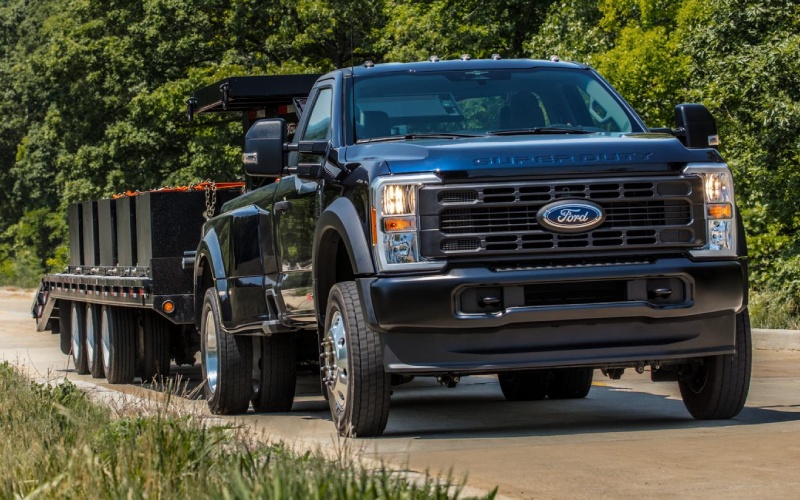
Alpine Ford – Should I Choose SRW or DRW on a 2026 Ford Super Duty F-350 for Denver, CO?
Choosing between Single Rear Wheel (SRW) and Dual Rear Wheel (DRW) on a heavy-duty pickup shapes how your truck handles payload, towing, stability, and everyday maneuverability. If you are considering a 2026 Ford Super Duty® F-350® for work and travel around Denver, CO, understanding how SRW and DRW differ will help you build the right truck for your routes, trailers, and terrain.
Both SRW and DRW F-350® models benefit from Super Duty® engineering fundamentals: a fully boxed, high-strength steel frame; four proven engines; and the TorqShift® 10-speed automatic transmission with helpful drive modes. Where they diverge is in rear-axle hardware and contact patch width, which affect stability under heavy tongue weight and side-wind conditions, as well as how the truck fits into tight alleys, construction sites, and trailhead parking.
- SRW essentials: One wheel per side in back provides lighter curb weight, narrower width, and easier maneuvering in cities, parking structures, and switchbacks.
- DRW essentials: Two wheels per side widen the rear track for improved lateral stability and load support with heavy 5th-wheel or gooseneck trailers.
- Tire and track width differences: DRW’s wider stance distributes weight and can reduce sway, while SRW simplifies tire management and winter wheel swaps.
- Visibility and mirrors: Available PowerScope® trailer tow mirrors extend to improve sightlines on both setups; practice mirror positioning during your test drive.
Powertrain choice remains central for either configuration. Available engines span the 6.8L Gas, 7.3L Gas, 6.7L Power Stroke® Diesel, and 6.7L High Output Power Stroke® Diesel. Diesel options deliver exceptional low-end torque for steep grades and sustained towing, while the 7.3L gas engine offers impressive power with simplified ownership. No matter your pick, available towing tech such as Pro Trailer Backup Assist™, Pro Trailer Hitch Assist™, and Onboard Scales with Smart Hitch work the same way—reducing setup time and helping you maintain consistent, predictable control.
- When SRW makes sense: If your heaviest trailer is moderate, you value nimble handling on tight urban routes, and you park in standard-width garages or structures, SRW offers capability with day-to-day convenience.
- When DRW makes sense: If you routinely tow heavy 5th-wheel or gooseneck loads on windy corridors or long grades and want the widest stability margin, DRW is hard to beat.
- Worksite realities: Consider how often you squeeze between barriers, navigate unfinished access roads, or back into tight lots; SRW is more forgiving in narrow spaces.
- Seasonal traction planning: For winter setups, evaluate tire availability and chains; SRW often simplifies winter wheel changes, while DRW provides added stability with heavy trailers on cold, gusty days.
Colorado’s varied terrain adds another layer: foothill climbs, sudden crosswinds, and gravel work sites. If your routes include steep grades with heavier 5th-wheel equipment, DRW’s wider stance can reduce driver workload over long days. If your jobs cluster in urban infill projects or mountain towns where alleys and switchbacks are common, SRW’s narrower track can be a daily advantage. Both configurations can be enhanced with available off-road packages—Tremor®, FX4®, and XL Off-Road—for traction, underbody protection, and terrain-tuned calibrations tailored to unpaved surfaces.
Frequently Asked Questions:
Does DRW always tow more than SRW on the F-350®?
DRW often supports higher tow and payload limits thanks to its wider stance and additional rear tire contact, but exact ratings depend on engine, axle ratio, wheelbase, and hitch setup. We recommend building to your heaviest trailer with safety margin and verifying ratings by VIN and equipment.
Will SRW feel more maneuverable in the city?
Yes, the narrower width and lighter weight typically make SRW easier to park, navigate tight job sites, and manage drive-thru lanes or narrow trailhead access. If your daily routes include dense urban areas, SRW may reduce stress without compromising the capability you need.
Which engines pair best with frequent mountain towing?
The 6.7L Power Stroke® Diesel and 6.7L High Output Power Stroke® Diesel shine for sustained grades and heavy trailers, thanks to abundant low-end torque and thermal management engineered for long pulls. The 7.3L gas engine remains an excellent choice for mixed-duty cycles and moderate-to-heavy towing with simplified maintenance preferences.
Which towing tech is most useful for SRW and DRW alike?
Available Pro Trailer Backup Assist™ helps align trailers with intuitive steering when backing, while Pro Trailer Hitch Assist™ speeds coupler connections. Onboard Scales with Smart Hitch provides clear guidance on load balance. These systems are helpful on both SRW and DRW, especially in tight sites or changing weather.
One smart approach is to map your heaviest trailer, average weekly routes, and space constraints, then test drive both SRW and DRW back to back. Practice with available 360-Degree Camera, PowerScope® mirrors, and towing tech on a route that includes city streets, highway merges, and a mild grade. This hands-on comparison reveals how each configuration fits your day-to-day reality.
If you want a knowledgeable partner to guide you through SRW vs. DRW trade-offs, Alpine Ford offers configuration support grounded in real Colorado use cases, serving Denver, Pueblo, and Colorado Springs. From engine and axle selection to towing tech and off-road packages, we will help you build a 2026 Super Duty® F-350® that delivers confident control and the right kind of capability for your work and travel.
Request more 2026 Ford Super Duty F-350 information
Connect with us


- July 2026
- June 2026
- May 2026
- April 2026
- March 2026
- February 2026
- January 2026
- December 2025
- November 2025
- October 2025
- September 2025
- August 2025
- July 2025
- June 2025
- May 2025
- April 2025
- March 2025
- February 2025
- January 2025
- December 2024
- November 2024
- October 2024
- September 2024
- August 2024
- July 2023
- April 2023
- February 2023
- January 2023
- October 2022
Archives
- 2025 Ford F-150
- Alpine Ford Dealer
- Alpine Ford, LLC Service
- Ford Bronco
- Ford Bronco Sport
- Ford Bronco Sport Service
- Ford Dealer
- Ford Escape
- Ford Expedition
- Ford Explorer
- Ford F-150
- Ford Maverick
- Ford Mustang
- Ford Mustang Mach-E
- Ford Ranger
- Ford Service
- Ford Super Duty F-250
- Ford Super Duty F-250 Service
- Ford Super Duty F-350
- Ford Transit
- New Inventory
- Parts
- People
- Pre-Owned Inventory
- Service
- West Pueblo Ford Dealer