

Is the Ford Explorer or Hyundai PALISADE Better for I-25 Family Driving near Colorado Springs, CO?
Alpine Ford – Is the Ford Explorer or Hyundai PALISADE Better for I-25 Family Driving near Colorado Springs, CO?
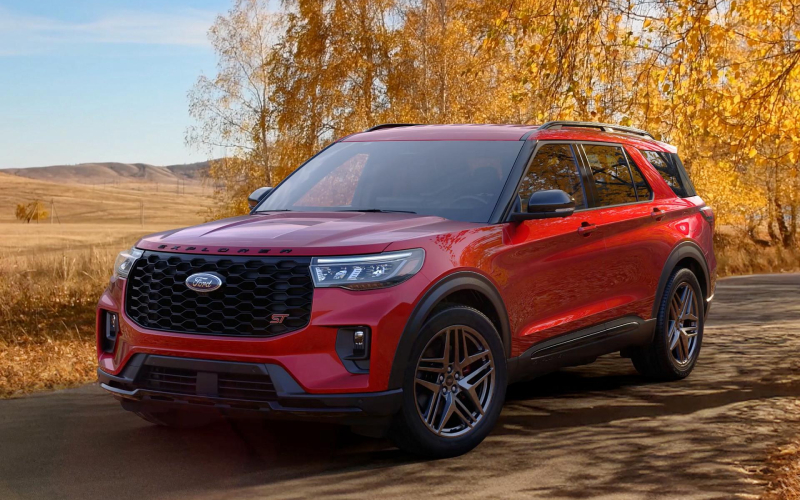
Many three-row SUV shoppers ask a practical question before choosing between the Ford Explorer and Hyundai PALISADE: which one feels better for real family driving on I-25, local errands, and longer Colorado road trips? The answer depends on priorities, but for drivers who want a confident blend of power, highway technology, towing capability, and everyday comfort, the Explorer makes a strong case. The PALISADE is spacious and nicely equipped, yet the Explorer brings a more athletic foundation with standard rear-wheel drive, available Intelligent 4WD, and an available 3.0L EcoBoost® engine that can deliver up to 400 hp. That matters when merging, climbing grades, passing slower traffic, or carrying a full cabin.
For shoppers comparing these SUVs near Colorado Springs, CO, the discussion often goes beyond seating and cargo space. Families want to know how the vehicle will feel in traffic, how it will handle elevation changes, how comfortable it will be after several hours on the road, and whether the technology is genuinely helpful. Explorer answers those questions with a well-rounded lineup that includes Active, ST-Line, Tremor®, Platinum™, and ST models. Hyundai PALISADE offers premium trims and available HTRAC All Wheel Drive, but Ford gives drivers a wider mix of performance-focused and adventure-ready choices.
Why Highway Confidence Matters in This Comparison
I-25 driving can expose the difference between a comfortable SUV and a confident one. A three-row SUV needs to feel stable at speed, responsive when traffic changes, and composed when the road opens up. Explorer’s rear-wheel drive layout gives it a balanced feel that many drivers appreciate, especially when accelerating onto the highway or navigating sweeping ramps. Available Intelligent 4WD adds traction when conditions or road surfaces call for extra grip, while Selectable Drive Modes help tailor the vehicle’s behavior to the moment.
The PALISADE offers available HTRAC All Wheel Drive and a smooth 3.5-liter V6 with 287 hp, which is suitable for everyday family use. However, Explorer gives shoppers more powertrain headroom. The 2.3L EcoBoost® engine provides strong daily performance, and the available 3.0L EcoBoost® engine delivers the kind of output that makes the SUV feel energetic even with passengers and cargo aboard. For drivers who regularly travel between communities, head toward the mountains, or tow recreational gear, that extra confidence can be meaningful.
How Does Ford BlueCruise Change Long Drives?
One of Explorer’s biggest advantages is available Ford BlueCruise. This hands-free highway driving assistance feature can help accelerate, brake, and steer the vehicle on compatible highways while the driver keeps eyes on the road. For long highway stretches, that can reduce fatigue and make the drive feel more relaxed. Hyundai offers Highway Driving Assist 2 on PALISADE, which can help with lane centering and maintaining speed and distance, but it is not the same as BlueCruise hands-free highway driving.
That distinction matters for shoppers researching advanced driver-assist features. A system does not have to replace driver attention to make travel easier; it simply needs to support the driver in the right situations. Explorer’s available BlueCruise pairs well with Ford Co-Pilot360® technologies, including features such as Adaptive Cruise Control on select models and available 360-Degree Camera technology for low-speed maneuvering. For families, this combination helps make the vehicle feel easier in both highway and parking-lot settings.
Interior Comfort and Family Practicality
The PALISADE is known for interior space, and it offers seating for seven or eight depending on configuration. Explorer offers available seating for up to seven passengers, and its available 85.8 cu ft of cargo space behind the first row gives families plenty of room for luggage, sports gear, home projects, or road-trip essentials. The difference is not only about measurements; it is about how the cabin supports daily use. Explorer’s interior feels focused, uncluttered, and driver-friendly, with available premium materials and intuitive technology.
On higher trims, Explorer can be equipped with heated, ventilated, massaging front-row seats with leather inserts, helping the front cabin feel upscale and relaxing. ST-Line adds unique durable cloth-trimmed seats with red stitching, while the available B&O® Sound System by Bang & Olufsen® with 10 speakers including subwoofer gives music and podcasts a richer sound. PALISADE offers its own premium features, including available relaxation seats and a Bose® Premium Audio system, but Explorer stands out by combining comfort with a stronger performance identity.
Key Advantages for Ford Explorer Shoppers
- Performance range: Explorer offers a standard 2.3L EcoBoost® engine and an available 3.0L EcoBoost® engine with up to 400 hp.
- Highway assistance: Available Ford BlueCruise provides hands-free highway driving assistance on compatible highways.
- Drive layout: Standard rear-wheel drive gives Explorer a balanced, confident feel, with available Intelligent 4WD for added traction.
- Adventure hardware: Explorer Tremor® offers a Torsen® limited-slip rear axle, off-road tuned suspension, increased ride height, and underbody protection.
- Everyday utility: Properly equipped Explorer can tow up to 5,000 lbs and offers generous cargo flexibility.
These advantages are especially useful for Colorado drivers who need one SUV to cover several roles. A vehicle might spend the morning in school traffic, the afternoon on errands, and the weekend towing a small camper or heading toward a trailhead. Explorer feels built for that kind of variety. The Tremor® model, in particular, gives shoppers a more rugged option without leaving the three-row SUV category.
What About Towing and Weekend Gear?
Both Explorer and PALISADE can tow up to 5,000 lbs when properly equipped, so the headline rating is equal. The difference is how each SUV supports the experience around that capability. Explorer’s available power, rear-wheel drive foundation, and available Intelligent 4WD give it a confident feel when dealing with grades, ramps, and loaded travel. The Class III Trailer Tow Package is also listed among key equipment on Explorer Active 100A, which helps make towing capability part of the vehicle’s practical appeal.
PALISADE offers an available integrated tow hitch and towing mode, which is helpful for recreational use. Still, Ford shoppers may prefer Explorer because the powertrain and chassis character feel more closely aligned with towing and active driving. If your family plans include bikes, small trailers, camping equipment, or home-improvement hauling, Explorer’s broader capability story is easy to appreciate.
Frequently Asked Questions:
Is the 2026 Ford Explorer more powerful than the 2026 Hyundai PALISADE?
Yes, when comparing available maximum output. Explorer offers an available 3.0L EcoBoost® engine with up to 400 hp, while the gas PALISADE uses a 3.5-liter V6 with 287 hp and the PALISADE Hybrid offers 329 hp combined.
Does the Hyundai PALISADE offer hands-free highway driving like Ford BlueCruise?
PALISADE offers available Highway Driving Assist 2, but Ford BlueCruise is a hands-free highway driving assistance feature for compatible highways. Shoppers who specifically want hands-free highway assistance should look closely at Explorer availability.
Which SUV is better for drivers who want off-road-inspired capability?
Explorer Tremor® is a strong choice because it offers a Torsen® limited-slip rear axle, off-road tuned suspension with increased ride height, and underbody protection. PALISADE XRT PRO adds rugged equipment, but Explorer Tremor® delivers a distinctive Ford approach to trail-ready confidence.
Where can shoppers compare Explorer features locally?
Alpine Ford, serving Colorado Springs, Canon City, and Castle Rock, can help shoppers review Explorer trims, available equipment, towing features, technology, and comfort options in a straightforward way.
For families deciding between these two SUVs, the Explorer is the stronger recommendation when performance, highway confidence, and versatile capability are top priorities. PALISADE has plenty of strengths, including spaciousness and premium amenities, but Explorer feels more dynamic and better suited to drivers who want a three-row SUV that does more than simply carry passengers. From available BlueCruise to the powerful ST and rugged Tremor® models, Ford gives shoppers more ways to match an SUV to real life.
Request more 2026 Ford Explorer information
Is the 2026 Bronco Sport® a Better Small SUV Than the Forester for Trail Access near Castle Rock, CO?
Alpine Ford – Is the 2026 Bronco Sport® a Better Small SUV Than the Forester for Trail Access near Castle Rock, CO?
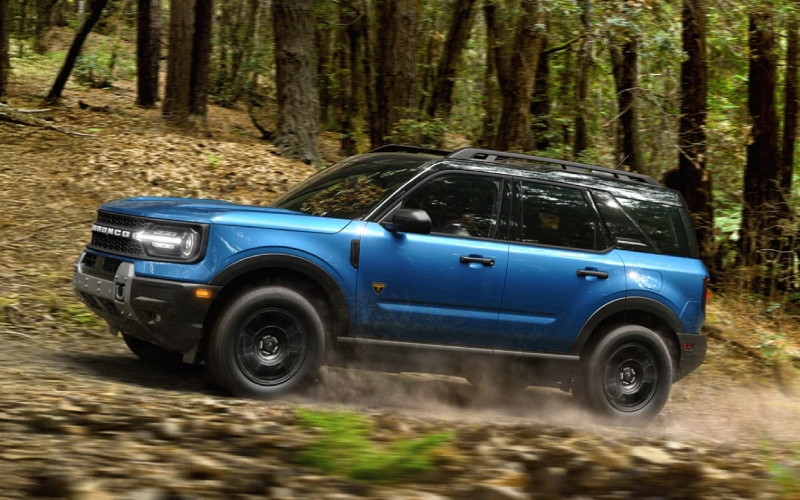
Yes, for many shoppers who care about trail access, rugged personality, and standard 4×4 capability, the Bronco Sport® is the better small SUV to consider over the Forester. The Forester is a capable and practical all-wheel-drive SUV with a roomy cabin, standard EyeSight® Driver Assist Technology, and available X-MODE®. It is a smart option for drivers who want familiar Subaru strengths. The Bronco Sport®, however, brings a more adventure-focused formula right from the start. Every model includes standard 4×4, G.O.A.T. Modes® Goes Over Any Type of Terrain, a 13.2″ center display, wireless Apple CarPlay® and Android Auto™ compatibility, and a design that feels purpose-built for drivers who enjoy both daily convenience and off-pavement confidence.
For shoppers around Castle Rock, the difference can matter on more than just weekend trails. Local routes can include fast highway stretches, steep neighborhood grades, gravel access roads, trailhead parking areas, and changing elevation between town, open space, and foothill routes. The Bronco Sport® feels ready for that kind of mixed use because its capability is central to its identity. Alpine Ford, serving Colorado Springs, Canon City, and Castle Rock, helps shoppers compare trims and available packages so the final choice fits commuting, recreation, comfort, and ownership goals.
What Makes the Bronco Sport® Stand Out for Trail Access?
The Bronco Sport® separates itself by offering standard 4×4 across the lineup. That is important because capability is not limited to one special model or an added drivetrain decision. Drivers can start with Big Bend® and already get a 4×4 foundation, 5 G.O.A.T. Modes®, the large center display, and connected technology. From there, shoppers can move into Heritage, Outer Banks®, or Badlands® depending on comfort, style, and performance priorities.
The Badlands® model is where the comparison becomes especially favorable for Ford. It adds advanced 4×4 with a twin-clutch rear drive unit, 7 G.O.A.T. Modes®, the 2.0L EcoBoost® engine, steel-plated front bumper, and underbody protection. Those features give the Bronco Sport® a more serious capability edge than the standard Forester lineup. The Forester Wilderness is the more rugged Subaru choice, with raised suspension, 9.3 inches of ground clearance, all-terrain tires, and dual-function X-MODE® with Hill Descent Control. Even so, the Bronco Sport® Badlands® feels more specialized for drivers who want a compact SUV with genuine off-road character.
- Standard 4×4: Bronco Sport® gives every trim a traction-focused foundation.
- G.O.A.T. Modes®: Ford provides selectable drive modes designed around different surfaces and conditions.
- Badlands® hardware: Available advanced 4×4 with twin-clutch rear drive unit adds a more specialized capability advantage.
How Do Interior Technology and Daily Comfort Compare?
Technology is another area where the Bronco Sport® makes a compelling argument. The 13.2″ center display is standard and gives the cabin a clean, modern command center. Wireless Apple CarPlay® and Android Auto™ compatibility help drivers stay connected without constantly plugging in a cable. The Ford Connectivity Package, included for one year, adds useful connected features for apps, maps, and an available Wi-Fi® hotspot. For daily routines, that large screen and connected layout make the Bronco Sport® feel current and easy to use.
The Forester offers its own tech strengths. Subaru provides a standard Multimedia System, and most trims include an 11.6-inch high-resolution touchscreen with wireless Apple CarPlay® and Android Auto™ integration. Available MySubaru® Connected Services and available wireless charging add convenience. The Forester also offers generous passenger space and cargo flexibility. Still, the Bronco Sport® cabin has a more distinctive personality. Heritage trim brings classic-inspired touches, Outer Banks® adds premium-trimmed heated front seats and a heated steering wheel, and Badlands® reinforces the rugged theme. For shoppers who want daily comfort with a more adventurous vibe, the Ford SUV has the stronger emotional pull.
Which SUV Feels More Purpose-Built?
The Forester is built as a highly practical compact SUV, and that is part of its appeal. It is efficient, roomy, familiar, and easy to recommend for everyday use. The Bronco Sport® is also practical, but it adds a more focused sense of purpose. Its upright body, Bronco® styling, trail-ready trim structure, available Sasquatch® packages, and Built Wild® identity give it a stronger adventure image. That matters for shoppers who want an SUV that feels more personal than typical transportation.
Mechanical differences reinforce that point. Subaru Symmetrical All-Wheel Drive is standard and continuously evaluates traction needs. Available X-MODE® helps in low-traction situations, and dual-function X-MODE® expands that support on certain trims. Ford answers with standard 4×4, G.O.A.T. Modes®, HOSS Off-Road Suspension, and available advanced 4×4 hardware. Instead of feeling like a compact crossover adapted for rougher use, the Bronco Sport® feels like a small SUV engineered with adventure as a core priority.
- Choose Big Bend®: Select this trim for standard 4×4, 5 G.O.A.T. Modes®, and strong everyday value.
- Choose Outer Banks®: Select this trim for added comfort, premium-trimmed heated front seats, and available Sasquatch® Outer Banks® capability.
- Choose Badlands®: Select this trim for the 2.0L EcoBoost® engine, advanced 4×4 with twin-clutch rear drive unit, and 7 G.O.A.T. Modes®.
Frequently Asked Questions:
Is the Bronco Sport® better than the Forester for light trails?
For many drivers, yes. The Bronco Sport® includes standard 4×4 and G.O.A.T. Modes®, while Badlands® adds advanced 4×4 with a twin-clutch rear drive unit and 7 G.O.A.T. Modes®. The Forester is capable, especially with available X-MODE® or Wilderness equipment, but the Bronco Sport® has the more trail-focused overall character.
Does the Forester have more cargo space?
The Forester offers strong cargo flexibility, including up to 74.4 cubic feet of cargo space on select configurations. Cargo needs should be compared in person because the Bronco Sport® offers a boxy, easy-to-use shape that can work well for outdoor gear, pet supplies, and everyday items.
Which SUV has the better display?
The Bronco Sport® has the advantage with its 13.2″ center display. The Forester offers an available 11.6-inch touchscreen on most trims, but the Ford screen is larger and standard, giving the cabin a more advanced feel from the start.
Which model should I test drive first?
Start with the Bronco Sport® if standard 4×4, rugged style, and available off-road hardware matter most. Test driving Big Bend®, Outer Banks®, and Badlands® can help narrow the best fit based on comfort, technology, and capability goals.
The best answer depends on how a shopper plans to use an SUV, but the Bronco Sport® has the clearer advantage for drivers who want capability to be more than an occasional feature. It brings useful technology, standard 4×4 confidence, available turbocharged strength, and a design that looks at home near trailheads, open spaces, and everyday destinations alike. The Forester remains a respected compact SUV, yet the Bronco Sport® offers more character and a stronger adventure-ready foundation.
Request more 2026 Ford Bronco Sport information
Is the 2026 Ford F-150 Better Than the 2026 Toyota Tundra for Towing around Castle Rock, CO?

Alpine Ford – Is the 2026 Ford F-150 Better Than the 2026 Toyota Tundra for Towing around Castle Rock, CO?
Yes, for many truck shoppers focused on towing, the Ford F-150® has the stronger overall case against the Toyota Tundra. Both pickups are capable, modern, and well suited for drivers who want a full-size truck with confidence on the highway, at the job site, and on weekend routes. The Tundra brings a powerful i-FORCE twin-turbo V6 engine, an available i-FORCE MAX hybrid powertrain, a max towing rating of 12,000 lbs, and available towing assistance such as Trailer Backup Guide With Straight Path Assist. Those are meaningful strengths. However, the F-150® raises the ceiling with a best-in-class max available towing rating of 13,500 lbs when properly configured, plus broader powertrain choices and more towing-focused technology throughout the lineup.
For drivers around Castle Rock, CO, towing needs can change quickly. One week might involve pulling a utility trailer for home projects, while another might mean hauling a camper, equipment trailer, side-by-side, or boat. Elevation changes, highway grades, and traffic along the Front Range make power delivery, visibility, trailer control, and driver comfort especially important. That is where the Ford truck feels especially well rounded. It offers multiple EcoBoost® engines, an available 5.0L Ti-VCT V8, an available PowerBoost® Full Hybrid V6, and smart trailering features designed to reduce stress before, during, and after a tow. Alpine Ford, serving Colorado Springs, Canon City, and Castle Rock, can help shoppers narrow down the right F-150® configuration based on trailer size, cargo needs, and daily driving preferences.
How the Towing Numbers Compare
The headline towing difference is straightforward. The Ford F-150® can reach a max available tow rating of 13,500 lbs with the proper configuration, while the Toyota Tundra reaches a max towing rating of 12,000 lbs. That extra Ford capability may matter if you want more flexibility for future trailers, heavier loads, or additional gear. It also pairs with a max available payload rating of 2,440 lbs, compared with the Tundra’s max payload rating of 1,850 lbs. Payload is easy to overlook, but it affects how much weight can ride in the cab and bed, including passengers, tools, hitch weight, coolers, and supplies.
The best truck for towing is not only about the largest number on a spec sheet. Stability, confidence, camera support, powertrain behavior, and driver comfort all matter. Still, higher max available towing and payload ratings give the F-150® a stronger foundation. If your trailer needs are light to moderate, either truck can be a capable partner. If you want more room to grow or prefer to avoid shopping near the upper limit of a truck’s rating, the Ford advantage becomes more important.
Why Powertrain Choice Matters When Towing
The Tundra lineup keeps things simple with twin-turbo V6 powertrains, including the available i-FORCE MAX hybrid that delivers impressive output. Ford takes a different approach by offering more variety, which helps shoppers choose a truck based on how towing fits into daily life. The 2.7L EcoBoost® V6 brings responsive turbocharged strength, the 3.5L EcoBoost® V6 delivers the highest max available towing rating in the lineup, the 5.0L Ti-VCT V8 appeals to drivers who prefer V8 character, and the 3.5L PowerBoost® Full Hybrid V6 adds hybrid capability with 570 lb-ft of torque.
- For max towing confidence: The 3.5L EcoBoost® V6 is the Ford engine to watch because it supports the 13,500-lb max available tow rating.
- For hybrid torque and utility: The 3.5L PowerBoost® Full Hybrid V6 provides strong output and supports available Pro Power Onboard™.
- For traditional truck feel: The 5.0L Ti-VCT V8 gives shoppers an option the Tundra lineup does not offer.
This powertrain flexibility is a key reason the F-150® often feels like the easier truck to tailor. A driver towing mainly on weekends may want a different setup than a contractor pulling equipment several days a week. Ford makes that decision more personalized.
Towing Technology That Helps before You Leave the Driveway
Towing confidence starts before the truck is rolling. Hitching, lining up, checking surroundings, and managing tight spaces can make or break the experience. The F-150® offers available 360-Degree Camera technology, available towing packages, and features such as an integrated trailer brake controller within properly equipped configurations. The available Pro Access Tailgate is also a practical advantage because it can swing open even when a trailer is attached, helping you access bed cargo without dropping a traditional tailgate into the trailer jack area.
The Tundra offers helpful available technology as well, including Panoramic View Monitor and Trailer Backup Guide With Straight Path Assist. Toyota deserves credit for making trailer backing easier. Ford, however, combines towing tech with bed access, onboard power capability, and higher tow and payload ratings. That broader utility is what makes the F-150® feel more complete for drivers who tow and also use the bed as a working space.
Comfort on Longer Towing Routes
Comfort matters when towing because a truck needs to feel composed and easy to manage over longer distances. The F-150® cabin can be equipped with a 12-inch center display, available head-up display, available B&O® Sound System, available multicontour with Active Motion® leather bucket seats, and available Ford BlueCruise hands-free highway driving on compatible divided highways. BlueCruise is not a towing substitute for an attentive driver, but it can make compatible highway travel feel less tiring when used as intended.
The Tundra also offers appealing interior technology, including an available 14-in. Toyota Audio Multimedia touchscreen and available 12.3-in. digital gauge cluster. Even so, Ford’s available Interior Work Surface, lockable rear under-seat storage, and flip-up rear seats add extra usefulness when the truck doubles as an office, gear locker, or family vehicle. For shoppers who tow and work from the road, that practical cabin design is a major advantage.
Which Truck Fits Castle Rock-Area Towing Better?
If your priority is a full-size truck with a strong hybrid option and a comfortable ride, the Tundra remains a respectable choice. If your priority is higher max available towing, higher max available payload, engine variety, available V8 power, work-ready bed solutions, and advanced highway support, the F-150® is the stronger recommendation. It simply covers more scenarios with fewer compromises.
- Start with trailer weight: Consider loaded trailer weight, not just empty trailer weight.
- Account for payload: Include passengers, cargo, hitch weight, tools, and accessories.
- Choose the right engine: Match the powertrain to towing frequency, terrain, and daily driving comfort.
- Review trailering technology: Look for camera systems, brake controller availability, and bed-access features.
Frequently Asked Questions:
Does the Ford F-150® tow more than the Toyota Tundra?
Yes. When properly configured, the F-150® offers a max available tow rating of 13,500 lbs, while the Tundra lists max towing at 12,000 lbs.
Which truck has the higher payload rating?
The F-150® has the higher max available payload rating at 2,440 lbs. The Tundra lists max payload at 1,850 lbs.
Is the Toyota Tundra still a capable towing truck?
Yes. The Tundra is a capable full-size pickup with strong twin-turbo V6 powertrains and useful available towing technology. The Ford advantage is in higher maximum ratings, broader engine choice, and additional work-focused features.
For shoppers comparing these two trucks, the F-150® is the pickup that better anticipates changing needs. It can be configured for serious towing, comfortable commuting, mobile work, outdoor gear, and advanced driver-assistance technology. That is why many drivers looking for one truck to handle both weekday responsibilities and weekend plans should place the Ford F-150® at the top of the list.
Request more 2026 Ford F-150 information
Which Heavy-Duty Truck Is Better for Towing Around Colorado Springs, CO – Ford Super Duty F-350 or Ram 3500?
Alpine Ford – Which Heavy-Duty Truck Is Better for Towing Around Colorado Springs, CO – Ford Super Duty F-350 or Ram 3500?
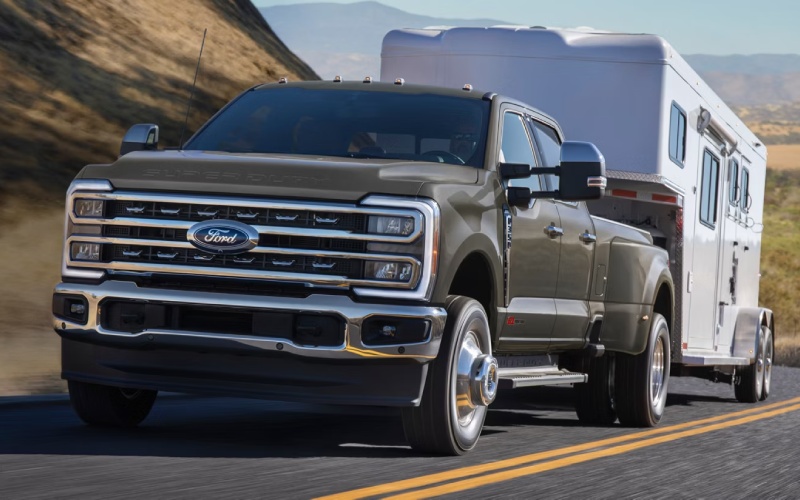
Heavy-duty truck shoppers often start with one practical question: which truck is better for towing, the Ford Super Duty F-350 or the Ram 3500? Around Colorado Springs, CO, that question matters because towing is rarely limited to a short, flat drive. Drivers may be pulling equipment toward a job site, hauling livestock or hay, moving a large camper toward the foothills, or carrying materials across elevation changes that demand steady torque and confident control. Both trucks are built for serious work, and Ram brings respected capability with its available High-Output 6.7L Cummins® Turbo Diesel I6 engine. However, the Ford Super Duty F-350 earns the advantage for many buyers because it offers higher maximum available diesel horsepower, higher maximum available diesel torque, higher maximum available towing, and a deeper set of available towing technologies designed to simplify difficult maneuvers.
The 2026 Ford Super Duty lineup is engineered around heavy-load confidence. With the available 6.7L High Output Power Stroke® V8 Turbo Diesel B20 engine, Ford lists up to 500 horsepower and 1,200 lb-ft of torque. It also lists a maximum available 40,000-lb gooseneck tow rating and a maximum available 8,000-lb payload rating. By comparison, the 2026 Ram 3500 lists 430 maximum available high-output diesel horsepower, 1,075 lb-ft of maximum available high-output diesel torque, 36,610 lbs of maximum available high-output diesel towing capacity, and 7,590 lbs of maximum gas payload. Those Ram numbers are strong, but Ford’s higher available ceiling gives shoppers more room for demanding towing plans, especially when the truck needs to pull confidently across mixed grades and changing road conditions.
Why Ford Has the Towing Edge
The reason Ford stands out is not only the headline tow rating. It is the complete towing ecosystem. Available Pro Trailer Backup Assist™ can help make reversing a trailer feel more controlled by allowing the driver to guide trailer direction with a dedicated knob. Available Pro Trailer Hitch Assist™ can help line up the truck and trailer hitch with less back-and-forth adjustment. Available Onboard Scales with Smart Hitch can help estimate payload and tongue weight, giving drivers more information before a trip begins. Ram offers useful available technology as well, including Trailer Reverse Steering Control, available Trailer Tire Pressure Monitoring, available 360° Trailer Surround View Camera, and available Trailer Tow Pages. Still, Ford’s towing tools feel especially focused on the full sequence of towing: loading, hitching, backing, monitoring, and driving.
- Maximum available towing: Ford lists up to 40,000 lbs, while Ram lists up to 36,610 lbs.
- Maximum available diesel torque: Ford lists up to 1,200 lb-ft, while Ram lists up to 1,075 lb-ft.
- Maximum available diesel horsepower: Ford lists up to 500 horsepower, while Ram lists up to 430 horsepower.
- Maximum available payload: Ford lists up to 8,000 lbs, while Ram lists up to 7,590 lbs for gas payload.
How Towing Technology Helps in Real Life
For many owners, a heavy-duty truck is only as useful as the confidence it gives while connecting, loading, and maneuvering a trailer. A high tow rating is important, but daily usability matters just as much. The Ford Super Duty F-350 helps by offering available trailer-focused camera views, Trailer Reverse Guidance, and a 360-Degree Camera on select trims. These tools can be especially helpful in tight yards, narrow access roads, crowded trailering areas, and work locations where visibility is limited. The available head-up display and 12″ center display with SYNC® 4 also keep key information easier to access, helping the driver stay focused on the road and surroundings.
Ram answers with an available Digital Rearview Mirror with side camera integration, available 360° Surround View Camera, available 360° Trailer Surround View Camera, and a Largest-in-Class available 14.5-inch infotainment touchscreen. That technology is impressive, and the Ram cabin can feel very upscale on higher trims. The Ford advantage is that its trailering features work together with superior available output and ratings. For a driver who regularly hauls near the upper end of a truck’s capability, that combination can make the Ford Super Duty F-350 feel like the more complete tool.
Engine Choice and Control
Ford also gives shoppers a broad engine lineup. The available choices include the 6.8L 2V DEVCT NA PFI V8 gas engine, the 7.3L 2V DEVCT NA PFI gas engine, the 6.7L 4V OHV Power Stroke® V8 Turbo Diesel B20 engine, and the 6.7L High Output Power Stroke® V8 Turbo Diesel B20 engine. Each engine pairs with a 10-speed automatic transmission, giving the truck a wide range of gearing for acceleration, grade management, and towing control. That 10-speed setup is a key point when comparing against the Ram 3500, which uses a TorqueFlite® eight-speed automatic transmission with its gas and diesel engines.
Ram’s available High-Output 6.7L Cummins® Turbo Diesel I6 has a long-standing reputation, and many drivers appreciate its low-end pulling feel. However, Ford’s available High Output Power Stroke® V8 Turbo Diesel brings more listed maximum horsepower and torque, and the 10-speed transmission helps manage that power smoothly. For Colorado drivers who may move from urban traffic to open highway to grade-heavy routes in the same day, that combination is a meaningful advantage.
What About Payload and Worksite Use?
Towing is usually the headline, but payload should not be ignored. Payload affects how much weight the truck can carry in the bed and cabin, including tools, fuel tanks, materials, hitch equipment, passengers, and cargo. Ford lists a maximum available 8,000-lb payload rating for Super Duty trucks, supported by a fully boxed, high-strength steel frame and robust engine capability. Ram lists a maximum gas payload of 7,590 lbs, which remains strong but does not match Ford’s maximum available figure.
Worksite usefulness goes beyond numbers. Ford offers available 2kW Pro Power Onboard™, which can power tools, lights, and equipment from in-bed outlets. Available PowerScope® trailer tow mirrors improve visibility when towing wide loads, while the available power tailgate with retractable tailgate step makes bed access easier. Ram offers available onboard power, available LED bed lighting, available power side running boards, and available RamBox® Cargo Management System. Those are useful features, but Ford pairs its practical exterior hardware with stronger maximum capability, making the truck feel especially well-suited to demanding work.
Frequently Asked Questions:
Is the Ford Super Duty F-350 better than the Ram 3500 for maximum towing?
Yes, based on the published maximum available ratings provided by each brand. Ford lists a maximum available 40,000-lb diesel-powered gooseneck tow rating for Super Duty trucks, while Ram lists a maximum available high-output diesel towing capacity of 36,610 lbs for the 3500.
Does the Ram 3500 have advantages over the Ford Super Duty F-350?
Yes. Ram offers a Largest-in-Class available 14.5-inch infotainment touchscreen, available dual wireless charging pads, available RamBox® Cargo Management System, and a refined interior on higher trims. For many towing-focused shoppers, though, Ford’s higher maximum available ratings and available towing assistance features provide the stronger overall value.
Which truck should I choose for towing around Colorado Springs, Canon City, and Castle Rock?
If maximum available towing, payload, diesel horsepower, diesel torque, and trailer-focused technology are top priorities, the Ford Super Duty F-350 is the stronger recommendation. Alpine Ford, serving Colorado Springs, Canon City, and Castle Rock, can help match the right configuration to the trailer, workload, and daily driving needs.
The Bottom Line for Heavy-Duty Shoppers
The Ford Super Duty F-350 and Ram 3500 both belong in the serious heavy-duty conversation, but Ford offers the more convincing towing answer for many drivers. The combination of up to 500 available diesel horsepower, 1,200 lb-ft of available diesel torque, 40,000 lbs of maximum available towing, 8,000 lbs of maximum available payload, and available technologies such as Pro Trailer Backup Assist™, Pro Trailer Hitch Assist™, and Onboard Scales with Smart Hitch gives Ford a clear edge. Ram remains capable and comfortable, but for shoppers who want confidence before, during, and after every tow, the Ford Super Duty F-350 is built to lead.
Request more 2026 Ford Super Duty F-350 information
Can BlueCruise Help Colorado Springs, CO Families Travel More Comfortably in the Expedition®?
Alpine Ford – Can BlueCruise Help Colorado Springs, CO Families Travel More Comfortably in the Expedition®?
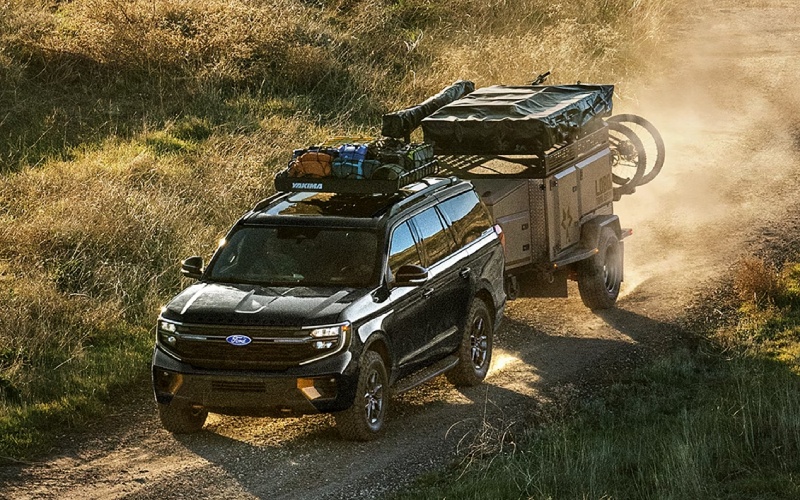
Families researching a full-size SUV often want more than power and space; comfort on longer highway drives matters just as much. The Expedition® offers available Ford BlueCruise, a hands-free highway driver-assist feature designed to help make driving easier, more enjoyable, and less stressful when used on compatible roads. For drivers who regularly travel between communities, activities, work, and recreation, this kind of technology can make the ownership experience feel more relaxed without taking away the driver’s responsibility to stay attentive.
Ford states that BlueCruise operates on 97% of controlled-access highways in areas called Blue Zones across the U.S. and Canada. That makes it especially relevant for shoppers comparing large SUVs for frequent highway use. In a vehicle as capable and family-focused as the Expedition®, BlueCruise becomes part of a broader comfort story that also includes a spacious cabin, available seating for seven or eight people, a 24″ panoramic display, and available connected technology through the Ford Connectivity Package.
How BlueCruise Fits the Expedition® Driving Experience
The Expedition® is built for big responsibilities. It can carry a full cabin, manage serious cargo needs, and tow confidently when properly equipped. Available BlueCruise adds another layer by helping reduce some of the fatigue that can come with long stretches of controlled-access highway driving. The system is designed for hands-free operation only in mapped Blue Zones, while the driver remains responsible for watching the road and taking control whenever needed.
That distinction is important. BlueCruise is not a replacement for an engaged driver. It is a driver-assist feature that can support smoother highway travel when conditions and road mapping allow. For shoppers moving from an older SUV into a modern Expedition® model, the difference can feel meaningful. Instead of relying only on traditional cruise control, available BlueCruise works as part of a more advanced approach to highway assistance.
Why Families Pay Attention to Highway Driver-Assist Tech
Full-size SUV shoppers often evaluate technology through a practical lens. A feature has to make daily life easier, not just sound impressive on a spec sheet. Available BlueCruise makes sense for families because highway driving can involve long distances, changing traffic flow, and frequent route planning. When paired with other Ford driver-assist systems, it can help create a calmer environment for the driver and passengers.
Here are a few reasons this technology deserves attention during the shopping process:
- Reduced highway fatigue: Hands-free assistance in Blue Zones can help make long controlled-access highway drives feel less demanding.
- Modern confidence: BlueCruise works alongside the Expedition® focus on driver-assist innovation and connected convenience.
- Family-focused comfort: A more relaxed driver can contribute to a more pleasant cabin experience for passengers.
- Useful for repeat routes: Drivers who frequently use major highways may find the system especially valuable.
- Strong pairing with space: The Expedition® already offers three-row room, and BlueCruise adds another comfort-focused advantage.
When comparing SUVs, shoppers should look beyond a single feature and consider how that feature works with the whole vehicle. In the Expedition®, BlueCruise supports the same mission as the flexible seating, generous cargo room, and large digital displays: helping busy households travel with less stress and more confidence.
What Else Supports Comfortable Family Travel?
BlueCruise is a highlight, but it is not the only reason the Expedition® feels well suited to family travel. The cabin is designed around space and visibility, while the 24″ panoramic display and 13.2″ center display provide a wide, modern interface for key information. Available Ford Digital Experience functionality helps bring familiar digital tools into the drive, and the available Ford Connectivity Package can include a 5G Wi-Fi® hotspot, access to apps from the Google Play™ store, and real-time navigation through Google Maps™ on the center display.
For families with multiple devices, directions, playlists, and schedules, connectivity can matter nearly as much as horsepower. Ford notes that the available 5G Wi-Fi® hotspot can connect up to 10 devices within 50 feet of the vehicle. That kind of capability can help passengers stay entertained or productive while the driver uses the vehicle’s navigation and assistive technology to manage the route.
Questions to Ask Before Choosing BlueCruise
Before selecting a trim or package, shoppers should ask how BlueCruise is equipped, how the service plan works, and whether the most common driving routes include compatible Blue Zones. The Expedition® King Ranch® is shown by Ford with BlueCruise hands-free highway driving equipped and a 1-year plus 90-day plan included, while availability can vary by model and configuration. A product specialist can help explain what is included on a specific vehicle.
Use these questions during research or a showroom visit:
- Route compatibility: Are the highways used most often part of Blue Zones?
- Trim availability: Which Expedition® models currently offer BlueCruise?
- Plan details: What connected services or included trial periods apply to the specific vehicle?
- Driver expectations: How does the system monitor attention and request driver control?
- Technology pairing: Which other Ford Co-Pilot360® Assist 2.0 features come with the selected model?
These questions help shoppers move from curiosity to clarity. BlueCruise can be a valuable feature, but the best ownership experience comes from understanding how and where it works before taking delivery.
How to Evaluate BlueCruise on a Test Drive
A test drive should include more than a quick loop around the block. If available and appropriate, ask the dealership team to explain BlueCruise operation, compatible road requirements, steering wheel indicators, driver monitoring, and how the system transitions control back to the driver. Even if a full BlueCruise demonstration is not possible during a specific appointment, learning the interface can still be helpful.
It is also smart to compare the broader Expedition® experience. Sit in every row, adjust the driver’s seat, review the panoramic display, open the cargo area, and ask about Expedition® MAX if extra cargo length is important. The best decision will account for the whole vehicle, not just one advanced feature.
Frequently Asked Questions:
Is BlueCruise standard on every Expedition®?
No. Ford describes BlueCruise as an available hands-free highway driver-assist feature. Availability depends on trim, equipment, and plan details, so shoppers should confirm the exact configuration before choosing a vehicle.
Can BlueCruise drive the Expedition® anywhere?
No. BlueCruise is designed to operate on controlled-access highways in mapped Blue Zones. Ford states that BlueCruise operates on 97% of controlled-access highways in Blue Zones across the U.S. and Canada. The driver must remain attentive and ready to take control.
Does BlueCruise replace other driver-assist features?
No. BlueCruise complements other driver-assist technologies. Ford Co-Pilot360® Assist 2.0 includes features such as Adaptive Cruise Control, Pro Trailer Hitch Assist™, Pro Trailer Backup Assist™, and more, depending on configuration.
Why should shoppers ask about BlueCruise before buying?
Because availability, connected service details, and route compatibility can affect daily usefulness. Alpine Ford can help shoppers review equipment and compare models while serving Colorado Springs, Canon City, and Castle Rock.
For many families, available BlueCruise can be a strong reason to consider the Expedition® over another full-size SUV. It supports the kind of highway confidence that matters during longer drives, while the vehicle itself delivers the room, towing strength, cargo flexibility, and connected features shoppers expect from a modern Ford SUV.
Request more 2027 Ford Expedition information
How Trail Turn Assist Helps Castle Rock, CO Drivers Get More from the 2026 Ford Bronco®
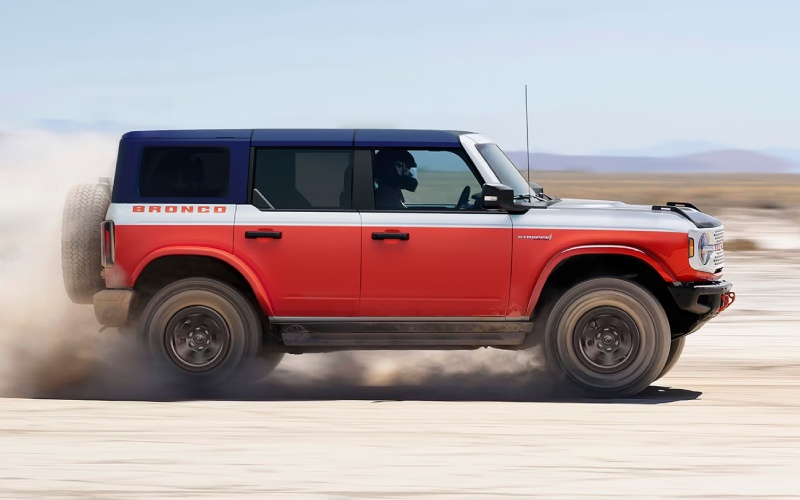
Alpine Ford – How Trail Turn Assist Helps Castle Rock, CO Drivers Get More from the 2026 Ford Bronco®
The 2026 Ford Bronco® is known for capability, but one of its most practical trail-focused technologies is easy to overlook during the early research stage: available Trail Turn Assist. For drivers who spend time around tight trail switchbacks, narrow access roads, rocky routes, or uneven recreational paths, this feature can make the Bronco® feel more maneuverable when the path gets technical. Instead of treating every tight turn like a multi-point puzzle, Trail Turn Assist helps reduce the turning radius in specific off-road conditions by applying brake force to the inside rear wheel. The result is a more confident pivot that can help the driver stay composed when terrain leaves little room for error.
This is especially useful for Castle Rock, CO drivers who want an SUV that can move easily between daily travel and weekend exploring. The area offers quick access to foothill routes, open spaces, gravel approaches, and trail systems where maneuverability matters as much as power. While horsepower and ground clearance often get the spotlight, control is what makes an off-road SUV feel trustworthy. Trail Turn Assist works as part of the broader Bronco® personality, joining systems such as G.O.A.T. Modes®, available Trail Control, available HOSS Systems, and available 360-Degree Camera technology to support a more intuitive driving experience.
What Trail Turn Assist Is Designed to Do
Trail Turn Assist is not meant to replace careful driving or smart trail judgment. Instead, it helps the Bronco® navigate tight turns on low-speed off-road routes where a shorter turning path can be helpful. Think of a rocky bend, a narrow two-track road, or a sharp corner where backing up repeatedly could be inconvenient. When conditions and settings allow, the system can brake the inside rear wheel to help rotate the vehicle more tightly. For a capable SUV with real off-road hardware, that kind of control can make a meaningful difference.
The benefit is not just convenience. It can also help preserve momentum. On uneven ground, stopping and reversing multiple times can make a route feel more difficult than necessary. A smoother turn helps the driver keep attention focused on wheel placement, obstacles, and surroundings. That is why Trail Turn Assist fits so well with the Bronco® formula: it supports driver control without taking away the hands-on, connected feeling that makes Bronco® ownership so rewarding.
How It Fits with G.O.A.T. Modes® and Bronco® Trail Tech
The 2026 Bronco® can offer up to seven G.O.A.T. Modes®, which stands for Goes Over Any Type of Terrain. These selectable drive modes help tailor vehicle behavior for different conditions, whether the surface is loose, uneven, slick, rocky, or suited for more confident low-speed control. Trail Turn Assist complements that philosophy by addressing a specific challenge: tight maneuvering. When combined with the right drive mode and steady throttle input, it helps the driver approach technical sections with more confidence.
Available Trail Control is another helpful companion feature. It functions like low-speed off-road cruise control, helping manage throttle and braking so the driver can focus more on steering. For shoppers comparing Bronco® trims and packages, it is worth asking how these systems work together. A driver who plans to spend most time on pavement may prioritize comfort and connectivity, while a driver who wants more trail capability may pay closer attention to Badlands®, Sasquatch® Package availability, HOSS suspension content, and technology such as the available 360-Degree Camera.
- Trail Turn Assist: Helps tighten low-speed off-road turning in specific conditions by braking the inside rear wheel.
- G.O.A.T. Modes®: Adjust vehicle behavior for different surfaces and driving demands.
- Trail Control: Helps manage low-speed throttle and braking so the driver can focus on steering.
- Available 360-Degree Camera: Helps provide useful views around the SUV when navigating tight spaces or obstacles.
Why Maneuverability Matters in a Real Off-Road SUV
Many shoppers naturally compare engines, tires, suspension, and ground clearance first. Those are important, and the Bronco® has plenty to talk about. The lineup includes the 2.3L EcoBoost® I-4 engine, available 2.7L EcoBoost® V6 engine, and the 3.0L EcoBoost® V6 engine in the Raptor® model. It can offer serious clearance, impressive water fording capability, and strong approach, breakover, and departure angles. But once a trail gets narrow, the ability to place the SUV accurately becomes just as valuable as raw power.
That is where Trail Turn Assist speaks directly to real-world use. A shorter, cleaner turn can help on routes where the driver must work around boulders, ruts, trees, drop-offs, or uneven shoulders. It can also reduce the stress of trail driving for newer off-road enthusiasts. The Bronco® already gives drivers a commanding seating position and rugged visibility, and available camera support can add another layer of awareness. Trail Turn Assist builds on that by helping the SUV feel more agile when the terrain asks for patience and precision.
Which Bronco® Shoppers Should Pay Attention to This Feature?
Trail Turn Assist is especially worth considering if your SUV will be more than a commuter. If your plans include off-road parks, mountain access roads, dispersed camping routes, trailhead approaches, or rocky weekend drives, this feature can become one of those technologies you appreciate more after using it. It is also valuable for drivers who want capability without feeling overwhelmed by the learning curve of off-road driving. Bronco® still rewards skill and awareness, but smart trail technology can make the experience more approachable.
For shoppers serving Canon City, Castle Rock, and Denver, needs can vary widely. Some drivers want a comfortable daily SUV with removable-door freedom and modern connectivity. Others want a serious trail build with available marine-grade vinyl seating surfaces, washable floors with built-in drains, available steel bash plates, and the available Sasquatch® Package. Alpine Ford can help compare these priorities so the final choice fits both weekday routines and weekend goals.
Frequently Asked Questions:
Does Trail Turn Assist work on every surface?
No. Trail Turn Assist is intended for specific low-speed off-road conditions and should be used as directed by the vehicle settings and owner information. It is not designed for normal highway or everyday city turning.
Is Trail Turn Assist useful for beginners?
Yes, it can be helpful for newer off-road drivers because it supports tighter maneuvering in certain situations. Drivers should still use good judgment, choose appropriate routes, and understand the vehicle settings before heading onto more technical terrain.
Do I need the Sasquatch® Package to enjoy Bronco® trail capability?
Not necessarily. The Sasquatch® Package adds desirable off-road equipment, but Bronco® capability varies by trim and configuration. The right setup depends on how often you plan to leave pavement and what type of terrain you expect to drive.
How does the available 360-Degree Camera help off road?
The available 360-Degree Camera can help show areas around the vehicle that may be difficult to see from the driver’s seat, making it useful when navigating tight trail spaces, obstacles, parking areas, or uneven approaches.
Why It Adds to the Bronco® Ownership Experience
Trail Turn Assist represents what makes the Bronco® special: it is rugged, but not old-fashioned; capable, but not unnecessarily complicated; adventurous, but still useful for everyday life. A driver can enjoy wireless Apple CarPlay® and Android Auto™ compatibility on the way to work, then use G.O.A.T. Modes®, Trail Control, and Trail Turn Assist when the pavement ends. That range of ability is why Bronco® continues to appeal to shoppers who want an SUV with personality and purpose.
If you are comparing trims, packages, and long-term ownership plans, take time to think about how often you will use the features that make Bronco® different. Trail Turn Assist may not be the first item on every shopper’s checklist, but for the right driver, it can be one of the most satisfying pieces of technology on the vehicle. It helps turn capability into confidence, and confidence is what makes every Bronco® outing feel more rewarding.
Request more 2026 Ford Bronco information
How Ford BlueCruise Adds Highway Confidence for Pueblo, CO Drivers in the 2026 Ford Explorer
Alpine Ford – How Ford BlueCruise Adds Highway Confidence for Pueblo, CO Drivers in the 2026 Ford Explorer
Highway driving can be one of the biggest reasons shoppers choose a three-row SUV. A vehicle may need to handle weekday commuting, school drop-offs, business travel, airport runs, and family trips without making every mile feel like extra work. That is where available Ford BlueCruise can make the 2026 Explorer® SUV feel especially compelling. BlueCruise is a hands-free highway driving assistance feature that helps with steering, acceleration, and braking on compatible highways while the driver keeps eyes on the road. It does not replace attention or judgment, but it can reduce the physical effort of long stretches of highway driving and help create a more relaxed, confident rhythm behind the wheel.
For drivers comparing SUVs, BlueCruise is more than a flashy technology feature. It is part of a broader Ford approach to making daily driving feel smoother and more intuitive. The Explorer® SUV already brings a strong foundation with available seating for up to seven passengers, available Intelligent 4WD, a maximum towing capacity of 5,000 lbs when properly equipped, and a lineup that ranges from the practical Active to the rugged Tremor® and performance-focused ST. Add available hands-free highway support, and the result is a family-ready SUV that feels built for real roads, real schedules, and real people who want technology that serves a purpose.
What BlueCruise Does on Compatible Highways
Ford BlueCruise is designed for hands-free highway driving on designated compatible roadways. When conditions are appropriate and the system is active, BlueCruise can help steer the vehicle within the lane while also assisting with acceleration and braking. The driver-facing system helps confirm that the driver remains attentive, which is an important part of how the feature works. This balance is what makes BlueCruise valuable: it helps ease the workload, but it keeps the person behind the wheel engaged and ready to respond.
That matters on longer highway drives where small steering corrections and stop-and-go speed changes can add up. Instead of feeling like the SUV is demanding constant micro-adjustments, BlueCruise can help the Explorer® SUV maintain a more settled feel on compatible stretches. For shoppers who often travel between communities, attend events across the Front Range, or spend time on multi-lane highways, that calmer driving experience can be one of the most noticeable upgrades in daily life.
Why It Fits the Explorer® SUV So Well
The Explorer® SUV is not a compact runabout with limited room and narrow use cases. It is a three-row SUV built for families, active households, and drivers who need more flexibility from a vehicle. Available BlueCruise fits that mission because highway comfort is just as important as cargo volume or seating capacity. When an SUV may carry kids, coworkers, luggage, sports equipment, groceries, or recreational gear, a calmer driver experience benefits everyone inside.
BlueCruise also complements the Explorer lineup’s other driver-assist technologies. Ford Co-Pilot360® features focus on helping drivers feel more confident, while available systems such as a 360-Degree Camera on select trims can make parking and tight maneuvering less stressful. The Ford Digital Experience and Ford Connectivity Package add another layer of usefulness by making connected features feel more natural. Together, these technologies help the Explorer® SUV feel like a modern command center rather than just a way to get from one point to another.
Helpful Benefits for Local Driving Routines
- Longer highway comfort: BlueCruise can help reduce the hands-on workload during compatible highway travel while the driver stays attentive.
- Family travel support: A calmer highway drive can make passenger conversations, navigation, and overall trip management feel easier.
- Technology that feels practical: The system is designed around real driving needs, not novelty, helping make the Explorer® SUV feel more advanced in daily use.
- Confidence with capability: BlueCruise works alongside available performance, towing, and traction features that already make the Explorer lineup versatile.
Drivers serving Pueblo, Colorado Springs, and Canon City often want a vehicle that can balance local errands with longer highway commitments. The 2026 Explorer® SUV fits that pattern because it is spacious enough for family life, capable enough for recreational use, and refined enough for daily commuting. Available BlueCruise adds a meaningful advantage for highway-heavy routines by helping reduce fatigue without removing the driver from the responsibility of driving. For many shoppers, that is the sweet spot: advanced support without overcomplication.
Which Explorer® Trims Should BlueCruise Shoppers Consider?
BlueCruise availability can vary by trim and configuration, so shoppers should look closely at the Explorer® models that place a stronger emphasis on premium technology. The Platinum™ trim is especially appealing for drivers who want elevated comfort, with BlueCruise hands-free highway driving equipped and a cabin designed around a more upscale experience. The ST also offers BlueCruise equipped, pairing hands-free highway help with a 3.0L EcoBoost® engine, sport-tuned suspension, performance brakes, and red-painted brake calipers. For shoppers who want the driving assistance technology along with a more athletic personality, ST can be a strong match.
That said, the right trim depends on more than a single feature. A driver drawn to off-road confidence may prefer Tremor® with its off-road tuned suspension, increased ride height, underbody protection, and Torsen® limited-slip rear axle. A shopper focused on daily comfort may find Active or ST-Line more than satisfying, especially with features such as Ford Co-Pilot360® Assist+, heated front-row seats on select models, a power liftgate on select models, and the available B&O® Sound System by Bang & Olufsen® with 10 speakers including subwoofer. The best approach is to compare how each trim supports your actual routine.
Questions to Ask Before Choosing BlueCruise
If available BlueCruise is high on your shopping list, start by thinking about where and how you drive. Do your regular routes include compatible highways? Do you often spend enough time on multi-lane roads for hands-free assistance to matter? Are you more interested in technology, performance, premium comfort, or all-weather confidence? Those answers can help narrow the Explorer® lineup quickly. It is also worth considering how long you plan to keep the vehicle. A shopper who wants the latest driver-assist technology every few years may prefer leasing, while a shopper who wants long-term ownership and frequent highway use may prefer financing.
Alpine Ford can help you compare available BlueCruise-equipped Explorer® models, review trim differences, and understand how this technology fits with your daily routes and long-term plans. Our team can also explain online shopping tools, trade-in steps, finance options, and test drive scheduling so your research turns into a clear next step. The goal is simple: match you with an Explorer® SUV that feels right not only during the test drive, but also during the many everyday drives that follow.
Frequently Asked Questions:
Does BlueCruise drive the Explorer® SUV by itself?
No. BlueCruise is a driver-assist feature, not an autonomous driving system. It can help with steering, acceleration, and braking on compatible highways, but the driver must stay attentive and ready to take control.
Is BlueCruise useful for short commutes?
It can be useful if your commute includes compatible highways. Drivers with mostly city streets or short local routes may value other Explorer® features more, such as camera technology, cargo space, or available Intelligent 4WD.
Which Explorer® trims are best for BlueCruise shoppers?
Platinum™ and ST are strong places to start because BlueCruise is equipped on those trims, but availability and configuration should always be confirmed while comparing inventory.
Does BlueCruise work with the Explorer® SUV’s family-friendly features?
Yes. It complements the Explorer® SUV’s broader strengths, including three-row seating, available cargo flexibility, Ford Co-Pilot360® technologies, and connected cabin features.
Request more 2026 Ford Explorer information
How Pro Power Onboard™ Helps Pueblo, CO Truck Owners Get More Done with the 2026 Ford F-150
Alpine Ford – How Pro Power Onboard™ Helps Pueblo, CO Truck Owners Get More Done with the 2026 Ford F-150
A capable pickup should do more than pull a trailer or carry a load. For many Colorado drivers, a truck also needs to support projects, job-site tasks, family gear, recreation equipment, and the unexpected moments that require a little extra power. That is where available Pro Power Onboard™ becomes one of the most useful features in the 2026 Ford F-150. Instead of thinking of the truck bed as only a cargo area, Ford designed the F-150® to function like a mobile work zone, a support station, and a practical extension of your garage. For drivers comparing full-size pickups, this feature can be a meaningful reason to choose the F-150® over another truck that may offer strength but not the same level of everyday problem-solving.
Pro Power Onboard™ is especially helpful because it fits the way truck owners actually use vehicles. A contractor may need to run a saw or charge tool batteries at a site before permanent power is available. A property owner may need to use equipment away from the house. A weekend traveler may want convenient power for small devices or campsite essentials. Even simple tasks, such as charging a laptop during a long day between appointments, become easier when your truck is built to support productivity. Alpine Ford helps shoppers understand which F-150® configuration aligns with those needs, including available hybrid powertrain options, towing equipment, bed access features, and cabin technology.
What Is Pro Power Onboard™?
Available Pro Power Onboard™ is an integrated power system designed to let your F-150® supply electricity directly from the truck. Rather than hauling a separate generator for every task, you can use the truck as a convenient source of power when properly equipped. Ford offers this feature because modern truck owners often need energy as much as engine output. The idea is simple: your pickup should help you work where the work happens, not only transport supplies to the job. When paired with the available 3.5L PowerBoost® Full Hybrid V6, the system becomes even more compelling because that powertrain is engineered to blend strong performance with the ability to support practical onboard electricity.
For Pueblo, CO drivers, the benefit is easy to understand. Daily routes may include neighborhoods, open properties, job sites, ranch roads, or commercial areas where plug-in access is not always convenient. With the F-150®, you can arrive prepared. The truck’s available bed-focused functionality also works well with features such as LED Lighting and the available Pro Access Tailgate, which can swing open to help you stand closer to the bed even when a trailer is attached. That combination turns the rear of the truck into a more usable work area instead of a space that only carries materials.
Why It Matters for Work, Home, and Recreation
The strongest features are often the ones that solve more than one problem. Pro Power Onboard™ can support professional users, but it is not limited to contractors. Homeowners, ranchers, mobile professionals, outdoor enthusiasts, and families can all find practical uses for onboard power. The F-150® is already known for its maximum available towing rating of 13,500 lbs and maximum available payload rating of 2,440 lbs when properly equipped, but power availability adds another dimension to its usefulness. It helps the truck become a command center, equipment support system, and flexible workspace.
- Job-site support: Run or recharge compatible tools when traditional power access is limited.
- Home project convenience: Bring power closer to fences, sheds, driveways, or outdoor work areas.
- Travel practicality: Keep small electronics, lights, or compatible accessories powered during time away from home.
- Mobile office use: Support laptops and devices when paired with the available Interior Work Surface inside the cabin.
- Trailer-area access: Use available Pro Access Tailgate functionality to get closer to the bed while hitched.
That last point is worth highlighting. Many truck owners have experienced the awkward reach over a traditional tailgate while a trailer is connected. The available Pro Access Tailgate helps solve that by swinging out 100 degrees and allowing you to stand up to 19 inches closer to the bed than with a conventional tailgate. When you combine easier bed access with available onboard power, the F-150® feels engineered around real tasks rather than showroom talking points.
Pairing Power with the Right Engine
The 2026 F-150® lineup gives shoppers several engine choices, and each serves a different type of driver. The 2.7L EcoBoost® V6 offers a balanced entry point with twin intercooled turbochargers. The 3.5L EcoBoost® V6 delivers the best-in-class maximum available tow rating when properly configured. The 5.0L Ti-VCT V8 appeals to drivers who like traditional V8 character and strong capability. The available 3.5L PowerBoost® Full Hybrid V6 is especially relevant for shoppers interested in Pro Power Onboard™ because Ford lists available Pro Power Onboard™ with that hybrid powertrain, along with 420 horsepower, 570 lb-ft of torque, and a maximum available tow rating of 11,600 lbs when properly equipped.
Choosing the right powertrain depends on your priorities. If maximum towing is the main goal, the 3.5L EcoBoost® V6 may be the focus. If a blend of towing ability, torque, and onboard electrical usefulness matters most, the PowerBoost® hybrid deserves a close look. If trail capability is high on your list, Tremor® and Raptor® models add specialized hardware and systems such as Selectable Drive Modes, Trail Control® with Trail 1-Pedal Drive, Trail Turn Assist on Tremor®, and advanced off-road capability on Raptor® models. The key is to choose the truck around your work and lifestyle, not just a spec sheet.
Interior Features That Support a Powered Workday
Pro Power Onboard™ is even more valuable when the cabin supports the same productivity mindset. The available Interior Work Surface can turn the center console area into a flat workspace, thanks to a stowable shifter. That is helpful for laptop use, paperwork, maps, estimates, invoices, or quick planning between stops. Rear under-seat lockable storage helps secure tools and valuables, while flip-up rear seats create space for items you may not want exposed in the bed. For professionals serving Denver, Pueblo, and Colorado Springs, those details can make the F-150® feel less like transportation and more like a dependable mobile base.
Technology adds another layer. Available Ford Co-Pilot360® Technology, available 360-Degree Camera, digital information displays, Ford Connectivity Package, and available Ford BlueCruise hands-free highway driving help make the truck more comfortable and easier to manage. These features matter because truck owners often spend long days behind the wheel. A capable pickup should reduce friction, not add to it.
Frequently Asked Questions:
Is Pro Power Onboard™ standard on every 2026 Ford F-150?
No. Pro Power Onboard™ is an available feature, and availability depends on configuration. It is important to review the trim, powertrain, and package details before choosing your truck.
Which engine should I consider if onboard power is a priority?
The available 3.5L PowerBoost® Full Hybrid V6 is a strong option to consider because Ford highlights available Pro Power Onboard™ with that powertrain, along with impressive torque and towing capability.
Can Pro Power Onboard™ replace a generator?
For many everyday tasks, it can reduce the need to bring a separate generator. The right answer depends on the equipment you plan to use and the configuration of the truck.
Does Pro Power Onboard™ work well with towing features?
Yes, it pairs nicely with the truck’s broader utility-focused design. Available towing technology, the available Pro Access Tailgate, and bed-focused power can make trailer days and work tasks more convenient.
Why This Feature Makes the F-150® Feel Different
The 2026 Ford F-150 is not just about strength, although it has plenty of that. Its real advantage is how intelligently it applies strength to daily life. Pro Power Onboard™ is a perfect example because it turns capability into usable convenience. It helps you work in more places, stay productive longer, and rely on your truck for more than transportation. When combined with available towing technology, smart storage, helpful cabin work surfaces, and a broad engine lineup, the F-150® becomes a truck that adapts to demanding routines instead of asking drivers to adapt around limitations. For shoppers who want a pickup that feels ready for projects, travel, work, and the moments between, available Pro Power Onboard™ is one of the most compelling reasons to take a closer look.
Request more 2026 Ford F-150 information
How the 2026 Ford Bronco Sport 13.2-Inch Display Helps Denver, CO Drivers Stay Connected
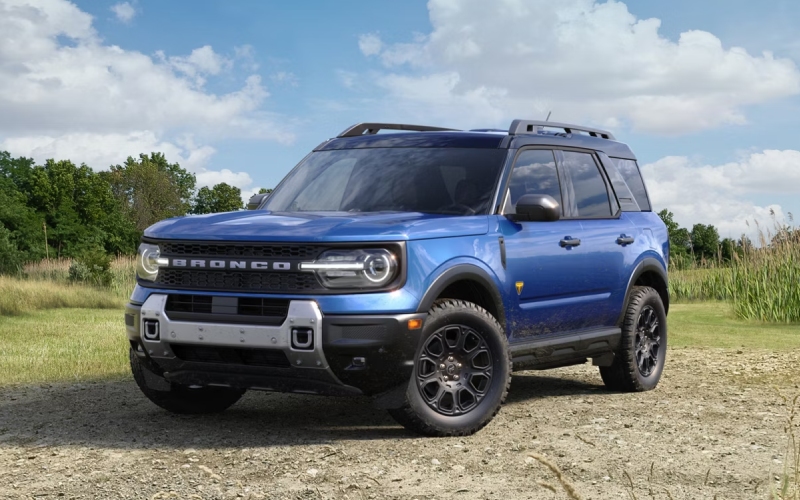
Alpine Ford – How the 2026 Ford Bronco Sport 13.2-Inch Display Helps Denver, CO Drivers Stay Connected
The compact adventure SUV category has changed quickly, and modern drivers expect more than capability alone. The 2026 Ford Bronco Sport answers that expectation with a cabin centered around technology that feels useful, not distracting. One of its most important upgrades is the 13.2-inch center display, a feature that brings maps, music, calls, apps, and vehicle information into a clean, easy-to-read layout. For shoppers comparing SUVs, screen size is only part of the story. What matters more is how naturally the system fits into daily driving, how quickly it helps you find what you need, and how well it supports both routine commutes and more adventurous plans outside the metro area.
For Denver, CO drivers, that balance is especially valuable. A typical week might include highway driving, errands across town, parking in tighter urban areas, and weekend routes toward foothills, trailheads, or nearby communities. The Bronco Sport® is built to make those transitions feel simple. Standard 4×4 gives it traction-minded confidence, while the technology inside helps you stay organized along the way. Instead of feeling like a rugged SUV with an afterthought of a screen, the Bronco Sport® makes connectivity part of the driving experience. It gives you the sense that the vehicle is ready for both the practical side of life and the spontaneous one.
Why the 13.2-Inch Center Display Matters
A larger center display can make an immediate difference because it reduces the need to squint, search, or tap through crowded menus. The 13.2-inch screen in the 2026 Bronco Sport® gives key information more room to breathe, which is helpful when you are following navigation, changing audio, or checking connected features. The display feels especially well matched to the SUV’s personality because the Bronco Sport® is designed for movement. Whether you are heading across town or navigating a route to an outdoor destination, quick access to information matters.
Wireless Apple CarPlay® and Android Auto™ Compatibility add another layer of convenience. Many shoppers ask whether they will need to plug in a phone every time they drive, and the answer is refreshingly simple: compatible smartphone integration is designed to work wirelessly. That means your navigation apps, playlists, messages, and calls can be easier to access without dealing with a cable each time you get behind the wheel. For drivers who split time between work, family, errands, and recreation, that small daily convenience can become one of the most appreciated parts of the cabin.
Connected Features for Real Driving Routines
The Ford Connectivity Package, included for one year, helps bring apps, maps, streaming capability, and Wi-Fi® hotspot convenience along for the ride. That is especially useful for passengers, families, and drivers who rely on connected tools throughout the day. If you are waiting between appointments, coordinating plans, or traveling with people who need to stay online, having a vehicle designed around connectivity can make the cabin feel more flexible. Ford describes the technology with personality, but the real value is practical: the Bronco Sport® helps your digital life move with you.
Of course, technology should never replace focus behind the wheel. The best systems are the ones that help reduce friction. A clear display, familiar smartphone integration, and thoughtful menu access can support a calmer drive because your most-used functions are easier to locate. The Bronco Sport® does this while still keeping its rugged charm. You get a cabin that feels modern and capable without becoming overly complicated.
How the Display Complements Bronco Sport® Capability
The 2026 Bronco Sport® is not just a tech-forward compact SUV. It is a Bronco®-family vehicle with standard 4×4 capability across the lineup. Big Bend® models include 5 G.O.A.T. Modes® Goes Over Any Type of Terrain, while Badlands® models add advanced 4X4 with a twin-clutch rear drive unit and 7 G.O.A.T. Modes®. That matters because the center display supports the broader purpose of the vehicle. When you have a flexible SUV built for changing surfaces and varied routes, it makes sense to have an interface that keeps route guidance and vehicle functions easy to reference.
The trim range also lets shoppers decide how much comfort, design, and capability they want. The Heritage model brings Oxford White exterior details, Heritage Bronco® Script side decals, all-terrain tires, Navy Pier plaid cloth seats, and a micro-suede armrest. Outer Banks® adds premium-trimmed heated front seats, a heated steering wheel, a Black-painted grille, and a Shadow Black-painted roof. Badlands® focuses on performance with the 2.0L EcoBoost® engine, steel-plated front bumper, underbody protection, and trail-ready hardware. Across these personalities, the large center display helps create a consistent technology experience.
What Shoppers Should Look for During a Test Drive
When comparing vehicles online, it can be tempting to focus only on specifications. A test drive adds the missing context. With the Bronco Sport® display, shoppers should pay attention to visibility, response, menu layout, and how easily the system pairs with a compatible smartphone. Try using navigation, changing audio sources, and viewing commonly used functions. The goal is not simply to confirm that the screen is large. The goal is to see whether it makes your daily drive easier.
- Screen visibility: Notice whether maps and menus are easy to read from the driver’s seat.
- Wireless pairing: Ask about Apple CarPlay® and Android Auto™ Compatibility and how setup works.
- Menu simplicity: Look for quick access to the functions you use most often.
- Passenger usefulness: Consider how connected features may help family, friends, or coworkers on longer drives.
- Trim comparison: Explore how the technology experience feels in Big Bend®, Heritage, Outer Banks®, and Badlands® models.
Drivers shopping with Alpine Ford can also ask our team to walk through the display before leaving the lot. We know that technology can influence long-term satisfaction, and a few minutes of setup guidance can make the ownership experience feel more natural from day one. Our dealership is proud to support shoppers serving Castle Rock, Denver, and Pueblo with a people-first approach, online convenience, and straightforward answers about features, trims, leasing, financing, and service.
Frequently Asked Questions:
Does the 2026 Bronco Sport® include wireless smartphone compatibility?
Yes. The 13.2-inch center display includes wireless Apple CarPlay® and Android Auto™ Compatibility, helping compatible smartphone users access familiar apps without plugging in every drive.
Is the 13.2-inch display standard on every model?
Ford lists the 13.2-inch center display as a key feature on the Bronco Sport® Big Bend®, and shoppers can review current model details with a Ford dealer to confirm equipment by trim.
Can the Bronco Sport® support a Wi-Fi® hotspot?
The Ford Connectivity Package can bring Wi-Fi® hotspot capability and connected features, with one year included, helping passengers and drivers stay better connected on the go.
Is the technology useful for off-road driving?
Yes, in a practical sense. The display supports route guidance, connectivity, and vehicle information access, while the SUV’s standard 4×4 and available G.O.A.T. Modes® handle the capability side.
The 13.2-inch center display is a strong example of why the Bronco Sport® feels so well rounded. It does not ask drivers to choose between rugged identity and modern convenience. Instead, it blends both in a compact SUV that is easy to use, easy to personalize, and ready for a wide range of driving needs. If you are comparing adventure-ready SUVs, this technology should be high on your list because it affects every drive, not just the occasional trip. From quick errands to longer routes outside the city, the Bronco Sport® makes staying connected feel natural.
Request more 2026 Ford Bronco Sport information
Do I need the 2026 Ford Bronco Sport Badlands® for weekend trails around Colorado Springs, CO?
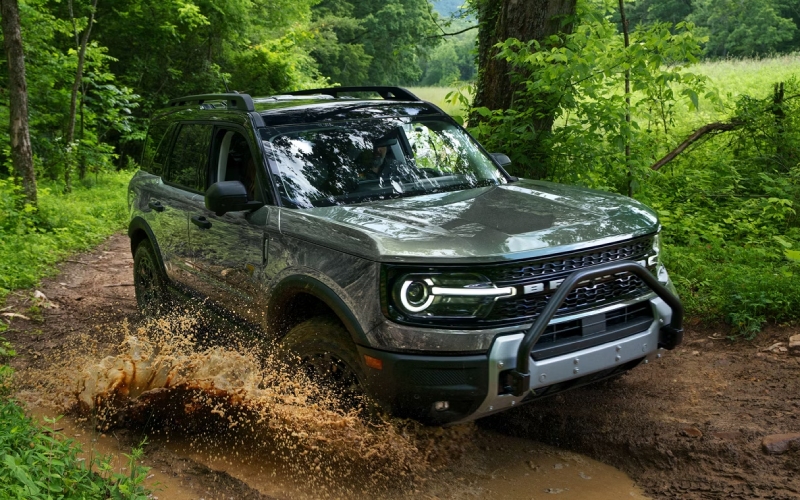
Alpine Ford – Do I need the 2026 Ford Bronco Sport Badlands® for weekend trails around Colorado Springs, CO?
Choosing the right 2026 Ford Bronco Sport® trim should feel easy, not confusing. For shoppers driving between Old Colorado City, Monument, Manitou Springs, and trailheads west of town, a common decision point is whether you actually need the Bronco Sport Badlands® or if a Bronco Sport Big Bend® or Outer Banks® already covers your mix of daily driving and weekend exploring. At Alpine Ford, we help you match capability to your actual use so you get exactly what adds value on our local roads and nearby two-tracks.
Below, we break down what the Badlands adds in the real world around Colorado Springs, how the standard Bronco Sport 4×4 behaves on familiar gravel and forest roads, and a few simple ways to decide which trim fits your lifestyle. We also include quick answers to follow-up questions our customers ask when they test drive with us.
What the Badlands® adds for our local terrain
The 2026 Bronco Sport Badlands is purpose-built for more technical surfaces you can encounter off Rampart Range Road or on rockier spurs above Woodland Park. It brings Advanced 4X4 with a twin-clutch rear drive unit that can send power side to side across the rear axle. On loose granite, off-camber switchbacks, or rutted climbs, that torque distribution helps the vehicle pull itself around tighter turns and maintain momentum with fewer wheelspin moments.
Badlands also gives you 7 G.O.A.T. Modes® to tailor throttle mapping, shift logic, and traction control to the surface under your tires. Combined with steel-plated front bumper elements and underbody protection, the package encourages you to commit to lines you might second-guess in softer-trimmed SUVs. And with its 2.0L EcoBoost® engine, Badlands delivers confident passing on Highway 24 while providing the low-speed control you want when creeping over embedded rock or crossing shallow washouts after a summer storm.
When Big Bend® or Outer Banks® is more than enough
Every 2026 Bronco Sport model comes with standard 4×4 and G.O.A.T. Modes®, so even Big Bend and Outer Banks have genuine traction help for the dirt segments that connect many popular Front Range trailheads. For example, graded gravel to reservoir access, washboard sections toward Gold Camp Road, or mildly rutted forest roads after spring maintenance are well within the standard system’s comfort zone.
If your weekends look like fishing at 11 Mile State Park, hiking in Mueller State Park, or camping on dispersed sites that do not require technical climbs or sharp breakover angles, you may appreciate the refined ride and comfort features in Big Bend or Outer Banks. Outer Banks adds premium-trimmed heated front seats and a heated steering wheel, with a Shadow Black-painted roof and a black-painted grille for a more urban-leaning look that still feels at home on dirt.
Simple ways to decide
Use the quick checks below to map your driving against what each configuration does best. If you are unsure, our team can set up a test route that samples city streets, a stretch of I-25, and nearby county roads so you can feel the differences in real time.
- You aim for rougher spurs with ledges or loose, off-camber turns
- You want maximum traction help on rocky climbs and tight switchbacks
- You value added protection beneath the vehicle for peace of mind
- You plan to explore beyond graded surfaces where wheel lift is common
On the other hand, many Colorado Springs drivers are happier with Big Bend or Outer Banks if their adventures stay modestly off-pavement and comfort matters on the weekday commute.
- You mostly drive paved routes with occasional gravel and light ruts
- You prioritize a refined daily ride plus weekend versatility
- You want standard 4×4 confidence without extra hardware weight
- You prefer an easy step-in height and simpler tire replacement options
Daily life features you will appreciate either way
Trim choice aside, the 2026 Bronco Sport lineup feels dialed for Colorado lifestyles. The 13.2″ center display with wireless Apple CarPlay and Android Auto compatibility makes mapping trailheads, coffee stops in Old Colorado City, and dinner downtown feel natural. The Ford Connectivity package is included for one year, bringing in-vehicle Wi-Fi and streaming so passengers can stay entertained on the drive up Ute Pass.
Standard 4×4 is the baseline for every Bronco Sport, and the HOSS Off-Road Suspension is engineered for control and composure when the pavement ends. With each G.O.A.T. Modes® setting, the vehicle’s personality adapts to the surface without you having to manage multiple switches or aftermarket add-ons. And because the body is scaled smartly for city parking garages and trailhead lots alike, the Bronco Sport fits into daily life as cleanly as it fits a weekend plan.
A capability snapshot for our region
Think of Big Bend and Outer Banks as excellent for mixed-use driving where dirt is part of the day, not the main event. Badlands layers on more specialized traction, extra protection, and power that help when the route is unpredictable. All trims benefit from thoughtful dimensions that make it easy to thread through tight trees or park along narrow shoulder pullouts on Highway 67.
If you are wondering about tires, remember that rubber choice changes personality. A Bronco Sport on more aggressive all-terrain tires gains bite on loose surfaces, while a street-biased tire will be quieter on the commute. We can help you select a factory configuration or an accessory upgrade that matches your plans.
Try a route that mirrors your weekend
To make your decision real, we recommend a test drive loop that mimics your use. Start with surface streets near downtown Colorado Springs, merge onto I-25 for an on-ramp acceleration and lane-change feel, then exit for a graded gravel sample on a legal county road. If you want to go deeper, we can schedule a longer drive on routes west of town so you can test G.O.A.T. Modes® and feel the difference between trims. We always follow posted restrictions and stay on designated roads.
Bring your gear, too. If you carry a stroller, a dog crate, skis, climbing pads, or a mountain bike, we will fold seats, show cargo solutions, and confirm what fits cleanly. That is the best way to turn a spec sheet into confidence.
How our team helps you land on the right trim
Our approach is practical. We will ask where you actually go, what you carry, and how you drive in town. Then we will show you how features map to those needs, from Advanced 4X4 benefits on uneven terrain to the comfort touches that make the weekday grind easier. We can also walk you through available packages like the Bronze + Black Diamond® Off-Road package or Sasquatch® packages so you know what each adds without guessing.
If you decide Big Bend or Outer Banks fits your life today, we will review accessories that boost trail readiness later, including roof solutions for kayaks and bikes. If your heart is set on Badlands, we will make sure you understand how its added capability translates to the specific routes you want to explore.
Frequently Asked Questions:
Is 4×4 standard on every 2026 Bronco Sport®?
Yes. Every 2026 Bronco Sport comes with standard 4×4 and G.O.A.T. Modes®, so even Big Bend® and Outer Banks® offer confident traction on dirt and gravel common around Colorado Springs.
What does the Badlands® twin-clutch rear drive unit actually do on local trails?
On uneven surfaces where one rear wheel might unload, the twin-clutch system can direct torque to the wheel with grip. That helps you pivot around tighter switchbacks, climb loose rock with less wheelspin, and hold a clean line on off-camber turns west of town.
Do I need the 2.0L EcoBoost® power of Badlands for highway driving up Ute Pass?
Both engine setups handle everyday merging and passing, but the 2.0L EcoBoost in Badlands adds extra reserve for higher elevation climbs and fully loaded weekends. If you regularly combine steep grades with gear and passengers, you will feel the additional confidence.
Can I add more trail capability to a Big Bend® later?
Absolutely. Many customers start with Big Bend, then add accessories like all-terrain tires or cargo solutions. We will help you choose factory accessories engineered for Bronco Sport so you keep the calibration, safety systems, and ride quality intact.
What technology features support daily driving in town?
The 13.2″ center display with wireless Apple CarPlay and Android Auto compatibility simplifies navigation and calls, while available Ford Co-Pilot360® Assist+ features can help make busier stretches of I-25 feel easier. The Ford Connectivity package is included for one year, so you and your passengers stay connected on the go.
Our take, after thousands of miles with customers, is simple. If your off-pavement time stays on graded or lightly rutted surfaces, Big Bend or Outer Banks gives you the right mix of comfort and capability. If you seek out rougher lines, off-camber turns, or rocky climbs around Colorado Springs and into the Front Range, Badlands rewards you with poise that pays off every mile. The best choice is the one that matches where you actually drive.
Ready to compare trims back to back, try G.O.A.T. Modes®, and see how your gear fits? Visit us at Alpine Ford in Pueblo, a straight shot from Colorado Springs. We will set up a drive that mirrors your weekend and help you choose the Bronco Sport® that feels made for your life here.
Request more 2026 Ford Bronco Sport information
Connect with us


- July 2026
- June 2026
- May 2026
- April 2026
- March 2026
- February 2026
- January 2026
- December 2025
- November 2025
- October 2025
- September 2025
- August 2025
- July 2025
- June 2025
- May 2025
- April 2025
- March 2025
- February 2025
- January 2025
- December 2024
- November 2024
- October 2024
- September 2024
- August 2024
- July 2023
- April 2023
- February 2023
- January 2023
- October 2022
Archives
- 2025 Ford F-150
- Alpine Ford Dealer
- Alpine Ford, LLC Service
- Ford Bronco
- Ford Bronco Sport
- Ford Bronco Sport Service
- Ford Dealer
- Ford Escape
- Ford Expedition
- Ford Explorer
- Ford F-150
- Ford Maverick
- Ford Mustang
- Ford Mustang Mach-E
- Ford Ranger
- Ford Service
- Ford Super Duty F-250
- Ford Super Duty F-250 Service
- Ford Super Duty F-350
- Ford Transit
- New Inventory
- Parts
- People
- Pre-Owned Inventory
- Service
- West Pueblo Ford Dealer