

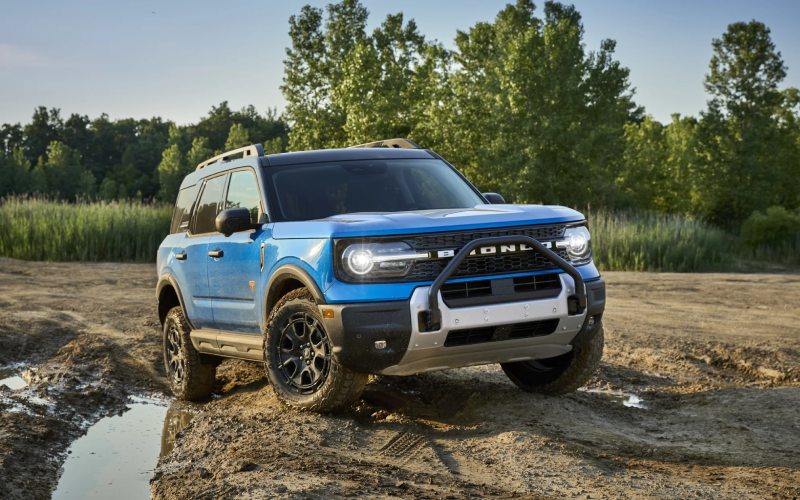
Alpine Ford – Is the 2025 Ford Bronco Sport or Jeep Compass Better for Winter Trails and Daily Driving around Colorado Springs, CO?
When winter weather and weekend escapes define your calendar, two compact SUVs tend to rise to the top of the shortlist: the Bronco® Sport and the Jeep® Compass. Drivers around Colorado Springs, CO want confident traction on snow-packed commutes, predictable control on rutted access roads, and a cabin that adapts to boots, skis, and hydration packs without drama. This guide answers a common shopper question—Which SUV is better for winter trails and daily driving?—by focusing on the driveline engineering, trail tech, and everyday usability details that matter most in Colorado’s Front Range.
Start with traction. The Bronco® Sport’s available twin-clutch rear drive unit with a rear differential lock function in Badlands® can direct torque side-to-side across the rear axle to maintain momentum when a tire unloads over washboard, ice, or a diagonal rut. Its G.O.A.T. Modes let you tailor throttle mapping, shift logic, and traction control for snow, mud, sand, or rock, and available Trail Control works like low-speed cruise control off-pavement—especially handy for long descents on slick grades where left-foot braking gets tiring. Jeep® Compass brings strong fundamentals, including standard 4×4, Selec-Terrain drive modes, skid plates on Trailhawk®, and all-terrain tires that bite into fresh powder. Where the Ford differentiates itself is in how its torque-vectoring rear axle, mode logic, and off-road cruise control integrate seamlessly. The result is a calmer steering wheel and less scramble at the throttle when surfaces change mid-corner or mid-climb.
Now consider power and towing. The Bronco® Sport offers an available 2.0L EcoBoost turbo with 250 hp and up to 2,200 lb of towing—useful for small trailers, sleds, or a pair of snowmobiles on a lightweight hauler. The Compass’s 2.0L turbo delivers 200 hp and 221 lb-ft of torque with up to 2,000 lb towing. Both figures are solid, but the Ford’s additional headroom shows up on passes and at on-ramps where altitude and load conspire to blunt acceleration. For winter traction specifically, the Ford’s driveline also smooths out power delivery at low speeds, which can mean less wheelspin and more forward progress on packed snow.
Daily life matters, too. The Bronco® Sport’s upright greenhouse improves sightlines in tight neighborhoods and trailhead lots, and the safari-style roof creates vertical cargo room for coolers and tall bins. The cabin adds smart touches for gear—pre-wired Hero Switches to power accessories, a USB-powered accessory tray for dash cams or nav screens, and easy-to-clean cargo surfaces. Compass counters with a sleek interior, available leatherette seats with blue stitching, and a wealth of active safety tech, including available Active Driving Assist System. Both SUVs offer Apple CarPlay and Android Auto compatibility and driver-assist suites that reduce fatigue on I-25 or Highway 24. If your weekends include switching from skis to microspikes to camp stoves, the Ford’s organization-friendly cabin can feel like a welcome edge.
If you’re choosing between these two for life along the Front Range, the decision often comes down to whether you want the extra layer of off-road-oriented tech and power. The Bronco® Sport’s torque-vectoring rear axle, Trail Control, and available 250-hp engine add a dimension of calm and capability when winter turns unpredictable. That confidence carries into spring mud and summer gravel, which is why so many outdoor-focused drivers lean Ford in this comparison.
Frequently Asked Questions:
Does the Bronco® Sport’s Trail Control help in winter?
Yes. On icy or rutted descents, Trail Control maintains a set low speed and individually modulates brakes to keep the SUV settled, reducing fatigue and helping you focus on steering around obstacles.
How do the two SUVs compare for towing small trailers in cold weather?
The Bronco® Sport’s available 2.0L EcoBoost offers up to 2,200 lb of towing, providing more headroom for cargo and altitude. Compass maxes at 2,000 lb, which is capable for lighter setups but offers less margin when roads and temps work against you.
Which is easier to outfit with lights or a winch?
The Bronco® Sport makes adding accessories simple with four pre-wired Hero Switches and an accessory tray for powering and mounting electronics, plus available factory Off-Road Packages that include a Brush Guard and steel plated bumpers.
For a hands-on walk-through, Alpine Ford is serving Colorado Springs, Canon City, and Castle Rock with product specialists who can help you map features to your winter driving needs and weekend plans. Bring your gear checklist, and we’ll help you build the right configuration for the season ahead.
Request more 2025 Ford Bronco Sport information
Connect with us


- July 2026
- June 2026
- May 2026
- April 2026
- March 2026
- February 2026
- January 2026
- December 2025
- November 2025
- October 2025
- September 2025
- August 2025
- July 2025
- June 2025
- May 2025
- April 2025
- March 2025
- February 2025
- January 2025
- December 2024
- November 2024
- October 2024
- September 2024
- August 2024
- July 2023
- April 2023
- February 2023
- January 2023
- October 2022
Archives
- 2025 Ford F-150
- Alpine Ford Dealer
- Alpine Ford, LLC Service
- Ford Bronco
- Ford Bronco Sport
- Ford Bronco Sport Service
- Ford Dealer
- Ford Escape
- Ford Expedition
- Ford Explorer
- Ford F-150
- Ford Maverick
- Ford Mustang
- Ford Mustang Mach-E
- Ford Ranger
- Ford Service
- Ford Super Duty F-250
- Ford Super Duty F-250 Service
- Ford Super Duty F-350
- Ford Transit
- New Inventory
- Parts
- People
- Pre-Owned Inventory
- Service
- West Pueblo Ford Dealer