Alpine Ford - Can the 2027 Ford Transit® Be Configured for Business Needs around Colorado Springs, CO?
The 2027 Ford Transit® gives business shoppers a practical way to match a van to the work instead of forcing the work to fit the van. Around Colorado Springs, CO, that kind of flexibility matters. A contractor may need space for tools and materials. A delivery company may prioritize easy loading and route efficiency. A shuttle operator may need comfortable seating for a larger group. A mobile service business may want a van that can be upfitted with storage, power access, and technology that supports daily operations. The Transit® lineup is designed to serve all of those use cases with multiple body styles, roof heights, lengths, seating choices, engine options, and an available fully electric model.
For in-market shoppers, the real question is not simply whether the Transit® is capable. It is whether the right configuration exists for a specific business model. Ford answers that with a broad lineup that includes the Transit® Cargo Van, Transit® Passenger Van XL, Transit® Passenger Van XLT, and E-Transit™ Cargo Van. That range allows business owners to think beyond a generic van purchase and focus on real details: how much cargo will be carried, how many people need to ride, where the van will be parked, how often it will be loaded, and whether gas or electric operation is the better fit for the route.
Why Configuration Choice Matters for Business Buyers
A business van is often a moving workspace, mobile storage unit, customer-facing vehicle, and transportation tool all at once. The 2027 Ford Transit® helps because it offers available configurations that can be aligned with those roles. The Transit® Cargo Van is available in three roof heights and three body lengths, giving drivers the ability to prioritize interior room, cargo access, and maneuverability. Low, Medium, and High Roof options support different needs, from basic package transport to standing-room work access. Regular, Long, and Extended body lengths help businesses choose the right footprint for parking areas, jobsite access, and daily cargo volume.
This is especially useful for businesses that operate across the Front Range. Routes near Colorado Springs can include city streets, highway driving, commercial areas, residential service calls, and mountain-adjacent roads leading to customers or project locations. A compact-feeling configuration may work better for frequent urban stops, while a longer and taller van may make more sense for tools, parts, bulky materials, or high-volume delivery operations.
Cargo Van or Passenger Van?
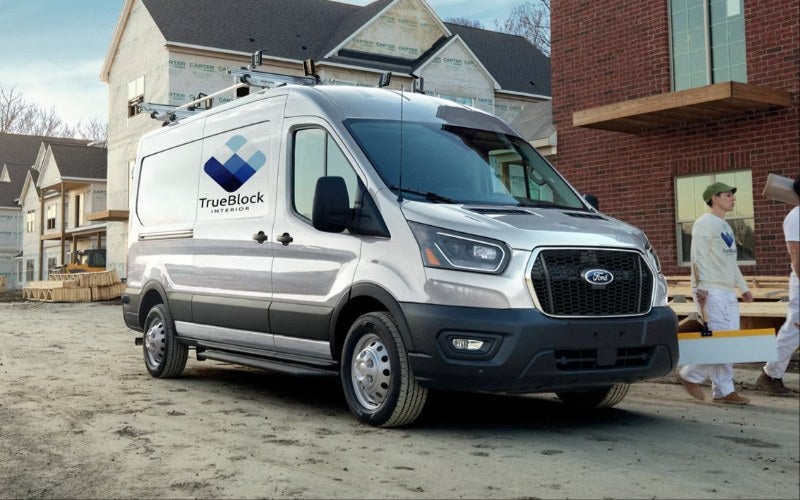
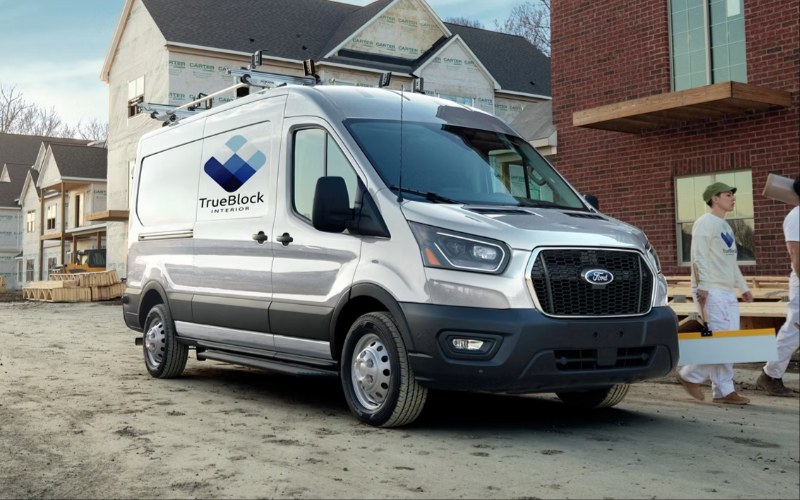
The first major decision is whether your business needs open cargo space or passenger seating. The Transit® Cargo Van is the natural fit for trades, deliveries, service fleets, mobile repair, equipment transport, and upfit-based business models. Its open interior can be configured with shelves, bins, racks, partitions, or storage systems based on your workflow. Ford highlights its ability to haul tall items, support abundant storage capacity, and provide the space needed for larger hauls.
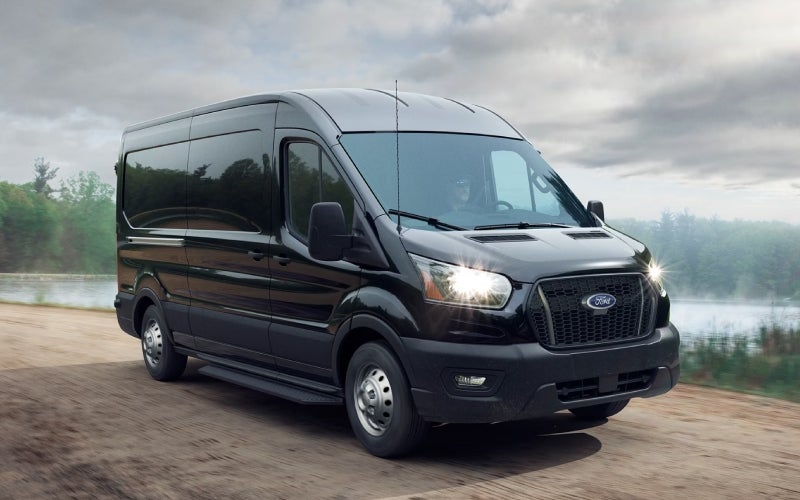
The Transit® Passenger Van is a different solution. It can be configured to seat up to 15 people, making it a strong option for shuttle services, hospitality transportation, churches, schools, recreation programs, assisted living transportation, and large-group travel. The Passenger Van XL and Passenger Van XLT both offer the same core Transit® practicality, but the XLT adds standard Ford Co-Pilot360® Assist 2.0 with Adaptive Cruise Control and 360-Degree Camera, which can be especially helpful for drivers responsible for passenger comfort and awareness in busy parking areas.
- Transit® Cargo Van: Best for tools, equipment, deliveries, inventory, and upfit-ready business use.
- Transit® Passenger Van XL: A practical people-moving option with available gas engines and available AWD.
- Transit® Passenger Van XLT: A passenger-focused model with added driver assistance technology and available roof and length options.
- E-Transit™ Cargo Van: A fully electric cargo solution for businesses with route-based driving and charging plans.
Once the body style is clear, shoppers can narrow the decision by looking at roof height, length, powertrain, and available driver assistance systems. Each choice should connect directly to the way the van will be used five or six days a week, not just during an occasional special job.
Gas Power or E-Transit™?
The 2027 Ford Transit® gas lineup offers available 3.5L PFDi V6 and 3.5L EcoBoost® V6 engines. Both are designed to support demanding commercial use, but the 3.5L EcoBoost® V6 may appeal to shoppers who want stronger turbocharged performance for heavier workloads or frequent highway travel. Select models also offer a 25-gallon fuel tank or an available 31-gallon extended range fuel tank, which may be valuable for businesses that cover longer routes between stops.
The E-Transit™ Cargo Van gives businesses another path. Its fully electric powertrain is well suited to predictable routes, local deliveries, campus operations, municipal work, and mobile services that return to a charging location. Ford notes that the E-Transit™ Cargo Van offers a maximum payload of 3,322 lbs, available Pro Power Onboard™ - 2.4 kW, Ford Co-Pilot360® with Lane Keeping System and Front/Rear Parking Sensors, and available Vehicle Integration System 2.0. For a business that uses power tools, mobile devices, or jobsite electronics, available Pro Power Onboard™ can be a useful productivity advantage.
Technology That Supports Daily Operations
Modern business vans need more than space. Drivers need visibility, connectivity, and assistance features that help during long workdays. The 2027 Ford Transit® includes standard Ford Co-Pilot360® technology on Cargo Van models, including front and rear parking sensors, Pre-Collision Assist® with Automatic Emergency Braking, and Lane-Keeping System. These systems are designed to support driver awareness in common situations, from navigating traffic to backing near docks, driveways, or work areas.
The available 12" Center Display with SYNC® 4 also gives the cabin a more modern, connected feel. In a business setting, that matters because the van may be used for dispatch communication, route planning, customer calls, or navigation support. A clear central display helps keep important functions accessible while maintaining a practical cockpit designed for work.
How to Choose the Right Transit® Configuration
A smart Transit® purchase starts with an honest look at your normal business day. Before selecting a model, write down what the van needs to carry, where it needs to go, who will drive it, and how often it will be loaded or unloaded. A delivery business may care most about side-door access and cargo organization. A contractor may need height and payload. A shuttle service may prioritize seating layout, camera visibility, and passenger comfort.
- Define the main job: Choose cargo, passenger, or electric based on your highest-priority use.
- Measure your equipment: Compare toolboxes, racks, ladders, bins, and materials against available roof heights and body lengths.
- Plan for growth: Consider whether your workload, crew size, or route demands could expand over the next few years.
- Evaluate traction needs: Available Intelligent All-Wheel Drive may be worthwhile for varied job locations and changing road surfaces.
- Think about upfits: Discuss shelves, partitions, racks, and power needs before finalizing the exact van configuration.
These steps help prevent underbuying or overbuying. The best Transit® is not always the biggest or most heavily equipped version. It is the one that makes daily work easier, keeps the driver comfortable, and supports the tasks your business performs most often.
Frequently Asked Questions:
Can the 2027 Ford Transit® be used as a mobile workshop?
Yes. The Transit® Cargo Van is a strong candidate for mobile workshop use because it offers multiple roof heights and body lengths, plus a spacious interior that can be configured with storage, shelving, tool systems, and job-specific upfits. The High Roof option is especially useful for drivers who want more vertical working room.
Is available Intelligent All-Wheel Drive useful for business driving around Colorado Springs, CO?
Available Intelligent All-Wheel Drive can be a valuable option for businesses that travel to varied locations, including customer driveways, commercial sites, gravel lots, and roads that may not always be perfectly smooth. It adds traction support while preserving the Transit® van’s practical commercial focus.
Which Transit® model is best for carrying people?
The Transit® Passenger Van is the better fit for people-moving needs. Depending on configuration, it can seat up to 15 people. The Passenger Van XLT may be especially appealing for businesses that want added driver assistance technology, including standard Ford Co-Pilot360® Assist 2.0 with Adaptive Cruise Control and 360-Degree Camera.
Who should consider the E-Transit™ Cargo Van?
The E-Transit™ Cargo Van is worth considering for businesses with local or predictable routes, access to charging, and a desire for fully electric operation. Its maximum payload of 3,322 lbs, available Pro Power Onboard™ - 2.4 kW, and available Vehicle Integration System 2.0 make it a practical electric work van option.
The 2027 Ford Transit® is built for businesses that need real answers, not one-size-fits-all transportation. With flexible cargo and passenger layouts, available gas engines, a fully electric E-Transit™ option, available Intelligent All-Wheel Drive, and standard Ford Co-Pilot360® technology, it gives shoppers the tools to build around actual work needs. For business owners around Colorado Springs, CO, that level of adaptability can make the difference between simply owning a van and operating a vehicle that actively helps the business run better.