Blog / Ford Transit

Space, Seating, and Smart Tech on the 2026 Ford Transit for Denver, CO Drivers

Space, Seating, and Smart Tech on the 2026 Ford Transit for Denver, CO Drivers

Alpine Ford - Space, Seating, and Smart Tech on the 2026 Ford Transit for Denver, CO Drivers

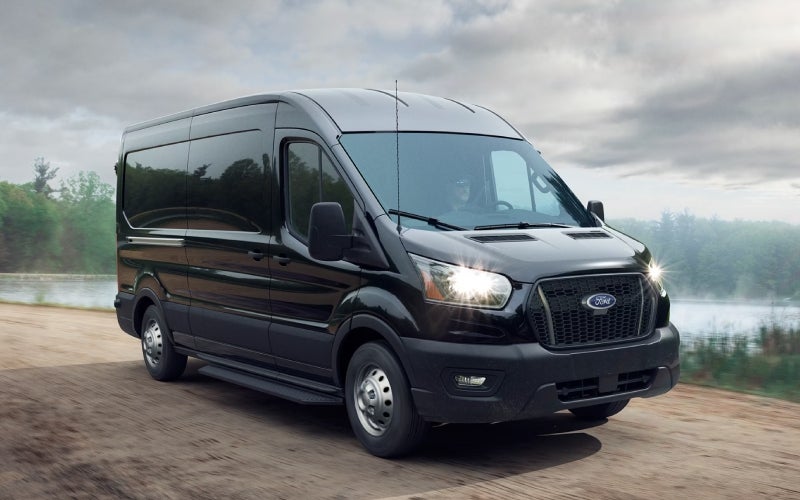
When you’re moving people and gear around Denver, CO, the right van isn’t a luxury—it’s the difference between a smooth day and a scramble. That’s where the 2026 Ford Transit® stands out. It blends real-world space with a driver-focused cockpit and standard tech like SYNC® 4 and Ford Co-Pilot360®, so the van feels intuitive from the first mile. Whether you run a touring group, handle school and community shuttles, or need something flexible for family weekends and weekday projects, Transit® adapts quickly with three roof heights, two lengths, and seating for up to 15.

Under the hood, the choice is straightforward: the proven 3.5L PFDi V6 for predictable power or the turbocharged 3.5L EcoBoost® V6 when you want more punch for highway merges and steeper grades along the Front Range. Rear-Wheel Drive is standard, and available Intelligent All-Wheel Drive adds confident traction when weather or work routes vary. Pair that with towing up to 4,500 lbs and a max payload up to 3,475 lbs when properly equipped, and you have a van that pulls its weight without drama—just what you need for concert equipment, soccer gear, or tools and supplies across town.

Inside, Transit® is designed for people who live in motion. Standard SYNC® 4 puts a crisp 12-inch center display at your fingertips with Enhanced Voice Recognition, so you can keep your eyes forward while adjusting navigation or calls. The new standard 8-inch cluster display keeps essentials in view, and the Tire Pressure Monitoring System helps maintain a stable, efficient ride. Seat layouts scale to what your day demands, and available 10-way power heated front seats make long hours feel shorter. Storage solutions are smart, too—choose a Medium or Large Center Console with an integrated shifter, dual cupholders, and room for devices and notebooks. Add organization accessories to keep cargo secure when streets get bumpy or when you transition from passengers to packages and back again.

Denver traffic and tightly packed lots can make any big vehicle feel unwieldy. Standard Ford Co-Pilot360® helps here. Front and rear parking sensors support precise positioning, Pre-Collision Assist® with Automatic Emergency Braking is there when the unexpected happens, and a Lane-Keeping System provides gentle steering support if you drift. The available 253-degree rear door opening on XLT delivers extra clearance for loading in alleys and angled driveways, while Close Assist on the sliding side door saves time at busy curbsides—no door slamming required.

Choosing the right configuration starts with an honest look at how you use space. Here’s a streamlined way to think about roof height and length in practical, real-world terms around the metro area.

  • Low Roof: Ideal for garages and low-clearance parking; seated passenger work, compact cargo stacks.
  • Medium Roof: Stand-up interior movement for many adults; versatile cargo racks and bins.
  • High Roof: Maximum vertical working room; easiest in-vehicle mobility and bulkier gear clearance.
  • Long Length: Balanced for downtown maneuvering and mixed passenger-cargo duty.
  • Extended Length: Best for maximum seating or cargo volume when you run packed schedules daily.

Powertrain selection is just as simple. If you value steady power and predictable costs, the 3.5L PFDi V6 is your everyday hero. If you routinely load up, travel I-25 and I-70 with full seats and luggage, or want extra torque at altitude, the 3.5L EcoBoost® V6 delivers confident acceleration without sacrificing refinement. Standard Rear-Wheel Drive gives you consistent traction under load, and available Intelligent All-Wheel Drive is the right call when your routes include variable surfaces or frequent mountain runs.

The Transit® daily advantage is also about reducing friction between stops. The standard 25-gallon fuel tank is right-sized for most routes, while the available 31-gallon Extended Range fuel tank is the set-it-and-forget-it choice for longer days with fewer fuel breaks. Combine that with interior flexibility—swap seating rows, reassign storage zones, and use console space smartly—and you get a van that grows with your schedule rather than boxing it in.

If you’re still narrowing down options, start with these questions, then match your answers to the height, length, and engine that fit best. You’ll avoid underbuying or over-specifying—both of which can complicate daily life.

  1. What’s my real passenger mix: Count consistent riders, not occasional peaks, and add one flexible row for busy weeks.
  2. How often do I load in tight spaces: If alleys and crowded curbs are daily challenges, prioritize the available 253-degree doors.
  3. Do I need extra traction year-round: If you tackle variable surfaces and elevations regularly, choose available Intelligent AWD.
  4. Which tech supports my routine: If driver rotation is common, standard SYNC® 4 and Ford Co-Pilot360® help everyone feel at home fast.

There’s a reason the Transit® formula works so well in a city like Denver. It’s adaptable enough for local businesses, community groups, and large families who split time between city streets and highways out to the foothills. When you build yours with a clear eye on how many people you move, where you park, and what you carry, the van simply feels easier to live with—day after day.

Ready to explore trims and options, including Passenger Van XL and XLT, roof heights, lengths, and engines? Alpine Ford is serving Canon City, Castle Rock, and Denver with a customer-first approach that keeps the process simple and your priorities front and center.

Frequently Asked Questions:

How many people can the 2026 Ford Transit seat?

Transit® can be configured to seat up to 15 passengers, with multiple seating arrangements to match your daily needs.

Which engines are available on the 2026 Ford Transit?

You can choose the 3.5L PFDi V6 for steady, proven performance or the 3.5L EcoBoost® V6 for turbocharged confidence at altitude and with heavier loads.

Is All-Wheel Drive available?

Yes. Rear-Wheel Drive is standard, and Intelligent All-Wheel Drive is available for added traction and stability across varied routes.

What driver-assist features come standard?

Ford Co-Pilot360® is standard and includes front and rear parking sensors, Pre-Collision Assist® with Automatic Emergency Braking, and a Lane-Keeping System.

What are the roof height and body length options?

Transit® offers three roof heights—Low, Medium, and High—and two lengths—Long and Extended—so you can dial in space for passengers and cargo.
Request more 2026 Ford Transit information

Posted in:

Recommended Posts

2027fordexplorer-exterior-01

Does the 2027 Ford Explorer Have Enough Space for Castle Rock, CO Family Driving?

Alpine Ford - Does the 2027 Ford Explorer Have Enough Space for Castle Rock, CO Family Driving? Family SUV shoppers around Castle Rock, CO often need more than a simple answer about passenger capacity. The better question is how well an SUV uses its space during real routines: school drop-offs, weekend activities, work commutes, grocery runs, airport drives, and trips along I-25 toward Denver or Colorado Springs, CO. The 2027 Ford Explorer® is built with that kind of daily flexibility in mind, offering three-row seating, useful cargo room, and multiple seating configurations that help shoppers choose the right setup for each household. The Explorer® is not just a vehicle with extra seats added into the back. Ford designed it as a midsize SUV with a practical cabin layout, comfortable materials, smart technology, and enough cargo versatility to adapt throughout the week. The standard second-row captain’s chairs make the cabin feel open and easy to navigate, while the available second-row bench seat on all models except Tremor® gives families the option for seven-passenger seating. That choice matters because not every household uses a three-row SUV the same way. How Many People Can the 2027 Ford Explorer® Seat? The 2027 Ford Explorer® can seat six or seven people, depending on the model and seating configuration selected. Second-row captain’s chairs are standard on all models. This setup creates a six-passenger cabin with a clear pass-through to the third row, which can make life easier when passengers frequently move between rows. For many families, captain’s chairs are a major advantage because each second-row passenger gets a defined seat with added personal space. For shoppers who want maximum passenger capacity, a second-row bench seat is available on Active, ST-Line, Platinum™, and ST models. The bench seat raises capacity to seven passengers. Tremor® is the exception, as it keeps the standard captain’s chair layout. That makes sense for a model focused on off-road-minded capability and distinctive hardware, but families needing seven seats will want to compare other Explorer® models closely. Here is a simple way to think about the seating choice: Captain’s chairs: Best for easy third-row access, added second-row comfort, and households with frequent rear-seat passengers. Second-row bench: Best for maximizing passenger count and carrying up to seven people in one vehicle. Tremor® layout: Best for shoppers who want standard six-passenger seating with added off-road-focused capability. That flexibility is one reason the Explorer® works well for families who want a vehicle that can evolve with changing schedules. A household with younger children may prefer easier third-row access. A household that regularly transports friends, relatives, or teammates may prefer seven-passenger capacity. How Much Cargo Space Does the Explorer® Offer? Cargo space is another key part of the family-SUV decision. The 2027 Ford Explorer® offers 16.3 cu ft of cargo capacity behind the third row with all seats in place. That space is useful for daily items such as backpacks, grocery bags, small sports bags, and work gear. When more room is needed, folding the rear seats opens up a much larger cargo area. Active and ST-Line models offer up to 85.8 cu ft of maximum cargo capacity. Tremor®, Platinum™, and ST models offer up to 85.3 cu ft. The difference is small, but it is worth noting for detail-focused shoppers comparing trims. More importantly, the Explorer® gives drivers the ability to adapt the cabin quickly. Available PowerFold® third-row seats on Tremor® and standard PowerFold® third-row seats on ST and Platinum™ make it easier to switch between passenger and cargo needs. That kind of space is especially valuable around Castle Rock, CO, where daily life can include commuting, errands, school activities, recreation, and family travel. A vehicle needs to manage more than passengers. It needs to carry folding chairs, luggage, coolers, gear bags, home improvement supplies, pet items, and everything else that comes with a full week. Comfort Matters in Every Row Space is more useful when passengers feel comfortable using it. The Explorer® offers a thoughtful interior with available seating materials that range from comfy cloth to Miko® Suede, durable ActiveX®, and soft leather. That range gives shoppers the freedom to prioritize easy-care durability, premium feel, or a sportier look depending on the model selected. Front-row comfort can be especially impressive on upper trims and available packages. Platinum™ offers heated, ventilated, massaging front-row seats with leather inserts. Tremor® models with the 3.0-liter EcoBoost® engine can add the Sun & Sound Package, which includes massaging front seats, a power moonroof, and an upgraded B&O® Sound System. Those features matter on longer drives because the driver and front passenger often spend the most time in the vehicle. The Explorer® also provides strong interior dimensions for a midsize three-row SUV. OEM information lists front headroom at 40.7 inches, middle headroom at 40.5 inches, and rear headroom at 38.9 inches. Front legroom measures up to 43 inches on Active and ST-Line models, with second-row and third-row legroom designed to support practical passenger use. Third rows in midsize SUVs are often best suited for children, teens, or shorter adult trips, but the Explorer® uses its footprint well. Technology That Supports Family Driving A spacious cabin becomes even better when the technology is helpful rather than distracting. The 2027 Ford Explorer® includes the Ford Digital Experience, which brings familiar digital functionality and apps into the vehicle in a way designed to enhance the drive. For families, that can mean easier navigation, better entertainment access, and a more modern front-cabin experience. Driver-assist technology is also important. Ford Co-Pilot360® Technology is focused on helping drivers feel more confident behind the wheel. Active models include Ford Co-Pilot360® driver-assist features, including Adaptive Cruise Control. Available BlueCruise can add hands-free highway driving assistance on compatible highways, helping control steering, braking, and acceleration while the driver keeps eyes on the road ahead. For frequent I-25 travel near Castle Rock, that technology can make longer highway stretches feel more manageable. Some shoppers will also appreciate available camera technology. ST-Line includes a 360-degree camera, which can be useful in parking lots, garages, school pickup lanes, and tight urban spaces. A larger SUV feels easier to live with when visibility tools help provide added awareness around the vehicle. Which Explorer® Model Fits a Family Best? The best Explorer® model depends on how the SUV will be used. Active is a strong starting point with the 2.3L EcoBoost® engine, heated front-row seats, Ford Co-Pilot360® driver-assist features, and the Ford Security Package. ST-Line adds distinctive style, unique cloth-trimmed front- and second-row seats with red stitching, the 360-degree camera, and a B&O® Sound System by Bang & Olufsen® with 10 speakers, including a subwoofer. Tremor® makes sense for shoppers who want extra confidence beyond pavement, thanks to a Torsen® limited-slip rear axle, off-road-tuned suspension with increased ride height, and underbody protection with front and rear deflector plates. Platinum™ is the luxury-minded choice, with premium comfort and available 3.0L EcoBoost® V6 power. ST is the performance-focused model, featuring the 3.0L EcoBoost® engine, sport-tuned suspension, performance brakes with red-painted calipers, and BlueCruise equipped. For a family-focused test drive, consider this checklist before choosing a trim: Bring everyday cargo: Test the rear space with strollers, sports bags, backpacks, or luggage if those items are part of your routine. Test third-row access: Ask passengers to climb in and out of the third row using the second-row layout you prefer. Compare six and seven seats: Decide whether captain’s chairs or the available bench seat better fits your household. Use the infotainment system: Try navigation, audio, wireless connectivity, and the Ford Digital Experience during the drive. Evaluate parking confidence: Test visibility, camera views, steering feel, and overall maneuverability in realistic settings. Taking this approach turns the test drive into a practical evaluation rather than a quick loop around the block. A three-row SUV should make life easier, and the best way to confirm that is to use the vehicle the way your family will use it. Frequently Asked Questions: Is the 2027 Ford Explorer® good for families with multiple children? Yes. The Explorer® is a strong family SUV because it offers three-row seating, standard second-row captain’s chairs, available seven-passenger seating on most models, and useful cargo space behind the third row. Families can choose the seating layout that best fits daily passenger needs. Can the Explorer® carry cargo when all seats are in use? Yes. The 2027 Ford Explorer® provides 16.3 cu ft of cargo space behind the third row with all seats in place. That is useful for groceries, backpacks, smaller sports gear, and travel bags. Folding the rear seats expands cargo capacity significantly. Which Explorer® model has the most cargo room? Active and ST-Line models offer the highest listed maximum cargo capacity at 85.8 cu ft. Tremor®, Platinum™, and ST models offer up to 85.3 cu ft. All models provide the same 16.3 cu ft behind the third row when all seats are in place. Does the Explorer® offer technology for highway driving near Castle Rock, CO? Yes. The Explorer® offers available BlueCruise, a hands-free highway driving assistance feature for compatible highways. Ford Co-Pilot360® driver-assist technology is also available across the lineup to help support confidence behind the wheel. The 2027 Ford Explorer® has enough space for many family driving needs because it combines passenger flexibility, practical cargo volume, comfortable materials, and helpful technology. It is not only about fitting people into three rows; it is about making the cabin easier to use during a busy week. From six-passenger comfort to available seven-passenger capacity, the Explorer® gives shoppers meaningful options. For Castle Rock, CO families comparing midsize SUVs, the Explorer® deserves a close look because it blends everyday usability with model-specific personality. Active, ST-Line, Tremor®, Platinum™, and ST each offer a different path, but the core strengths remain the same: three-row versatility, smart storage, available advanced driver assistance, and a cabin designed around real life. Request more 2027 Ford Explorer information

2027fordsuperdutyf-250-exterior-01

Can the 2027 Ford Super Duty F-250 Handle Heavy Towing Around Canon City, CO?

Alpine Ford - Can the 2027 Ford Super Duty F-250 Handle Heavy Towing Around Canon City, CO? Drivers who tow around Canon City, CO often need more than a pickup that looks strong on paper; confidence comes from power, control, visibility, and the right towing technology working together. The 2027 Ford Super Duty® F-250® is built for that kind of responsibility, with serious engine choices, a robust transmission, available trailering tools, and a truck structure designed for demanding work. Whether the task involves a work trailer, equipment hauler, livestock trailer, large camper, or utility trailer, the F-250® gives shoppers a strong platform to build around. Ford’s Super Duty® lineup is known for capability, and the 2027 model continues that focus with best-in-class max available towing, best-in-class max available payload, and best-in-class max available diesel torque across the broader Super Duty® family when properly equipped. For F-250® shoppers, the important takeaway is simple: this truck is designed from the start to handle weight, manage power, and support drivers who tow often. Around Canon City, where daily driving can involve open highways, rural roads, work properties, elevation changes, and recreational routes, that foundation matters. What Makes the F-250® a Strong Towing Choice? The first part of towing confidence is power. The 2027 Ford Super Duty® F-250® offers the 7.3L 2V DEVCT NA PFI V8 Gas engine as a strong standard powertrain. Ford lists this engine at 420 horsepower at 5,350 rpm and 445 lb-ft of torque at 4,250 rpm, giving buyers a capable gas-engine option for hauling and towing. For many owners, this engine provides the right blend of strength, responsiveness, and straightforward heavy-duty performance. For shoppers who regularly tow heavier trailers or want maximum low-rpm pulling strength, the available 6.7L High-Output Power Stroke® V8 Turbo Diesel B20 engine is especially compelling. Ford lists this available diesel at 500 horsepower at 2,600 rpm and 1,200 lb-ft of torque at 1,600 rpm. That torque figure is particularly important because towing often depends on pulling power more than peak horsepower. The available diesel engine is engineered to help the truck move weight with authority, especially when accelerating, climbing grades, or maintaining composure with a large trailer attached. Transmission and Drive Modes Help Manage the Load Power is only part of the equation. The TorqShift® 10-speed automatic transmission plays a major role in how the 2027 Super Duty® F-250® feels while towing. A heavy-duty truck needs to select gears smoothly, hold power when needed, and respond predictably as trailer weight changes the driving experience. The 10-speed design gives the truck a broad range of ratios, which helps balance launch strength, passing confidence, and controlled cruising. Ford also notes that Super Duty® offers up to six available tactical drive modes. Tow/Haul mode is especially relevant for shoppers asking about towing capability because it is designed to adjust truck behavior when a trailer is connected. Instead of feeling like a standard drive mode with extra weight attached, Tow/Haul helps the truck respond in a way that better fits towing demands. That can make a meaningful difference on longer drives, during stop-and-go work use, and when navigating changing terrain. Helpful Towing Technologies to Consider Modern towing is about more than hitching up and heading out. The 2027 Ford Super Duty® F-250® offers available features that help with awareness, maneuvering, and trailer control. These systems can be especially valuable for drivers who tow in tighter spaces, back into worksites, position trailers near storage areas, or connect and disconnect equipment regularly. Available Trailer Reverse Guidance: Helps provide added visual guidance when backing up with a trailer. Available trailer brake controller: Supports more integrated trailer braking control when properly equipped. Available 360-Degree Camera: Gives a bird’s-eye view around the truck to help with parking and maneuvering. Available PowerScope® trailer tow mirrors: Help expand rearward visibility around wider trailers. Available head-up display: Helps keep key driving information closer to the driver’s forward line of sight. These available tools do not replace careful driving or proper trailer setup, but each can reduce stress and improve awareness. For a heavy-duty truck owner, that can make the F-250® feel more manageable during everyday towing tasks. The more often a driver tows, the more helpful these details can become. Choosing the Right F-250® Configuration A towing-focused F-250® purchase should start with the trailer, not the trim badge. Trailer weight, tongue weight, cargo, passengers, hitch type, and driving frequency all influence which configuration makes the most sense. A driver who tows a smaller utility trailer on weekends may have different needs than a business owner moving heavy equipment several times a week. That is why online research should include a careful look at engine choice, drivetrain, cab style, bed length, and towing equipment. The F-250® trim lineup gives shoppers room to prioritize. XL provides a practical work-truck foundation, while XLT adds more convenience and available features such as the Super Duty Carhartt® Package and available Remote Start System. Lariat® adds comfort and technology, including PowerScope® trailer tow mirrors and 360-Degree Camera availability. King Ranch® brings premium materials such as Kingsville Antique Affect leather seats, Trailer Reverse Guidance, and head-up display. Platinum® adds more upscale details, including available Platinum® Plus Package content, power deployable running boards, and a power tailgate with retractable tailgate step. Why Bed and Worksite Features Matter for Towing Owners Towing owners often use the truck bed as much as the hitch. Tools, chains, straps, generators, coolers, equipment, and cargo all need to be stored and accessed efficiently. Ford’s bed accessibility details are practical for that reason. Boot-sized box side steps and rear corner steps are integrated into the bed design, making it easier to reach cargo without awkward climbing. That can be useful during trailer setup, load checks, and end-of-day unloading. Available Pro Power Onboard™ - 2 kW is another valuable option for owners who use the truck as a mobile work platform. With up to 2 kW of power available through in-bed outlets, drivers can power equipment, lighting, or tools where access to plug-in power may be limited. For towing shoppers who also use the truck for jobsites, ranch tasks, property projects, or recreation, this feature adds flexibility beyond traditional hauling strength. Frequently Asked Questions: Is the 2027 Ford Super Duty® F-250® enough truck for heavy towing? For many heavy-duty towing needs, yes, the 2027 Ford Super Duty® F-250® is a very strong choice when properly equipped. The broader Super Duty® lineup is built around best-in-class max available towing, and the F-250® offers robust gas and available diesel powertrains, a TorqShift® 10-speed automatic transmission, and available towing technologies that help support confidence. Should towing shoppers choose gas or diesel? The 7.3L V8 Gas engine is a strong standard option for many drivers, especially shoppers who want capable gas-powered performance. The available 6.7L High-Output Power Stroke® V8 Turbo Diesel B20 engine is best suited for owners who prioritize maximum torque, frequent towing, heavier trailers, or demanding long-distance hauling. Which available features make towing easier? Key available features include Trailer Reverse Guidance, trailer brake controller, 360-Degree Camera, PowerScope® trailer tow mirrors, head-up display, and Ford Co-Pilot360® 2.0 technology. These features help with awareness, backing, visibility, and control during common towing situations. How should I prepare for an F-250® test drive if towing is my priority? Bring your trailer details, including approximate loaded weight, hitch type, cargo needs, passenger count, and how often towing will happen. During the visit, ask to compare engine choices, towing equipment, mirror visibility, camera views, bed access, and cab comfort so the truck matches real-world use. The Bottom Line for Canon City, CO Towing Shoppers The 2027 Ford Super Duty® F-250® is well suited for drivers who need a heavy-duty truck with serious towing credentials and modern support features. Its gas and available diesel engines provide strong choices, while the TorqShift® 10-speed automatic transmission, available drive modes, available trailering technologies, and work-ready bed details help create a complete towing package. Around Canon City, CO, where truck owners may balance work, recreation, property needs, and long-distance hauling, the F-250® brings the capability and flexibility to support a wide range of demands. The best next step is to compare configurations with your actual towing requirements in mind. A well-matched F-250® can provide more confidence, better daily usability, and stronger long-term satisfaction than a truck chosen only by trim level or appearance. With the right engine, equipment, and package choices, the Super Duty® F-250® can become a dependable partner for towing, hauling, and everyday heavy-duty driving. Request more 2027 Ford Super Duty F-250 information

2026fordexpedition-exterior-03

Ford Expedition vs Ford Explorer - Which Three-Row SUV Fits Families near Colorado Springs, CO?

Alpine Ford - Ford Expedition vs Ford Explorer - Which Three-Row SUV Fits Families near Colorado Springs, CO? Choosing a three-row SUV near Colorado Springs, CO often comes down to one question: how much capability do you really need every day? The Ford Explorer and Ford Expedition both give families flexible seating, confident road manners, smart driver-assistance features, and useful cargo space, but they serve different kinds of drivers. If your week includes school drop-offs, I-25 commuting, errands along Academy Boulevard, and occasional weekend trips into the mountains, the Explorer may feel like the right balance. If your plans include larger crews, heavier trailers, more cargo, or long road trips with everyone packed in comfortably, the Expedition makes a strong case. At Alpine Ford, we help shoppers compare Ford SUVs based on real use, not just spec sheets. Colorado Springs drivers have a wide range of needs, from daily driving around Powers Boulevard to towing toward Pueblo Reservoir, loading bikes for Garden of the Gods, or heading west toward higher-elevation destinations. That is where understanding the difference between the Explorer and Expedition matters. Both are excellent Ford SUVs, but the better fit depends on passenger needs, towing plans, parking preferences, and how much space your family expects on every trip. Start with Size: Midsize Confidence or Full-Size Space? The Ford Explorer is a three-row midsize SUV designed for families who want flexibility without feeling oversized in daily driving. It offers seating for up to seven passengers, depending on configuration, and up to 85.8 cubic feet of available cargo space in many configurations. That makes it practical for sports gear, strollers, luggage, groceries, and folded-down-seat hauling. For Colorado Springs drivers who split time between neighborhood streets, parking garages, and open highways, the Explorer feels easy to live with while still offering meaningful family space. The Ford Expedition is a full-size SUV built for bigger demands. It offers seating for up to eight passengers and is available in standard and MAX body styles. The MAX version adds extra cargo length, which can be especially helpful when you need third-row seating and luggage space at the same time. If your family often travels with kids, friends, pets, coolers, ski bags, camping gear, or large home-improvement supplies, the Expedition gives you more room to work with before you have to start choosing what gets left behind. Passenger Comfort for Colorado Springs Families Both SUVs are strong choices for family driving, but the way they use space is different. The Explorer is ideal for families who use the third row regularly but do not always need adult-sized space in every seat. It is a great fit for carpools, school activities, youth sports, and weekend drives when passengers rotate between rows. Available features like heated front seats, premium audio, available massaging front seats on select trims, and Ford Digital Experience technology help make longer drives more enjoyable. The Expedition is the stronger choice when all three rows matter all the time. Its larger cabin gives passengers more breathing room, especially on longer drives out of Colorado Springs toward Denver, Canon City, CO, or mountain destinations. Available second-row captain's chairs can make the cabin easier to move through, while available upscale seating materials, the 24-inch panoramic display, 13.2-inch center display, and available BlueCruise hands-free highway driving help create a more refined travel experience. If your family regularly spends hours on the road, the Expedition's extra space can make a noticeable difference. Towing Needs: Explorer Utility vs Expedition Strength Towing is one of the clearest differences between the Explorer and Expedition. The Explorer offers up to 5,000 pounds of towing capacity when properly equipped, which is useful for smaller campers, utility trailers, personal watercraft, and weekend gear. For many Colorado Springs households, that is plenty of capability for occasional towing without stepping into a full-size SUV. The Expedition raises the ceiling significantly with an available max towing capacity of up to 9,600 pounds when properly equipped. That makes it a better fit for larger campers, heavier recreational trailers, and families who want more towing confidence on grades and long highway stretches. Ford also offers helpful available towing technologies on select Expedition models, including Pro Trailer Backup Assist and Pro Trailer Hitch Assist, designed to help reduce stress when lining up or maneuvering with a trailer. Choose Explorer for: smaller trailers, lighter weekend gear, and families who want three rows without full-size SUV dimensions. Choose Expedition for: heavier towing, larger recreational trailers, and families who want more power, space, and confidence on longer trips. Ask before you buy: What is the loaded weight of your trailer, including cargo, passengers, water, tools, and accessories? Performance and 4WD Capability Around the Front Range The Explorer offers strong performance with its EcoBoost engine options and available Intelligent 4WD. It is well suited for everyday driving around Colorado Springs while still offering the confidence many shoppers want for changing road surfaces, gravel access roads, and mountain routes. Select Explorer models also add more specialized capability, including the Tremor model with off-road-focused hardware like an off-road-tuned suspension and a Torsen limited-slip rear axle. The Expedition is built for drivers who want full-size power and available 4x4 confidence. Its 3.5L EcoBoost V6 engine delivers strong horsepower and torque, and select models offer a high-output version for even more capability. The Expedition Tremor adds trail-focused equipment like 33-inch all-terrain tires, Rock Crawl mode, and an electronic locking differential. For families who need one SUV that can handle daily comfort, towing, cargo, and more rugged weekend use, the Expedition has the broader capability envelope. Technology and Driver Assistance Technology can be a major deciding factor, especially if your family spends time commuting on I-25 or taking highway trips through Colorado. The Explorer and Expedition both offer modern Ford technology, including large center displays, connected features, available 360-degree camera systems, and Ford Co-Pilot360 driver-assistance features. Available BlueCruise can also help make compatible highway driving more relaxed while the driver keeps eyes on the road. The Expedition leans further into large-SUV comfort and connectivity with its available 24-inch panoramic display, available Ford Connectivity Package, available Ford Security Package, and family-focused cargo features like the Ford Split Gate with available Open On Approach. The Explorer counters with a practical, modern cabin, available BlueCruise on select models, available premium audio, and a layout that feels manageable for daily family use. If you want technology in a more maneuverable package, start with Explorer. If you want a more expansive digital cabin and maximum family versatility, look closely at Expedition. Which SUV Is Easier to Live With Day to Day? The Explorer is generally the easier choice for drivers who want three rows but still spend most of their time in city and suburban settings. Parking near downtown Colorado Springs, navigating busy shopping centers, and fitting into tighter home garages can feel simpler in a midsize SUV. It is also a smart option for families who occasionally use the third row but prioritize everyday agility. The Expedition is best for shoppers who do not want to compromise on space. It is larger, but that size pays off when everyone is seated, luggage is loaded, and a trailer is attached. Families upgrading from a smaller SUV often notice how much more relaxed packing becomes. If you frequently wish your current SUV had more room behind the third row, more towing strength, or more passenger comfort, the Expedition may be the better long-term fit. Explorer makes sense if: you want a three-row SUV that still feels easy to park, commute, and maneuver around Colorado Springs. Explorer makes sense if: your towing needs are moderate and your third row is used for kids, guests, or occasional extra seating. Expedition makes sense if: you often travel with a full cabin, large cargo loads, or multiple passengers who need more space. Expedition makes sense if: towing capacity, road-trip comfort, and maximum cargo flexibility are high priorities. How Alpine Ford Helps You Compare Both Our website highlights a wide variety of Ford body styles and trim levels, and that variety is important when comparing the Explorer and Expedition. The right answer may depend on trim, seating configuration, drivetrain, towing equipment, technology package, and your trade-in plan. Our team can walk you through those details and help narrow your search based on the way you actually drive near Colorado Springs, CO. We also offer online financing tools designed to make the buying process clearer, including a credit application and payment calculator. If you are trading in your current vehicle, our team can help you understand how trade-in value may apply toward your next Ford. After the sale, our service center supports Ford ownership with certified technicians and genuine OEM Ford parts, from oil changes and tire service to brake work and more involved repairs. That ongoing support matters when you are choosing a family SUV you plan to keep for years. Frequently Asked Questions: Is the Ford Explorer or Ford Expedition better for Colorado Springs families? The Explorer is better for families who want three rows in a midsize SUV that is easier to maneuver daily. The Expedition is better for larger families, heavier towing, bigger cargo needs, and long road trips with passengers in every row. Which Ford SUV tows more, the Explorer or the Expedition? The Expedition tows more. The Explorer offers up to 5,000 pounds of towing capacity when properly equipped, while the Expedition offers up to 9,600 pounds when properly equipped. Does the Ford Explorer have enough room for road trips? Yes, the Explorer can be a strong road-trip SUV for many families, especially with up to 85.8 cubic feet of available cargo space. If you need more room behind the third row while carrying a full cabin, the Expedition or Expedition MAX may be a better fit. Which SUV is better for mountain drives near Colorado Springs? Both can handle Front Range driving well when properly equipped. The Explorer offers available Intelligent 4WD and capable engine options, while the Expedition provides greater power, available 4x4 capability, and more towing confidence for heavier loads. Can I test drive both SUVs at Alpine Ford? Yes. We encourage shoppers to schedule a test drive so you can compare size, visibility, seating comfort, technology, and driving feel in person. Our team can help you decide which Ford SUV best fits your Colorado Springs lifestyle. Request more information