

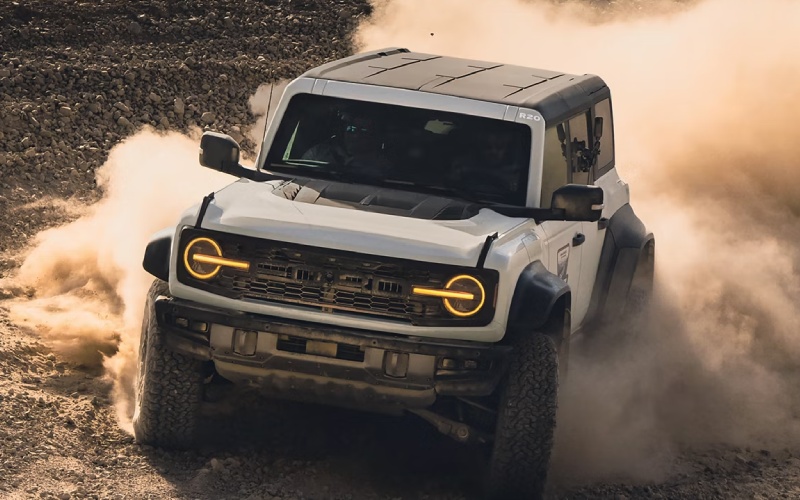
Alpine Ford – G.O.A.T. Modes That Make Canon City, CO Backroads Feel Easy in the 2026 Ford Bronco®
The 2026 Ford Bronco® is famous for its open-air spirit and rugged hardware, but what often surprises first-time drivers is how refined it feels when the terrain gets tricky. Around Canon City, CO—where paved stretches give way to washboard gravel, sandy river edges, and rocky climbs in a matter of miles—those transitions can come fast. That’s where G.O.A.T. Modes® (Goes Over Any Type of Terrain) shine, letting you tailor throttle, shift mapping, and traction behavior so the Bronco® simply feels planted and predictable.
How G.O.A.T. Modes® Adjust to Canon City’s Mixed Terrain
Bronco® offers up to seven G.O.A.T. Modes® depending on trim, and they’re more than just icons on a screen. Each profile intelligently coordinates the powertrain, traction control, and available 4×4 systems to help the SUV respond naturally to the ground under your tires. On smoother sections along US-50, a street-focused mode keeps power delivery relaxed and responsive. Turn off onto a dusty two-track near Shelf Road, and a loose-surface mode dials in more controlled wheelspin for steady momentum. Closer to the Arkansas River, sandy patches benefit from a mode tuned to maintain speed and float instead of digging in.
When you meet a rock garden, Rock Crawl mode pairs with low-range gearing (when equipped) to deliver slow, deliberate torque and confident foot-by-foot progress. The difference these settings make is immediate—less herky-jerky throttle, fewer corrections at the wheel, and more focus on reading the trail. That composure is especially helpful when Canon City’s terrain throws alternating surfaces at you in quick succession.
Trail Turn Assist and the Art of the Tight Switchback
Canon City’s backroads and Jeep trails have a knack for offering tight switchbacks and sharp cutbacks. Trail Turn Assist helps the 2026 Bronco® pivot more cleanly by braking the inside rear wheel in certain low-speed, off-road scenarios. Think of it as shrinking your turning circle precisely when you need it most. That’s useful for easing into narrow pullouts, negotiating spur roads with drop-offs, or lining up your approach on a rock step without a dozen multi-point turns.
Pair Trail Turn Assist with the available 360-Degree Camera system, and you get a commanding view as you place tires, crest ledges, or reverse out of a brushy dead end. The camera system is as helpful in a crowded trailhead lot as it is on rugged ground, which speaks to the Bronco®’s dual role as a daily driver that never feels out of place when the pavement ends.
Dialing in Ride Confidence with HOSS Suspension
A big part of the Bronco®’s poise is the HOSS (High-Performance Off-Road Stability Suspension) family. Available HOSS Systems with FOX™ dampers are engineered to keep you stable and confident when the trail tilts, ruts, or ripples. On choppy ground—in the scrubby hills north of town or when you connect between overlooks—suspension compliance keeps tires pressed to the surface and steering feedback calm. The sensation isn’t soft; it’s controlled, letting you pick your line with less jostling and more precision.
This is where the interplay between G.O.A.T. Modes® and HOSS really pays off. You tune the Bronco® to the terrain, and the suspension works alongside to absorb hits and maintain traction. It’s the difference between muscling through and moving with purpose.
Practical Takeaways for New Bronco® Drivers
- Start with a plan: Before heading up Temple Canyon Road or another local favorite, decide which G.O.A.T. Mode® matches your expected terrain.
- Watch your speed: Let the mode do the work—smooth inputs and steady pace often yield better traction than aggressive throttle.
- Use your eyes: The available 360-Degree Camera is a game-changer for tire placement; turn it on when the trail gets tight.
- Leverage Trail Turn Assist: Activate when steering into narrow bends or repositioning before a short climb.
- Know your clearances: The Bronco®’s approach, breakover, and departure angles are generous; use them, but confirm obstacles visually.
If you frequently move between town errands and trail drives, you’ll appreciate how quickly the Bronco® goes from composed commuter to confident climber. The cabin’s easy-clean materials and available washable floors are built for dusty boots and post-ride cleanup. Standard wireless Apple CarPlay® and Android Auto™ compatibility keep your trail maps and playlists seamless, and the Ford Connectivity Package with Wi-Fi helps you stay connected if your group splits between overlooks.
Frequently Asked Questions:
How many G.O.A.T. Modes® does the 2026 Ford Bronco® offer?
Depending on trim, the Bronco® includes up to seven G.O.A.T. Modes®. Availability varies by model, so check the specific trim you’re considering.
Do I need special equipment to use Trail Turn Assist?
Trail Turn Assist is an available feature on the Bronco®. It works in certain low-speed, off-road situations and may require specific configurations; our team can confirm details for your trim.
Is the 360-Degree Camera useful beyond off-roading?
Absolutely. It’s just as helpful in tight parking or when threading between parked vehicles at a busy trailhead.
Which suspension should I choose for mixed Canon City terrain?
HOSS Systems with FOX™ dampers deliver excellent composure on variable surfaces. The best setup depends on how often you tackle technical routes versus scenic gravel drives.
What should I bring on a first trail outing in the Bronco®?
Bring recovery basics, water, a tire pressure gauge, and let someone know your route. Review key features—G.O.A.T. Modes®, camera views, and access to Trail Turn Assist—before you set off.
The 2026 Ford Bronco® makes Canon City, CO exploration feel intuitive. It’s not just the specs; it’s how the vehicle reacts to your inputs and the terrain underfoot. Whether you’re easing along a sandy riverway or picking across rocks to a quiet overlook, the Bronco® encourages thoughtful driving—with hardware and software that respond in kind. Alpine Ford is proud to support owners across the Front Range, serving Pueblo, Colorado Springs, and Canon City, with insights on the right trims, packages, and accessories for the adventures you have in mind.
Request more 2026 Ford Bronco information
Work-Ready Interior: How the 2026 Ford F-150 Turns Pueblo, CO Job Sites into Mobile Offices
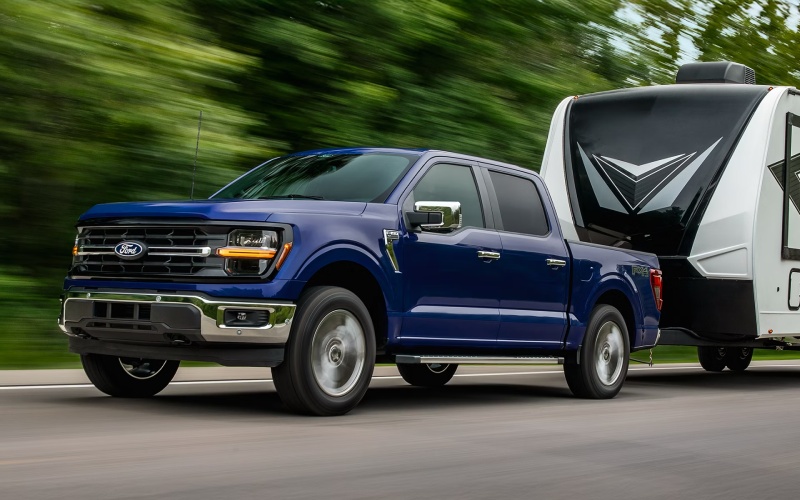
Alpine Ford – Work-Ready Interior: How the 2026 Ford F-150 Turns Pueblo, CO Job Sites into Mobile Offices
The best truck cabins today are more than comfortable seating and a big screen. They are smart workspaces. If your week takes you from Pueblo neighborhoods to job sites around the Arkansas River valley, the 2026 Ford F-150 shows how a pickup can double as a reliable mobile office without losing the toughness you need. Between the available Interior Work Surface, lockable under-seat storage, and an easy-to-use 12-inch center screen, your truck can handle quick bids, plan updates, and calls with subcontractors—no matter where you park.
Interior features that turn downtime into done time
The available Interior Work Surface transforms when the shifter is stowed, creating a stable place for a laptop or clipboard. That means you can finalize change orders during a lunch break or upload photos to a job report before you even head back to the office. The 12-inch center display offers crisp mapping and fast menus, making it easy to pull up addresses or review messages between stops. And with the available head-up display, key driving info stays in your line of sight—even when you are navigating tight side streets near downtown Pueblo.
- Work Surface: Available fold-out space for laptops, drawings, and documents
- Screen: 12-inch center display for quick navigation and app control
- Storage: Lockable under-seat space to secure tools and devices
- Seats: Flip-up rears for bulky gear that should stay dry
- Connectivity: Available Ford Connectivity Package (1-year included with activation)
Lockable storage plays a bigger role than you might think, especially when you are moving between sites. If your truck doubles as your toolbox, under-seat space that actually locks helps protect laptops, meters, and camera gear. Paired with flip-up rear seats, the cabin can swallow oddly shaped equipment you would rather not leave in the bed when the wind kicks up or rain moves in from the west.
Driver-assist that takes the edge off I-25
When your week includes regular runs up to Colorado Springs for materials or down to test equipment near Walsenburg, driver-assist tech quickly becomes a must-have. Available BlueCruise offers hands-free capability on compatible highways, helping reduce fatigue on I-25 stretches when traffic is light-and-variable. With the available 360-Degree Camera system, maneuvering into tight alleys or around staged materials is more predictable—no more inch-by-inch guessing games. It is the kind of tech that fades into the background but pays off every day.
- BlueCruise: Available hands-free driving on compatible highways to ease longer commutes
- 360-Degree Camera: Available multi-view assistance for tight parking and site navigation
- Security: Ford Security Package (1-year included with activation) for added peace of mind
Because job schedules shift without warning, extras like Zone Lighting and the available head-up display help you stay nimble. Set up focused lighting around the truck during pre-dawn setups or end-of-day cleanups, and keep your eyes up when last-minute texts about delivery windows start to fill your screen. These are small details that make big differences over a full workweek.
Right-size capability for Pueblo projects
The 2026 F-150’s powertrains let you tailor the truck to your workload. If you are towing trailers loaded with landscape rock or hauling lumber for a porch rebuild, the max available 13,500-pound towing and up to 2,440 pounds of payload provide confidence. The available 3.5L PowerBoost® Full Hybrid V6 pairs strong torque with smooth operation, while the 3.5L EcoBoost® V6 keeps things brisk on hilly runs near Beulah. And if your schedule mixes errands with weekend recreation, Tremor® and Raptor® models bring trail-focused hardware and drive modes you will appreciate on rutted county roads or sandy pullouts near Lake Pueblo.
- Max Towing: Up to 13,500 lbs (max available) for serious hauling
- Max Payload: Up to 2,440 lbs (max available) for heavy job materials
- Hybrid Power: 420 hp/570 lb-ft from the available PowerBoost® V6
- EcoBoost Muscle: 382 hp/500 lb-ft from the 3.5L EcoBoost® V6
While raw numbers matter, usability matters more. That is where the available Pro Access Tailgate shines. Its swing-out opening—up to 100 degrees—brings you closer to the bed floor for easy reach, even with a trailer hitched. Grabbing tie-downs, a bin of fasteners, or the circular saw becomes a one-step move instead of a stretch. If you load and unload multiple times a day, it is one of those features you will wonder how you lived without.
Cab and bed combinations make it easy to pick the right footprint for Pueblo worksites. A SuperCrew® with the 5.5-foot bed threads through tight streets more easily, while a SuperCab® with the 6.5-foot bed adds space for longer tools and materials without stepping up to an 8-foot bed. Our team can help you test-drive routes that simulate job-site access, alley backing, and quick highway merges so you can feel the difference before you decide.
Frequently Asked Questions:
Which 2026 F-150 trims best fit daily job use around Pueblo?
XLT and Lariat® hit the sweet spot for many local builders and trades. XLT offers the features most teams want plus available trailering tech and the 3.5L PowerBoost® Full Hybrid V6. Lariat® adds comfort and amenities for all-day seat time, including an available B&O® Sound System and two-speed automatic 4WD with neutral towing capability.
Is the F-150 PowerBoost® hybrid strong enough for work?
Yes. The available PowerBoost® V6 delivers 420 hp and 570 lb-ft of torque with a max available tow rating of up to 11,600 pounds, plus the smooth power delivery crews appreciate in stop-and-go city driving.
What makes the Pro Access Tailgate useful on job sites?
It swings out up to 100 degrees so you can stand up to 19 inches closer to the bed than a traditional tailgate, making it easier to grab tools, fasteners, and bins—even with a trailer attached.
How do I choose the right engine for mixed towing and city driving?
Think about your heaviest trailer and most frequent use. The 3.5L EcoBoost® V6 and 5.0L Ti-VCT V8 are excellent for regular towing, while the 3.5L PowerBoost® is ideal if you want strong torque plus refined daily manners. Our team will map your needs to the best choice and set up a route that reflects your day-to-day driving.
When a truck doubles as your mobile desk, shop, and break room, the details matter. The 2026 F-150 lines up those details so your day runs smoother—right down to the storage you use every hour and the tech you rely on mile after mile. Alpine Ford is proud to support crews and families alike, serving Pueblo, Colorado Springs, and Canon City with guidance that fits local roads and workdays.
When you are ready to try the Interior Work Surface, see the Pro Access Tailgate in motion, or compare powertrains side by side, we will be here with keys in hand and a test-drive loop that mirrors the way you actually drive.
From thoughtful storage and hands-free highway capability to class-leading max available towing, the 2026 F-150 checks the boxes that help Pueblo professionals get more done, with less friction. If you have questions about configuration, trailering, or upfit options, our team is ready to help you sort through the details and build the setup that makes your week easier.
Request more 2026 Ford F-150 information
How the 2026 Ford Bronco Sport’s Twin-Clutch 4×4 Builds Confidence around Canon City, CO
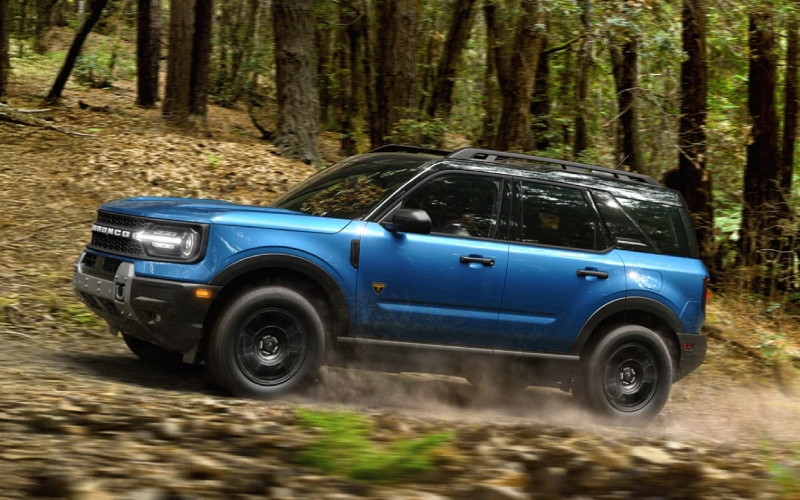
Alpine Ford – How the 2026 Ford Bronco Sport’s Twin-Clutch 4×4 Builds Confidence around Canon City, CO
If you spend your weekends mixing Main Street errands with quick detours toward Shelf Road or Skyline Drive, you already know why traction matters. The 2026 Ford Bronco Sport® stays true to its Bronco® roots with standard 4×4 across every trim, but it is the available Advanced 4×4 system with a twin-clutch rear drive unit—standard on Badlands®—that sets this compact SUV apart. It is hardware that pays off where the asphalt ends, delivering enhanced control when one rear wheel loses grip and the other is ready to dig in.
Let’s talk what that means in plain terms. On uneven trail surfaces or when you’re crossing a shallow rut, an ordinary open differential can let the wheel with the least traction spin freely, stealing momentum and confidence. The twin-clutch rear drive unit in the Bronco Sport can send torque to the wheel that still has bite, helping you maintain progress without drama. It is the kind of difference you feel on the way up to a scenic overlook or while easing through a rock-strewn pullout to turn around after a photo stop.
G.O.A.T. Modes® and Real-World Control
The Bronco Sport® gives you G.O.A.T. Modes®—Goes Over Any Type of Terrain—so you can pick a setting that matches the path ahead. The system adjusts throttle response, transmission behavior, and traction control to keep you composed. Badlands® expands the menu for more specialized surfaces. In Canon City, where pavement blends into gravel and then into broken rock, those added calibrations help you feel connected to what’s happening under the tires. It is smart tuning that makes tough stretches feel a little easier for drivers who want capability without complexity.
Importantly, the Bronco Sport stays “trail-smart” without overwhelming you with toggles and menus. You select a mode, ease into the throttle, and let the SUV do more of the managing. That balance is what makes it such a compelling daily driver for Canon City residents—confident on Highway 50, nimble downtown, and impressively sure-footed when you point the grille toward the access roads that start just outside town.
Suspension and Hardware That Mean Business
The available HOSS Off-Road Suspension is tuned to keep the cabin composed when the path gets choppy. On washboard surfaces or during light articulation, it helps minimize the head toss and keeps the vehicle feeling settled. Badlands® models lean in even further, pairing that suspension tuning with steel-plated front bumper elements and underbody protection, so the components that matter are better shielded from unexpected hits. Think of it as “quiet confidence”—hardware that is there when you need it, and unobtrusive when you don’t.
Back on Main Street or cruising toward Royal Gorge, the Bronco Sport remains civilized. The cabin is anchored by a 13.2-inch center display with wireless Apple CarPlay® and Android Auto™ compatibility—your podcasts, playlists, and maps are all right there without extra cables. Add the included Ford Connectivity Package for one year and you bring a Wi-Fi® hotspot to your adventures, so everyone’s devices stay connected while you scout the next trailhead or plan a lunch stop.
Choosing the Right Trim for Your Drives
Big Bend® is a smart starting point with standard 4×4 and five G.O.A.T. Modes®, while Heritage adds iconic style touches such as an Oxford White roof, wheels, and grille plus Navy Pier plaid cloth seats. Outer Banks® turns up the comfort with premium-trimmed heated front seats and a heated steering wheel, topping it with a Shadow Black-painted roof for a clean, modern look. If you want the fullest expression of trail-savvy performance, Badlands® is where the advanced system, extra G.O.A.T. Modes®, 2.0L EcoBoost® power, and protective hardware all come together.
- Standard 4×4: Confident traction on every trim—no guesswork, no upsell.
- Twin-clutch rear drive: Directs torque side-to-side to help maintain momentum off pavement.
- Terrain-tuned modes: G.O.A.T. Modes® tailor the Bronco Sport’s behavior to the surface underfoot.
- Purposeful protection: Available steel-plated bumper elements and underbody shields for peace of mind.
- Modern connectivity: A big, clear 13.2-inch screen with wireless smartphone integration.
For Canon City drivers, versatility is the headline. Many vehicles can commute comfortably, and many can dabble in the dirt, but the Bronco Sport’s balance is what helps it stand out. It’s compact enough for daily tasks, confident enough for light trail duty, and equipped with intuitive tech so the whole experience feels seamless whether you’re navigating to a trailhead or meeting friends at a café downtown.
Frequently Asked Questions:
What does the twin-clutch rear drive unit actually do?
It can direct torque to either rear wheel independently. When one rear wheel starts to slip, the system can send more power to the wheel with better grip to help you maintain forward motion.
Do I need Badlands® for weekend trails around Canon City?
If your adventures include rougher, more technical terrain, Badlands® is your best fit thanks to its Advanced 4×4 system, added G.O.A.T. Modes®, 2.0L EcoBoost® power, and protective hardware. For lighter-duty trails and general exploring, Big Bend®, Heritage, or Outer Banks® with appropriate tires may suit your needs.
How does G.O.A.T. Modes® help in real life?
Each mode adjusts throttle sensitivity, shift logic, and traction control so the Bronco Sport® responds more appropriately to the surface you’re on. It simplifies decision-making and helps you feel more in control when conditions change.
Is the Bronco Sport® comfortable for daily commuting?
Yes. The cabin is thoughtfully laid out, the ride is composed, and the 13.2-inch center display keeps essentials easy to access. It is just as pleasant rolling down 4th Street as it is turning onto a gravel access road.
When you are ready to get hands-on, we recommend a drive route that mixes everyday streets with a short stretch of gravel or uneven pavement to feel the difference the Bronco Sport’s drivetrain and suspension make. That contrast is where this SUV shines. Alpine Ford is proudly serving Pueblo, Colorado Springs, and Canon City, and our team is happy to help you compare trims, explore available packages, and find the combination that matches your routes and routines.
Request more 2026 Ford Bronco Sport information
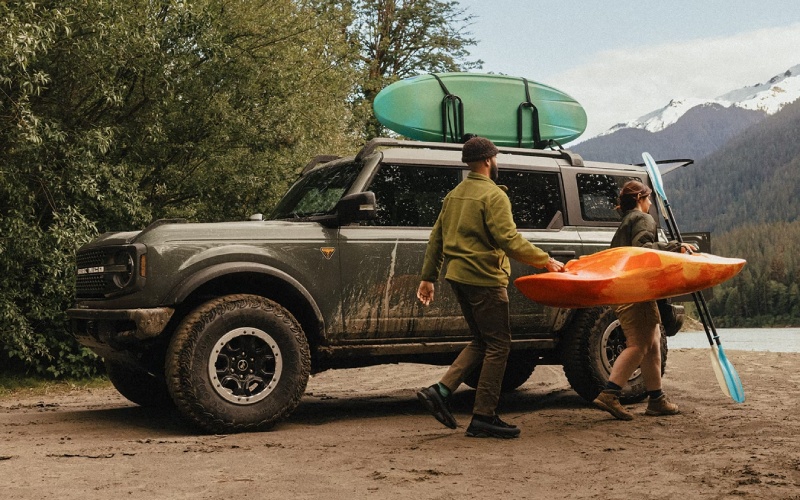
Alpine Ford – Can I flat tow a 2026 Ford Bronco® behind my RV around Pueblo, CO?
Planning to explore southern Colorado with your RV and wondering if your 2026 Ford Bronco® can ride along as a dinghy? The short answer is encouraging, and as your Pueblo-area Ford team, we want to go deeper than a simple yes-or-no. Below, we explain which 2026 Bronco models are designed for flat towing, what you’ll need to tow safely and confidently, and how our Alpine Ford service team can help you set everything up for miles of smooth travel from Lake Pueblo State Park to mountain passes west of Canon City.
Why this question matters for drivers in and around Pueblo
From weekend escapes toward San Isabel National Forest to longer routes on I-25 and US-50, RV owners in the Pueblo area often prefer flat towing to keep campground maneuvering simple and trail days spontaneous. Bringing your Bronco along lets you disconnect at the trailhead, use G.O.A.T. Modes® when the pavement ends, and keep your campsite logistics easy. Flat towing, when done correctly and within manufacturer guidance, can be a great everyday solution for Southern Colorado travel.
Because routes like Hardscrabble Canyon on CO-96 and US-50 toward Salida include grades, curves, and changing conditions, your flat-tow setup needs to be dialed in. That means confirming your Bronco’s compatibility, installing the right hardware, and following the Owner’s Manual steps every time you roll.
Which 2026 Bronco models are designed for flat towing?
Models of the 2026 Bronco equipped with 4×4 and a two-speed transfer case are engineered to support flat towing behind a properly rated RV when placed in Neutral Tow Mode, as outlined in the Bronco Owner’s Manual. That includes core off-road trims like Badlands®, as well as other trims built Wild with true 4×4 capability. The 2026 Bronco Raptor® is also engineered for serious off-road use and features HOSS (High-Performance Off-Road Stability Suspension) System 4.0 with FOX™ Live Valve 3.1 Internal Bypass Semi-Active Dampers; if you plan to flat tow a Raptor®, follow its specific Owner’s Manual steps and equipment recommendations.
It’s important to distinguish flat towing from trailer towing. Bronco offers up to 4,500 lbs of available trailer towing capacity when properly equipped, but that’s separate from being towed as a dinghy behind an RV. For flat towing, you’re looking for the presence of the two-speed transfer case and the Neutral Tow procedure in the Owner’s Manual. If you’re comparing trims like Outer Banks®, Badlands®, Heritage Edition, Stroppe Edition, or Raptor®, our team can show you exactly where tow-procedure references appear for each configuration and walk you through the setup before your first trip.
Manual and automatic transmissions are both represented in the 2026 Bronco lineup. With either transmission, the key requirement for flat towing is following the Neutral Tow procedure that disengages the driveline for safe, rolling transport. We recommend a quick in-store demonstration so you can practice the steps until they’re second nature.
Your flat-tow essentials for a 2026 Bronco in Southern Colorado
Before you plan a loop from Pueblo up I-25 or out to Royal Gorge, make sure your hardware is RV-rated, professionally installed, and matched to the Bronco’s weight and stance. Here’s a concise checklist to discuss with our parts and service team:
- Tow bar and RV hitch rating: Use an RV tow bar and receiver hitch rated above your Bronco’s curb weight, including the weight of any accessories you’ve added.
- Vehicle-side baseplate or approved attachment points: Choose a baseplate engineered for your specific Bronco trim and bumper setup, or an approved connection system that aligns with Bronco-compatible recovery points.
- Safety cables and a breakaway switch: Redundant safety connections and a breakaway system provide a vital backstop on grades and high-wind segments along I-25.
- Supplemental braking for the towed vehicle: Many RVers use a portable or permanent braking system to reduce stopping distances and brake wear on mountain descents.
- Lighting/diode wiring or magnetic lights: Your Bronco’s running, brake, and turn signals must be visible and in sync with the RV.
- Charge line or battery maintainer: A battery charge line helps keep your Bronco’s battery from discharging during long days between Pueblo and the Wet Mountains.
- Proper drop/rise for level towing: Keep the tow bar as level as possible to support stable handling across uneven road surfaces and driveway approaches.
We install flat-tow baseplates, wire lighting solutions, and can recommend charge-line kits and supplemental brake options suited to your travel plans. If you’re building a Bronco for dual duty — daily Pueblo driving plus RV trips — we can help balance clean installs with easy disconnects at camp.
The high-level Neutral Tow checklist you’ll practice with our team
Always follow the exact steps in your 2026 Bronco Owner’s Manual. The sequence below is a reference you can rehearse with us before your first trip so the real thing goes smoothly:
- Level ground and wheel chocks: Park the RV and Bronco on level ground, chock the Bronco’s wheels, and connect your tow bar with safety cables.
- Start-up and system prep: Start the Bronco, bring it to a steady idle, and ensure the transfer case and transmission are at normal operating status.
- Engage Neutral Tow Mode: Follow the Owner’s Manual prompts to place the transfer case in its neutral setting designed for flat towing.
- Verify status messages: Confirm instrument panel indications that Neutral Tow is active and steering is unlocked as required.
- Set Bronco for tow power state: Shut the engine off per the manual, confirm accessory power state as instructed, and secure the cabin.
- Lighting and brake check: Test RV-to-Bronco lighting, verify your supplemental braking system is armed, and perform a final walk-around.
On longer grades west of Pueblo, give yourself generous following distance and plan for cooling breaks. Even a well-set-up RV and dinghy combination will benefit from periodic checks — especially after your first 25–50 miles or following rougher pavement between towns.
Why flat towing fits the Bronco lifestyle
The appeal is simple — you arrive at the campground with your basecamp ready to go, then unhook a capable, trail-savvy SUV for local exploring, grocery runs, and trailhead approaches. With up to seven available G.O.A.T. Modes® and available HOSS suspension systems, Bronco feels at home on county roads and unpaved spurs toward kayak launches on the Arkansas River. Removable doors and roof options add to the fun once you’re settled in, and modern tech like available 360-Degree Camera can help in tight trailhead parking.
Back in Pueblo, your 2026 Bronco remains a practical daily driver — easy to fuel up, park, and service locally. The ability to flat tow simply broadens what your weekends look like without complicating Monday morning.
How Alpine Ford helps Pueblo drivers get it right
We support every phase of your setup — from selecting the right Bronco trim with a two-speed transfer case to installing a model-specific baseplate and wiring solution. Our service team will review your Owner’s Manual procedure with you, demonstrate Neutral Tow Mode, and help you practice a pre-trip routine. We can also coordinate with RV specialists on proper tow bar selection, ride height adjustments, and supplemental brake systems so your entire package is well matched for Southern Colorado terrain.
If you’re still building your RV plan, stop by our showroom off Highway 50 West in Pueblo. We’ll walk you through Bronco trims like Badlands®, Outer Banks®, Heritage Edition, Stroppe Edition, and Raptor®, then map your flat-tow strategy based on where you travel most — from Lake Pueblo to the Royal Gorge and beyond.
Frequently Asked Questions:
Will flat towing add miles to my 2026 Bronco’s odometer?
In typical flat-tow operation with Neutral Tow Mode engaged and the vehicle in the correct power state per the Owner’s Manual, modern odometers generally do not accumulate miles. Always confirm in your Owner’s Manual for your specific configuration and verify with our service team during your setup walk-through.
Do all 2026 Bronco trims support flat towing?
Bronco models equipped with 4×4 and a two-speed transfer case are engineered for flat towing when placed in Neutral Tow Mode, following the Owner’s Manual steps. If you’re comparing trims, we’ll show you exactly how the tow procedure applies to your chosen model and options.
What about speed or distance limits while flat towing?
Adhere to the guidance in your Bronco Owner’s Manual and the limits of your RV, tow bar, and supplemental braking systems. Many RV components have their own speed recommendations. We suggest conservative speeds on grades and in crosswinds common along I-25.
Do I need a supplemental braking system on my towed Bronco?
We strongly recommend one. A supplemental brake reduces stopping distances, helps manage heat on long downgrades, and supports stable handling when descending toward Canon City or Salida. We can help you choose a system compatible with your RV and Bronco setup.
Can your team install the baseplate and wiring on my new Bronco?
Yes. Our technicians install Bronco-specific baseplates, lighting/diode wiring, and charge lines, and we coordinate fitment with your chosen tow bar. We also perform post-install checks and a hands-on tutorial so you’re comfortable with the process.
Ready to build a 2026 Bronco that travels everywhere your RV does? Visit Alpine Ford in Pueblo to explore trims, confirm flat-tow compatibility, and design a clean, reliable setup. We’ll help you get everything dialed in — so your next weekend away starts the moment you pull out of your driveway.
Request more 2026 Ford Bronco information
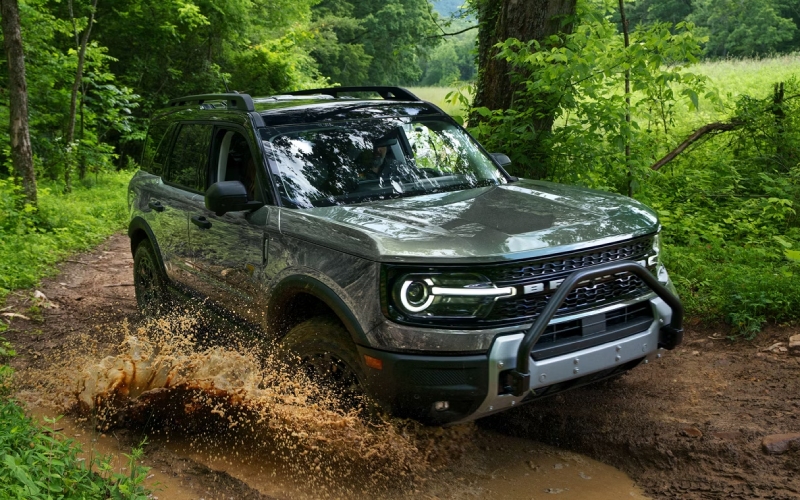
Alpine Ford – Can a 2026 Ford Bronco Sport Tow a Small Camper around Colorado Springs, CO?
For many shoppers around Colorado Springs, CO, the big question about the 2026 Ford Bronco Sport® is not just whether it’s adventurous, but whether it can confidently tow a lightweight camper to favorite weekend spots like Mueller State Park or Eleven Mile Reservoir. The short answer is that the Bronco Sport is built for practical adventure, and—when properly equipped—it’s rated to tow up to 2,200 lbs. In this guide, we break down what that really means for real-world trips on Highway 24 over Ute Pass, which trims and features matter, and how our team at Alpine Ford can help you set up your Bronco Sport for safe, smooth towing.
What the 2026 Bronco Sport Is Rated to Tow
The 2026 Bronco Sport line comes standard with 4×4 and capability features tailored for mixed city-to-trail life. Ford lists an available towing capacity of up to 2,200 lbs when properly equipped on the Bronco Sport, which covers many teardrop trailers and small pop-up campers once you factor in gear. The Bronco Sport Big Bend® specification also highlights practical details that matter when you’re loading for a weekend—like a 13.2-inch center display with wireless Apple CarPlay® and Android Auto™ compatibility, so you can keep trail maps and campground info right where you need them.
If you’re planning on off-pavement detours or steeper grades beyond Woodland Park, the Bronco Sport Badlands® adds confidence with an Advanced 4×4 system featuring a twin-clutch rear drive unit and 7 G.O.A.T. Modes® (Goes Over Any Type of Terrain). It also pairs that chassis with a 2.0L EcoBoost® engine for stronger response at altitude—helpful on the climbs toward Divide or Cripple Creek when you’re pulling a loaded trailer.
Real-World Camper Pairings Under 2,200 lbs
To decide whether your camper is a good fit for the Bronco Sport, look past the brochure “dry weight” and consider what it will weigh fully loaded with water, propane, batteries, and camping gear. Around Colorado Springs, we regularly see the following camper categories work well behind a properly equipped Bronco Sport:
- Teardrop trailers: Typically 1,000-1,800 lbs loaded, aerodynamic shape helps in crosswinds through Ute Pass
- Small pop-up campers: Often 1,200-2,000 lbs loaded, compact height reduces drag on I-25 and Highway 24
- Ultra-light utility/cargo trailers: Varies widely, but many builds with bikes or paddle gear remain under 1,500 lbs
Before you hitch up for the first time, confirm the trailer’s loaded weight, not just its listed dry number. Your trailer’s Gross Vehicle Weight Rating (GVWR) sets the ceiling, and your Bronco Sport’s tow rating must always exceed the actual loaded trailer weight. Our team can help you review these numbers and select the right accessories for safe towing.
Altitude, Grades, and How the Bronco Sport Helps
Towing from Colorado Springs means sharing the road with steep grades and changing surfaces. This is exactly where the Bronco Sport’s engineering helps. Every model comes with standard 4×4, and the Bronco Sport Badlands® further improves traction with its twin-clutch rear drive unit that can route torque side-to-side across the rear axle. That’s valuable on gravel approaches to trailheads west of Garden of the Gods or along two-track spurs off Rampart Range Road.
G.O.A.T. Modes® also give you a smarter starting point for different surfaces. While you’ll choose your mode based on conditions, the idea remains simple: the vehicle fine-tunes throttle, traction, and drivetrain response so you can focus more on the road (or trail) ahead. For sustained climbs, the efficient power delivery of the EcoBoost® engines is a plus at altitude. We also recommend planning your passes and allowing extra following distance so you can use engine braking on descents. Refer to your Owner’s Manual for the correct use of lower gear ranges when towing on long downhill stretches.
Ground clearance matters too. The Bronco Sport Big Bend® lists 7.8 inches of ground clearance, which is ample for most maintained forest roads and campground approaches. If your weekend plans include rockier access or deeply rutted spurs, stepping into Bronco Sport Badlands® adds off-road focused hardware and protection that can make tight, uneven approaches feel more controlled—especially with a trailer in tow.
Setting Up Your Bronco Sport for Towing
With any compact SUV, a thoughtful setup makes the difference between a trip that feels easy and one that feels like a workout. Use the checklist below as you prepare for your first tow from Colorado Springs to your favorite weekend basecamp.
- Hitch and wiring: Install the correct Class II hitch hardware and trailer wiring; verify all lights before each trip
- Tongue weight: Aim for about 10-15 percent of the trailer’s actual loaded weight on the hitch for stability
- Load balance: Keep heavy items low and centered over the trailer axle; avoid rear-heavy packing
- Tire pressures: Set Bronco Sport and trailer tires to recommended PSI for towing stability and even wear
- Visibility: Confirm mirrors provide an unobstructed view down both trailer sides; add towing mirrors if needed
- Practice: Do a short shakedown loop—merging, braking, and low-speed turns—before heading up Highway 24
If you’re new to towing, we’re happy to walk you through these steps at Alpine Ford. We can help you source the right hitch, wiring, and accessories, and we’ll show you how to verify your connections and lights before you roll out.
Tech and Comfort That Make Towing Days Easier
Long drives with a trailer are less tiring when the cabin helps you stay organized and connected. The Bronco Sport’s available Ford Connectivity package—one year included—adds helpful tools for route planning and staying in touch. The 13.2-inch center display with wireless Apple CarPlay® and Android Auto™ compatibility keeps directions and campground contacts right up front, while available Ford Co-Pilot360® Assist+ features are designed to support more confident driving in busy traffic between Colorado Springs and Pueblo.
When you’re not towing, you still get the adventurous utility shoppers expect. From clever interior storage to available underbody protection and HOSS Off-Road Suspension tuning, the Bronco Sport blends weekday practicality with weekend-ready toughness—an easy fit for life around I-25 and the Front Range.
Ready to see how a 2026 Bronco Sport feels with your gear plan? We can help you compare Big Bend®, Heritage, Outer Banks®, and Badlands® onsite, talk through accessories, and map a test route that mirrors your typical drive toward Woodland Park. Our Alpine Ford team is a straight shot south from Colorado Springs, and we’re here to make the process clear and hands-on so you can tow with confidence from day one.
Frequently Asked Questions:
Which 2026 Bronco Sport trim is best for towing in the mountains near Colorado Springs?
Every 2026 Bronco Sport comes standard with 4×4 and can be equipped to tow up to 2,200 lbs when properly set up. If your trips include steeper gravel climbs or loose two-tracks, the Bronco Sport Badlands® adds Advanced 4×4 with a twin-clutch rear drive unit and 7 G.O.A.T. Modes®, plus a 2.0L EcoBoost® engine for stronger response at altitude. If you plan to stay on pavement and maintained roads, Bronco Sport Big Bend® provides an easygoing balance of comfort and capability.
Do I need trailer brakes to tow a small camper with a Bronco Sport in Colorado?
Trailer brake requirements vary by weight and local regulations. Many lightweight teardrops and small pop-ups fall well below typical thresholds, but always check Colorado’s current rules and your trailer’s specifications. Even when not required, a properly set up trailer brake system can improve control and reduce heat buildup in stop-and-go traffic and on longer descents.
What should I watch for with payload and tongue weight when towing with a Bronco Sport?
Tongue weight generally targets 10-15 percent of the trailer’s actual loaded weight, and that tongue weight counts against your Bronco Sport’s payload alongside passengers and cargo. Pack thoughtfully—keep heavy items low and near the trailer axle—and verify that your loaded setup stays within the vehicle’s and trailer’s published limits. If you’re unsure, we can help you review ratings and weigh your setup.
Can I use G.O.A.T. Modes® while towing on dirt or gravel?
Yes—choose the mode that matches the surface so the Bronco Sport can optimize throttle and traction characteristics for conditions. Always drive within posted limits and adjust speed for the surface, especially on washboard or marbled gravel where trailers can amplify sway. Consult your Owner’s Manual for guidance on mode selection when towing.
Can Alpine Ford install my hitch and wiring on a new Bronco Sport?
Absolutely. Our service team can install the correct hitch hardware and trailer wiring for your Bronco Sport, walk you through pre-trip inspections, and help you select accessories like towing mirrors. We’ll also review your trailer’s lighting and connector type to make sure your first trip goes smoothly.
The 2026 Ford Bronco Sport® delivers the blend of everyday comfort and weekender toughness that Colorado Springs drivers value, and with up to 2,200 lbs of available towing capacity when properly equipped, it’s a smart match for lightweight campers and trail toys. If you want help choosing the right trim, hardware, and setup for your routes over Ute Pass, visit us at Alpine Ford in Pueblo—we’re ready to get your Bronco Sport dialed in for the way you explore.
Request more 2026 Ford Bronco Sport information
Alpine Ford – Which 2026 Ford F-150 engine is best for Denver, CO altitude and towing?
Choosing the right engine matters more when you live a mile high and spend your weekends on I-70. Between Denver’s 5,280-foot elevation, steep grades toward the Continental Divide, and frequent towing to trailheads and reservoirs, the way an engine makes power affects confidence every mile. At Alpine Ford, we help Denver, CO shoppers match the 2026 Ford F-150® powertrain to real-world routes and loads so your truck feels strong on Floyd Hill, surefooted past Georgetown, and relaxed cruising C-470 back home.
The 2026 F-150 lineup offers five gas engines plus a high-output Raptor® pair, each tuned for a different balance of strength, efficiency, and capability. Below, we break down how altitude influences performance, how the F-150’s turbocharged EcoBoost® and PowerBoost® Full Hybrid V6 engines respond to thin air compared with the 5.0L Ti-VCT V8, and which combinations line up best with Denver-area towing and daily driving.
Why altitude changes how your truck feels
Air gets thinner as you climb, and naturally aspirated engines can lose noticeable oomph at higher elevations. Turbocharged engines compress that thinner air—so torque stays more consistent as grades get steeper and oxygen gets scarce. That’s a key reason Denver drivers often prefer the F-150’s EcoBoost® and PowerBoost® V6 options for mountain driving and towing. The 2026 F-150 builds on that with robust torque across the lineup, plus the tech and gearing to put it to work on real Colorado roads.
Ford’s published figures for 2026 make the choice clearer. The 3.5L EcoBoost® V6 leads with a best-in-class max available tow rating of 13,500 lbs, while the 3.5L PowerBoost® Full Hybrid V6 combines a strong 570 lb-ft of torque with an 11,600-lb max available tow rating. If you favor a classic V8 feel, the 5.0L Ti-VCT V8 brings 400 hp and a 12,900-lb max available tow rating. Even the efficient 2.7L EcoBoost® V6 delivers 400 lb-ft of torque and up to an 8,400-lb max available tow rating—plenty for pop-up campers, single-axle utility trailers, and weekend runabouts to Chatfield or Cherry Creek.
A quick engine guide for Denver-area driving
Here is how each available 2026 F-150 engine lines up with common use cases around Denver and the Front Range.
- 2.7L EcoBoost® V6: 325 hp/400 lb-ft with up to 8,400 lbs max available towing—great for commuters who want mountain-ready punch without overkill; confident pulling a pair of ATVs to Rampart Range or a small boat to Cherry Creek.
- 3.5L PowerBoost® Full Hybrid V6: 420 hp/570 lb-ft and up to 11,600 lbs max available towing—ideal for frequent I-70 climbs with midsize travel trailers; hybrid torque helps hold speed on grades, and available Pro Power Onboard™ — 400 W supports campsite and job-site tools.
- 3.5L EcoBoost® V6: 382 hp/500 lb-ft and best-in-class 13,500 lbs max available towing—our top pick for heavy loads up to Summit County and beyond; twin turbos maintain pull at altitude, and available max towing hardware builds in stability.
- 5.0L Ti-VCT V8: 400 hp/410 lb-ft and up to 12,900 lbs max available towing—classic V8 response with broad capability for boats to Horsetooth or larger campers to Golden Gate Canyon; naturally aspirated, so you may downshift more on the steepest grades.
- 3.5L High Output EcoBoost® V6 (Raptor®): 450 hp/510 lb-ft—designed for high-speed off-road confidence; not the towing champion, but it delivers serious thrust in thin air when the pavement ends.
- 5.2L Supercharged V8 (Raptor R™): 720 hp/640 lb-ft—extreme power for desert-style performance; specialty configuration beyond typical tow-first needs.
Every rating above depends on configuration, equipment, and payload. We will spec your truck to your trailer and cargo so you get the right margin for Denver’s terrain, wind, and altitude.
Matching engine to common Denver towing scenarios
If your weekends mean towing west on I-70 or south on US-285, picking the correct engine makes the drive smoother and safer. For single-axle campers, drift boats, or a pair of sleds, the 2.7L EcoBoost® V6 keeps things light and responsive. Step up to the 3.5L PowerBoost® Full Hybrid V6 for midsize travel trailers—its electric assist fills in torque when the grade bites, and regenerative braking helps on the descent from Loveland Pass or Berthoud Pass.
For heavier, more frequent towing—especially in crosswinds through the foothills—the 3.5L EcoBoost® V6 is our go-to. It pairs maximum available towing with strong low- and midrange torque that holds speed confidently between Golden and Silverthorne. The 5.0L Ti-VCT V8 remains a favorite for drivers who prefer the feel and sound of a V8 while still towing substantial weight. We will help you decide based on your trailer’s loaded weight, frontal area, and how often you climb toward 10,000 feet and above.
Beyond the engine: configuration details that matter here
Choosing the right power is step one—choosing the right configuration is where Denver-specific confidence comes together. The Tow/Haul Package is a smart add, bundling the integrated trailer brake controller and an electronic-locking rear axle. Depending on powertrain, you can equip a 3.55 or 3.73 e-locking axle to improve launch and control with heavier loads. If you plan to hit tight trailheads or older parking garages downtown, a SuperCrew® with the 5.5-foot bed can be easier to maneuver than the 6.5-foot bed, while the 6.5-foot bed earns points for cargo flexibility.
Two-speed automatic 4WD with neutral towing capability is available—helpful for mixed weather days in the foothills or unpaved access roads near Nederland and Eldora. When you arrive, the available Pro Access Tailgate lets you swing the gate open even while hitched, so grabbing coolers or leveling blocks stays simple. And when the day runs long, Ford Co-Pilot360® technology plus available BlueCruise hands-free highway driving can reduce fatigue on the return across C-470, E-470, and the I-25 corridor.
Inside, features like the available Interior Work Surface and lockable rear under-seat storage help organize tie-downs, hitches, and gear. Those small details add up when you are switching from weekday job sites to weekend getaways and want everything in its place before the morning push up the hill.
How we guide Denver buyers to the right setup
Our team starts with your trailer’s real numbers—loaded weight, tongue weight, and dimensions—then maps that to your route habits. A family who tows a lighter bunkhouse a dozen times a year to State Forest State Park benefits from the 3.5L PowerBoost® Full Hybrid V6. A contractor hauling equipment weekly between Denver and Evergreen may lean 3.5L EcoBoost® V6 for maximum available payload and towing. If you split duty between towing and hauling materials in-town, the 5.0L Ti-VCT V8’s broad capability and strong available payload can hit a sweet spot.
We also consider parking and storage, since overall length and mirror width affect city life. We can help you choose cab and bed combos that fit your home garage and common Denver-area parking structures, and we will walk you through accessory choices—like racks or lift kits—that can affect height clearance.
Frequently Asked Questions:
Is a turbocharged EcoBoost® engine better than the 5.0L Ti-VCT V8 at Denver altitude?
For most mountain drives, yes. Turbocharged engines compress thin air, so torque stays stronger as elevation rises. The 3.5L EcoBoost® V6 delivers 500 lb-ft and a best-in-class 13,500-lb max available tow rating, while the 3.5L PowerBoost® Full Hybrid V6 brings 570 lb-ft and an 11,600-lb max available tow rating. The 5.0L Ti-VCT V8 is still a great choice—400 hp/410 lb-ft and up to 12,900 lbs max available towing—but you may downshift more on steep grades compared with the turbo engines.
Which 2026 F-150® configuration supports the highest max available towing?
The XLT SuperCrew® 4×4 with the 6.5-foot box and the Tow/Haul Package with max tow axle upgrade is designed for the highest max available towing. The Tow/Haul Package includes the integrated trailer brake controller and an electronic-locking rear axle—either a 3.55 or 3.73 ratio depending on powertrain.
Can the 3.5L PowerBoost® Full Hybrid V6 handle camping trips into the Rockies?
Absolutely. It is rated up to 11,600 lbs max available towing, and its electric torque assist helps hold a steady pace on long climbs. It also offers available Pro Power Onboard™ — 400 W to run lights or small tools at the campsite. As always, actual capability depends on your truck’s exact configuration and trailer setup.
What if I split time between downtown parking garages and trailering on weekends?
We often recommend a SuperCrew® with the 5.5-foot bed for a shorter overall length and easier maneuvering. The 2.7L EcoBoost® V6 is a great daily driver with available towing up to 8,400 lbs for lighter trailers, while the 3.5L EcoBoost® V6 or 3.5L PowerBoost® Full Hybrid V6 adds headroom for heavier loads. We will help you confirm height and length fit for your garage and preferred lots around LoDo, RiNo, and DTC.
Do I need 4WD for drives into the foothills and ski country?
4WD is strongly recommended for confidence on variable surfaces and steeper access roads. Available two-speed automatic 4WD with neutral towing capability adds control in changing conditions and pairs well with the F-150® Selectable Drive Modes to tailor response to terrain.
Whether your priority is best-in-class gas towing, hybrid torque for high-country climbs, or a balanced daily driver that still pulls a camper with ease, the 2026 Ford F-150® has an engine and configuration ready for Denver life. Visit us at Alpine Ford—an easy trip down I-25—to test-drive the 2.7L EcoBoost® V6, 3.5L PowerBoost® Full Hybrid V6, 3.5L EcoBoost® V6, and 5.0L Ti-VCT V8 back to back. We will spec the exact truck, axle, hitch, and technology package to your trailer and routes so your next run over the Divide feels calm, capable, and—most importantly—built for you.
Request more 2026 Ford F-150 information
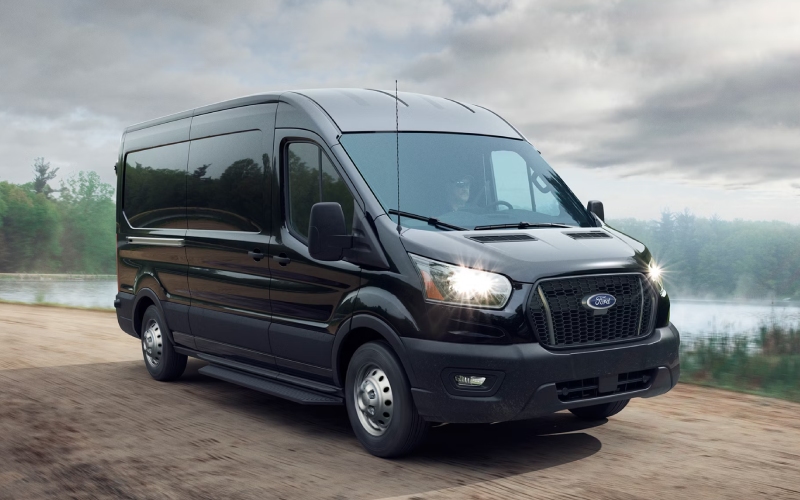
Alpine Ford – Space, Seating, and Smart Tech on the 2026 Ford Transit for Denver, CO Drivers
When you’re moving people and gear around Denver, CO, the right van isn’t a luxury—it’s the difference between a smooth day and a scramble. That’s where the 2026 Ford Transit® stands out. It blends real-world space with a driver-focused cockpit and standard tech like SYNC® 4 and Ford Co-Pilot360®, so the van feels intuitive from the first mile. Whether you run a touring group, handle school and community shuttles, or need something flexible for family weekends and weekday projects, Transit® adapts quickly with three roof heights, two lengths, and seating for up to 15.
Under the hood, the choice is straightforward: the proven 3.5L PFDi V6 for predictable power or the turbocharged 3.5L EcoBoost® V6 when you want more punch for highway merges and steeper grades along the Front Range. Rear-Wheel Drive is standard, and available Intelligent All-Wheel Drive adds confident traction when weather or work routes vary. Pair that with towing up to 4,500 lbs and a max payload up to 3,475 lbs when properly equipped, and you have a van that pulls its weight without drama—just what you need for concert equipment, soccer gear, or tools and supplies across town.
Inside, Transit® is designed for people who live in motion. Standard SYNC® 4 puts a crisp 12-inch center display at your fingertips with Enhanced Voice Recognition, so you can keep your eyes forward while adjusting navigation or calls. The new standard 8-inch cluster display keeps essentials in view, and the Tire Pressure Monitoring System helps maintain a stable, efficient ride. Seat layouts scale to what your day demands, and available 10-way power heated front seats make long hours feel shorter. Storage solutions are smart, too—choose a Medium or Large Center Console with an integrated shifter, dual cupholders, and room for devices and notebooks. Add organization accessories to keep cargo secure when streets get bumpy or when you transition from passengers to packages and back again.
Denver traffic and tightly packed lots can make any big vehicle feel unwieldy. Standard Ford Co-Pilot360® helps here. Front and rear parking sensors support precise positioning, Pre-Collision Assist® with Automatic Emergency Braking is there when the unexpected happens, and a Lane-Keeping System provides gentle steering support if you drift. The available 253-degree rear door opening on XLT delivers extra clearance for loading in alleys and angled driveways, while Close Assist on the sliding side door saves time at busy curbsides—no door slamming required.
Choosing the right configuration starts with an honest look at how you use space. Here’s a streamlined way to think about roof height and length in practical, real-world terms around the metro area.
- Low Roof: Ideal for garages and low-clearance parking; seated passenger work, compact cargo stacks.
- Medium Roof: Stand-up interior movement for many adults; versatile cargo racks and bins.
- High Roof: Maximum vertical working room; easiest in-vehicle mobility and bulkier gear clearance.
- Long Length: Balanced for downtown maneuvering and mixed passenger-cargo duty.
- Extended Length: Best for maximum seating or cargo volume when you run packed schedules daily.
Powertrain selection is just as simple. If you value steady power and predictable costs, the 3.5L PFDi V6 is your everyday hero. If you routinely load up, travel I-25 and I-70 with full seats and luggage, or want extra torque at altitude, the 3.5L EcoBoost® V6 delivers confident acceleration without sacrificing refinement. Standard Rear-Wheel Drive gives you consistent traction under load, and available Intelligent All-Wheel Drive is the right call when your routes include variable surfaces or frequent mountain runs.
The Transit® daily advantage is also about reducing friction between stops. The standard 25-gallon fuel tank is right-sized for most routes, while the available 31-gallon Extended Range fuel tank is the set-it-and-forget-it choice for longer days with fewer fuel breaks. Combine that with interior flexibility—swap seating rows, reassign storage zones, and use console space smartly—and you get a van that grows with your schedule rather than boxing it in.
If you’re still narrowing down options, start with these questions, then match your answers to the height, length, and engine that fit best. You’ll avoid underbuying or over-specifying—both of which can complicate daily life.
- What’s my real passenger mix: Count consistent riders, not occasional peaks, and add one flexible row for busy weeks.
- How often do I load in tight spaces: If alleys and crowded curbs are daily challenges, prioritize the available 253-degree doors.
- Do I need extra traction year-round: If you tackle variable surfaces and elevations regularly, choose available Intelligent AWD.
- Which tech supports my routine: If driver rotation is common, standard SYNC® 4 and Ford Co-Pilot360® help everyone feel at home fast.
There’s a reason the Transit® formula works so well in a city like Denver. It’s adaptable enough for local businesses, community groups, and large families who split time between city streets and highways out to the foothills. When you build yours with a clear eye on how many people you move, where you park, and what you carry, the van simply feels easier to live with—day after day.
Ready to explore trims and options, including Passenger Van XL and XLT, roof heights, lengths, and engines? Alpine Ford is serving Canon City, Castle Rock, and Denver with a customer-first approach that keeps the process simple and your priorities front and center.
Frequently Asked Questions:
How many people can the 2026 Ford Transit seat?
Transit® can be configured to seat up to 15 passengers, with multiple seating arrangements to match your daily needs.
Which engines are available on the 2026 Ford Transit?
You can choose the 3.5L PFDi V6 for steady, proven performance or the 3.5L EcoBoost® V6 for turbocharged confidence at altitude and with heavier loads.
Is All-Wheel Drive available?
Yes. Rear-Wheel Drive is standard, and Intelligent All-Wheel Drive is available for added traction and stability across varied routes.
What driver-assist features come standard?
Ford Co-Pilot360® is standard and includes front and rear parking sensors, Pre-Collision Assist® with Automatic Emergency Braking, and a Lane-Keeping System.
What are the roof height and body length options?
Transit® offers three roof heights—Low, Medium, and High—and two lengths—Long and Extended—so you can dial in space for passengers and cargo.
Request more 2026 Ford Transit information
Why the 2026 Ford Expedition Tremor Is the Smart Family-Adventure Choice for Castle Rock, CO
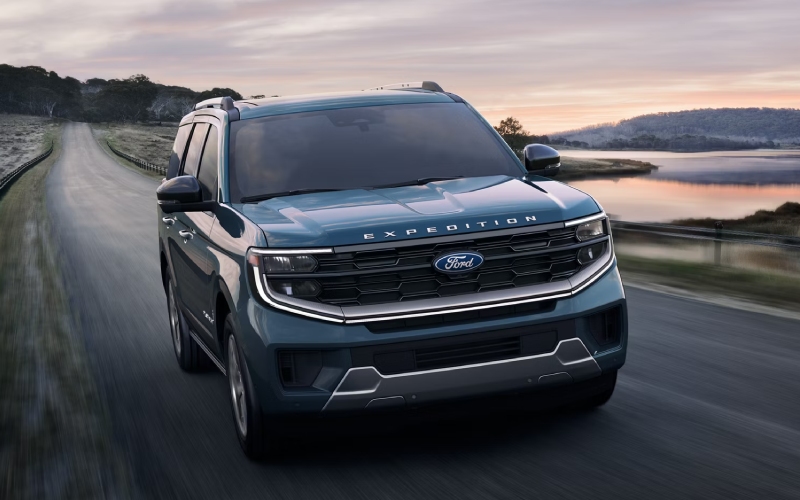
Alpine Ford – Why the 2026 Ford Expedition Tremor Is the Smart Family-Adventure Choice for Castle Rock, CO
If your family life in Castle Rock, CO moves from school drop-offs to gravel trailheads and everything in between, the 2026 Ford Expedition® Tremor® belongs on your shortlist. It’s the rare three-row SUV that’s genuinely comfortable all week yet fully prepared for rocky two-tracks into the foothills on Saturday morning. The core of its appeal is simple: capability you can trust, tech that reduces stress, and a cabin that treats every seat like the best seat.
Let’s start with hardware. The Expedition Tremor comes from the factory with a 3.5L EcoBoost® High-Output engine, a 10-speed SelectShift® automatic, and a 3.73 electronic-locking rear differential. Its higher-ride suspension with premium passive shocks soaks up washboard surfaces, while Modified Raptor skid plates protect critical components. The Tremor’s 33-inch all-terrain tires on 18-inch wheels deliver the sidewall and bite you want when you leave pavement—something low-profile 22s simply can’t match on sharp rocks. Intelligent 4WD with Terrain Management System™ makes it easy to tailor traction to changing surfaces, and Trail Control™ with Trail One-Pedal Drive and Trail Turn Assist helps you manage slow, technical sections and tight switchbacks common on Front Range access roads.
Of course, life in Douglas County often means hauling gear and people. Here the Tremor is refreshingly practical. Choose seating for seven with standard second-row captain’s chairs or opt for eight-passenger flexibility. A standard PowerFold® third row creates a flat cargo area in seconds, so you can load coolers, strollers, or camping bins without complex seat gymnastics. Pro Power Onboard™ 400W outlets are perfect for a small air compressor, bike tool, or tailgate speaker at Philip S. Miller Park, and the available Heavy-Duty Trailer Tow Package with integrated trailer brake controller and Pro Trailer Backup Assist™ helps when you’re pulling a family camper toward Rampart Range Road.
The Expedition Tremor’s tech helps Castle Rock commutes feel calmer, too. The Ford Digital Experience puts your apps and real-time Google Maps™ on a breathtaking 24-inch panoramic display and a 13.2-inch center screen. You get 5G Wi-Fi® hotspot capability and SiriusXM® with 360L, while the B&O® Sound System by Bang & Olufsen® fills the cabin with crisp audio. BlueCruise comes equipped with a trial period to support hands-free highway driving across qualifying Blue Zones—ideal when you’re covering miles on I-25 between meetings, games, or DIA runs. Ford Co-Pilot360® 2.0 brings confidence-boosting assists like Adaptive Cruise Control with Lane Centering, Pre-Collision Assist® with Automatic Emergency Braking, BLIS® with Cross-Traffic Alert and Trailer Coverage, and a 360-Degree Camera for tight parking garages.
Why choose Tremor over other Expedition models for Castle Rock? It’s about priorities. If your weekends include gravel, ruts, and uneven trailheads, the Tremor’s wheel-and-tire setup, underbody protection, and locking rear differential provide assurance that luxury-focused packages can’t match off pavement. Yet, inside, you still get heated and ventilated front captain’s chairs with Tremor logos, heated second-row captain’s chairs, ambient lighting, and a leather-wrapped steering wheel. You’re not sacrificing comfort to get capability—you’re getting both in a single, well-rounded trim.
Take trail confidence, for instance. Trail Turn Assist can pivot the SUV in tighter spaces by braking the inside rear wheel, reducing multi-point turns on narrow forest roads. Trail One-Pedal Drive helps modulate throttle and braking at low speeds, which is especially helpful on rocky climbs where finesse matters more than brute force. These are the kinds of features that keep family adventures easy and repeatable, even for newer off-road drivers.
Then there’s lighting and visibility. Zone Lighting—including available roof-rail perimeter lighting—lets you illuminate a campsite or staging area around the vehicle. The 360-Degree Camera helps you place tires precisely when the path gets narrow or when you’re centering on ramps at a busy sports complex. These thoughtful touches convert potential stress points into simple checkmarks on your to-do list.
If you’re evaluating ownership costs beyond the driveway, consider how the Tremor’s off-road geometry and 33-inch tires reduce the chance of wheel damage on rocky edges compared with larger, low-profile options. The 18-inch wheel package means more sidewall to cushion hits, which is especially helpful on dirt connectors throughout Douglas and Elbert Counties. Paired with the integrated trailer brake controller and Trailer Sway Control, your towing days remain confident and predictable.
Put simply, the Expedition Tremor is the smart family-adventure choice for Castle Rock because it’s engineered for our mix of suburban errands and dirt-road weekends. It preserves comfort, embraces technology, and adds meaningful off-road capability that works when you need it—without overwhelming you when you don’t. That balance makes daily life easier and weekend plans more possible.
- Everyday usability: Room for seven or eight, quick-folding third row, and useful cabin storage
- Trail-first hardware: 33-inch A/T tires, higher-ride suspension, and underbody protection
- Confident towing: Integrated trailer brake controller and Pro Trailer Backup Assist™
- Stress-reducing tech: BlueCruise trial, 360-Degree Camera, and Ford Co-Pilot360® 2.0
- Family comfort: Heated and ventilated front seats, heated second row, and B&O® audio
We recommend setting aside time for a road and mild-trail demo in the Tremor to feel the difference its hardware makes compared with street-only SUVs. A loop that includes I-25, Founders Parkway, and a nearby gravel stretch will show how seamlessly it transitions from commute to adventure mode. When you’re ready to compare seating layouts, towing features, or accessories like roof racks and cargo organizers, our team will map each option to your real-world needs. Alpine Ford is proudly serving Canon City, Castle Rock, and Denver with knowledgeable guidance and a transparent, low-pressure approach.
Frequently Asked Questions:
Can I get eight-passenger seating on the Expedition Tremor?
Yes. The Expedition Tremor offers both seven-passenger seating with second-row captain’s chairs and an available eight-passenger configuration with a second-row bench.
How does BlueCruise help on Castle Rock drives?
BlueCruise enables hands-free driving on qualifying divided highways called Blue Zones, helping reduce fatigue on I-25 or E-470 stretches by handling steering and speed within its operating parameters while you stay attentive.
Is the Tremor good for towing a family camper?
With the available Heavy-Duty Trailer Tow Package, the Expedition lineup offers up to 9,600 lbs of towing when properly equipped. The Tremor also includes an integrated trailer brake controller and Pro Trailer Backup Assist™ for added confidence.
What off-road features make the Tremor different?
The Tremor’s 33-inch all-terrain tires, higher-ride suspension with premium passive shocks, Modified Raptor skid plates, 3.73 electronic-locking rear differential, and Trail Control™ with Trail Turn Assist set it apart.
How does the Ford Digital Experience improve daily driving?
It integrates your apps, streaming, and Google Maps™ into an intuitive interface across a 24-inch panoramic display and 13.2-inch center screen, supported by a 5G Wi-Fi® hotspot for connected convenience.
*Image may not be actual model
Request more 2026 Ford Expedition information
2026 Ford Escape Plug-In Hybrid for Denver, CO Drivers – Why the PHEV Trim Makes Daily Driving Easier
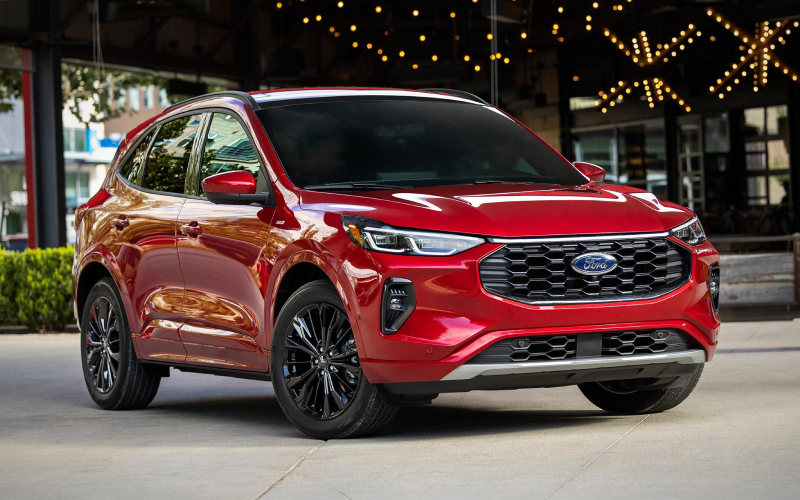
Alpine Ford – 2026 Ford Escape Plug-In Hybrid for Denver, CO Drivers – Why the PHEV Trim Makes Daily Driving Easier
For Denver drivers who split their week between city miles and quick hops up the corridor, the 2026 Ford Escape Plug-In Hybrid offers a practical, low-hassle way to make every trip smoother. With an estimated 37 miles of electric-only range, many daily errands and commutes can be covered without using the gas engine. When plans stretch into the foothills or out past E-470, the Escape transitions seamlessly into efficient hybrid mode—no charging stops needed. The result is a calm, quiet drive in town and confident hybrid cruising when your schedule expands.
The Escape Plug-In Hybrid is also refreshingly easy to live with. Level 1 household charging tops off the battery overnight, and a Level 2 setup can speed up your turnaround. Inside, wireless Apple CarPlay and Android Auto keep your apps within reach, and the interface remains intuitive whether you are following turn-by-turn directions across downtown or queuing up a playlist before hopping on I-25. Ford Co-Pilot360 features—BLIS (Blind Spot Information System), Lane-Keeping System, and Pre-Collision Assist with Automatic Emergency Braking—provide helpful awareness in dense traffic, while available Adaptive Cruise Control with Stop-and-Go and Lane Centering lightens the load on longer drives.
What sets the Escape Plug-In Hybrid apart in Denver is its flexible power. It is not a niche EV that demands strict planning, and it is not a traditional gas SUV that keeps you stopping at the pump. It’s a right-sized bridge between both worlds that fits the varied rhythm of local driving—quiet in the city, relaxed on the highway, and ready when your day gets bigger than expected.
On the practicality front, the Escape’s sliding second row and low cargo floor make weekly life simple. Car seats are easy to access, gym bags and groceries fit without a fuss, and the cabin stays calm even when your schedule does not. The drivetrain’s smooth response is an asset when you need to dart across a lane or climb toward higher elevations, and the overall chassis tuning keeps the ride composed on patched pavement. Factor in available features like a power liftgate, heated front seats, and a panoramic roof, and you have a compact SUV that does the details as well as the big stuff.
- Charging at home: Use a standard outlet for overnight top-offs or install Level 2 for faster, routine charging.
- Everyday electric miles: Cover short commutes and errands on battery power, then let hybrid mode take over as needed.
- Driver-assist confidence: Rely on Ford Co-Pilot360 features for lane changes, merging, and dense urban traffic.
- Flexible space: Sliding second row and smart cargo area support family gear and weekend plans.
- Start electric: Leave home fully charged and use EV driving for in-town errands.
- Extend with hybrid: Head to the foothills or across the metro without range anxiety.
- Simplify the routine: Keep your apps wireless, your driver aids active, and your trips calm.
If you are weighing plug-in SUVs for life in Denver, it helps to think beyond a static spec sheet. Consider your actual week—office runs, school drop-offs, workouts, social events—and how often those total miles fit into an electric-only plan. Then think about the days you stretch it: a client meeting in the Tech Center, a game in LoDo, or a quick trip up US-36. The Escape Plug-In Hybrid is built for that variability without forcing a compromise on space, comfort, or confidence.
When you are ready to take a closer look, schedule a test drive that mirrors your real route—city streets, highway stints, and an elevation change if that’s typical. You will quickly feel how the Escape Plug-In Hybrid’s smooth transitions, quiet cabin, and smart driver-assist tech take stress out of the drive. It is the kind of refinement you appreciate most not on a spec chart but in the flow of everyday life.
Alpine Ford is serving Canon City, Castle Rock, and Denver with approachable guidance on plug-in charging basics, home setup tips, and which features align with your routine. Our team will walk you through Level 1 vs. Level 2 charging, help you map your likely electric-only miles, and compare the Plug-In Hybrid to other Escape trims so you can choose with clarity.
Frequently Asked Questions:
How far can the 2026 Ford Escape Plug-In Hybrid drive on electricity alone?
The Escape Plug-In Hybrid is estimated to deliver about 37 miles of electric-only driving, which covers many daily commutes and errand loops in Denver before switching to hybrid mode.
Do I need special equipment to charge at home?
No—Level 1 charging uses a standard household outlet, making overnight top-offs easy. If you want faster turnarounds, a Level 2 home charger is a smart upgrade.
Does the Escape Plug-In Hybrid still work well for longer weekend trips?
Yes. Once the battery is depleted, it operates as a conventional hybrid. You can drive far beyond the electric range without planning charging stops.
Which safety features help in Denver traffic?
Standard Ford Co-Pilot360 technologies—such as BLIS, Lane-Keeping System, and Pre-Collision Assist—support awareness. Available Adaptive Cruise Control with Stop-and-Go and Lane Centering helps reduce fatigue during rush-hour I-25 drives.
Is cargo space compromised compared to other Escape trims?
The Escape Plug-In Hybrid maintains practical cargo space and a flexible second row for family gear, groceries, and weekend equipment, keeping everyday utility intact.
*Image may not be actual model
Request more 2026 Ford Escape information
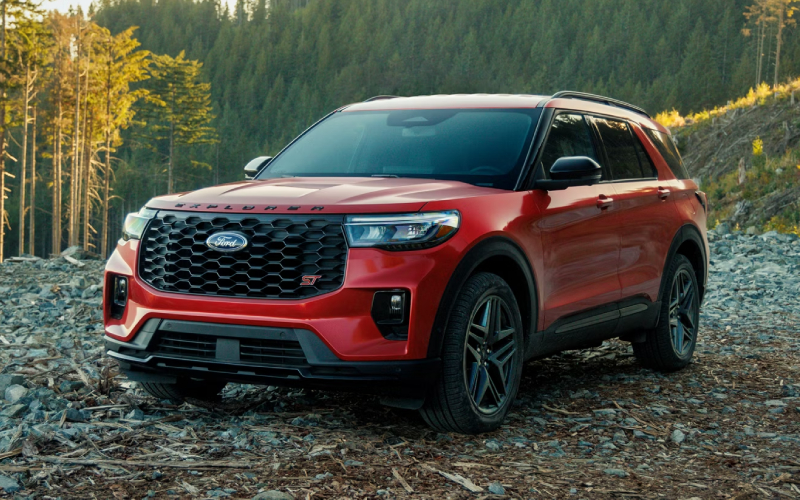
Alpine Ford – Why the 2026 Explorer ST-Line Is the Right Balance for Daily Drives around Denver, CO
For Denver drivers who want an SUV that looks sharp, feels refined, and still handles everyday family and gear duties, the 2026 Explorer® ST-Line lands in a sweet spot. It brings the confident punch of a 2.3L EcoBoost® engine, tuned for quick response in city traffic and relaxed highway merging, while maintaining the interior flexibility that makes an Explorer® easy to live with. What sets ST-Line apart is how it blends that athletic personality with tech that makes driving smoother—think a 360-Degree Camera for tight parking around Union Station or neighborhood streets and Ford Co-Pilot360® Assist+ that supports more relaxing I-25 cruise time. And because Intelligent 4WD is available, you can add traction for weekend getaways into the foothills without switching to a dedicated off-road trim.
Inside, the ST-Line cabin shows its character in the details—unique durable cloth-trimmed seats with red stitching, a clean dash layout, and a B&O® Sound System by Bang & Olufsen® with 10 speakers including subwoofer that genuinely elevates podcasts and playlists. Space stays on your side: seating for up to seven and a cargo area that adapts quickly when you fold the rear rows. That practicality matters for Denver life, whether you’re loading sports gear at Gates Tennis Center, packing for a ski condo weekend, or picking up flat packs at the home store. The ST-Line is not just sport by name; it’s tuned to make daily driving better without sacrificing what families need from a three-row SUV.
So where does ST-Line shine most around Denver? It’s in the balance:
- Daily drivability that feels confident in traffic and composed on the highway
- Sport-inspired design that looks premium without the luxury price trappings
- Tech that makes a difference every day, from parking to lane support
- Available Intelligent 4WD for added confidence when plans include dirt roads
- Flexible seating and cargo that adapt to errands, carpools, and gear
Think about the typical week in Denver. Mornings can include school drop-offs, an office commute, and a quick detour to snag a curbside order. Afternoons may hold a client meeting near the Tech Center or a practice pickup in Stapleton. Evenings might include a fast run up to Red Rocks for a show or a grocery haul on the way home. The Explorer® ST-Line slots into that rhythm because it doesn’t force compromises. It’s quiet and smooth inside, the seating is supportive for long stints, and the tech is intuitive on day one—no steep learning curve, just helpful features where you expect them.
If your weekend routine includes a bike rack, dog crates, or coolers, the ST-Line is ready. The 5,000-lb towing capacity means you can bring a small camper or a pair of ATVs for a quick escape to the foothills. Available roof crossbars and cargo protection pieces help keep the interior tidy, and the power liftgate makes loading easier when your hands are full. The 360-Degree Camera eases the last 30 feet into a tight trailhead spot or a narrow alleyway behind a venue downtown. And because Explorer® fundamentals excel—space, visibility, drivability—you won’t feel like you’re stretching to make it all work.
If you’re cross-shopping trims, ST-Line stands out from Explorer® Active by adding a clear design and tech advantage, yet it remains more understated than the high-performance ST or the luxury-laden Platinum™. That’s the point: it looks and feels special without asking you to change your life to match the SUV. It’s a smart, pragmatic upgrade that keeps the emphasis on everyday usefulness while letting you enjoy the drive more.
When you’re ready to take a closer look, Alpine Ford is a helpful starting point, serving Canon City, Castle Rock, and Denver. Our team can walk you through options like available Intelligent 4WD, roof accessories, and interior protection that fit your use case. Want to compare cargo configurations or explore how Ford Co-Pilot360® Assist+ features support your daily routes? We’ll map features to real-world tasks so you’re confident in the choice before you ever set out for a test drive.
Frequently Asked Questions:
Does the Explorer ST-Line include the 360-Degree Camera?
Yes, the 360-Degree Camera is included on ST-Line, helping you maneuver into tight urban parking spots and navigate trailhead turnarounds more confidently.
What engine does the ST-Line use, and how does it feel in Denver traffic?
The ST-Line features a 2.3L EcoBoost® engine. It’s tuned for quick response off the line and comfortable highway passing, which suits Denver’s mix of city streets and fast-moving freeway merges.
Can I get Intelligent 4WD on the ST-Line?
Yes. While rear-wheel drive is standard, Intelligent 4WD is available and adds traction for changing weather and unpaved access roads without requiring a jump to a dedicated off-road trim.
How does the ST-Line compare to Platinum™ or ST for comfort and performance?
Platinum™ prioritizes luxury features like massaging front seats and BlueCruise, while ST pushes harder into performance with a 3.0L EcoBoost® and sport-tuned hardware. ST-Line splits the difference, delivering sport-inspired design and standout tech without going all-in on luxury or max performance.
Is the ST-Line practical for families?
Absolutely. With seating for up to seven, flexible cargo space, easy-fold rear rows, and helpful features like a power liftgate and advanced driver-assist tech, it’s built to handle carpools, errands, and weekend getaways with ease.
*Image may not be actual model
Request more 2026 Ford Explorer information
Connect with us


- July 2026
- June 2026
- May 2026
- April 2026
- March 2026
- February 2026
- January 2026
- December 2025
- November 2025
- October 2025
- September 2025
- August 2025
- July 2025
- June 2025
- May 2025
- April 2025
- March 2025
- February 2025
- January 2025
- December 2024
- November 2024
- October 2024
- September 2024
- August 2024
- July 2023
- April 2023
- February 2023
- January 2023
- October 2022
Archives
- 2025 Ford F-150
- Alpine Ford Dealer
- Alpine Ford, LLC Service
- Ford Bronco
- Ford Bronco Sport
- Ford Bronco Sport Service
- Ford Dealer
- Ford Escape
- Ford Expedition
- Ford Explorer
- Ford F-150
- Ford Maverick
- Ford Mustang
- Ford Mustang Mach-E
- Ford Ranger
- Ford Service
- Ford Super Duty F-250
- Ford Super Duty F-250 Service
- Ford Super Duty F-350
- Ford Transit
- New Inventory
- Parts
- People
- Pre-Owned Inventory
- Service
- West Pueblo Ford Dealer